An online estimate can help a customer start a conversation without waiting for a visit. Its usefulness depends on what the calculation assumes and how the business checks details that public records cannot establish. Speed should make the next step clearer, rather than make an early figure sound more certain than it is.
Identify what the source actually describes
A public parcel record may provide a starting point for understanding a property. It does not automatically describe the area included in a particular service. The provider needs a process for distinguishing the recorded property from the work the customer is asking someone to perform.
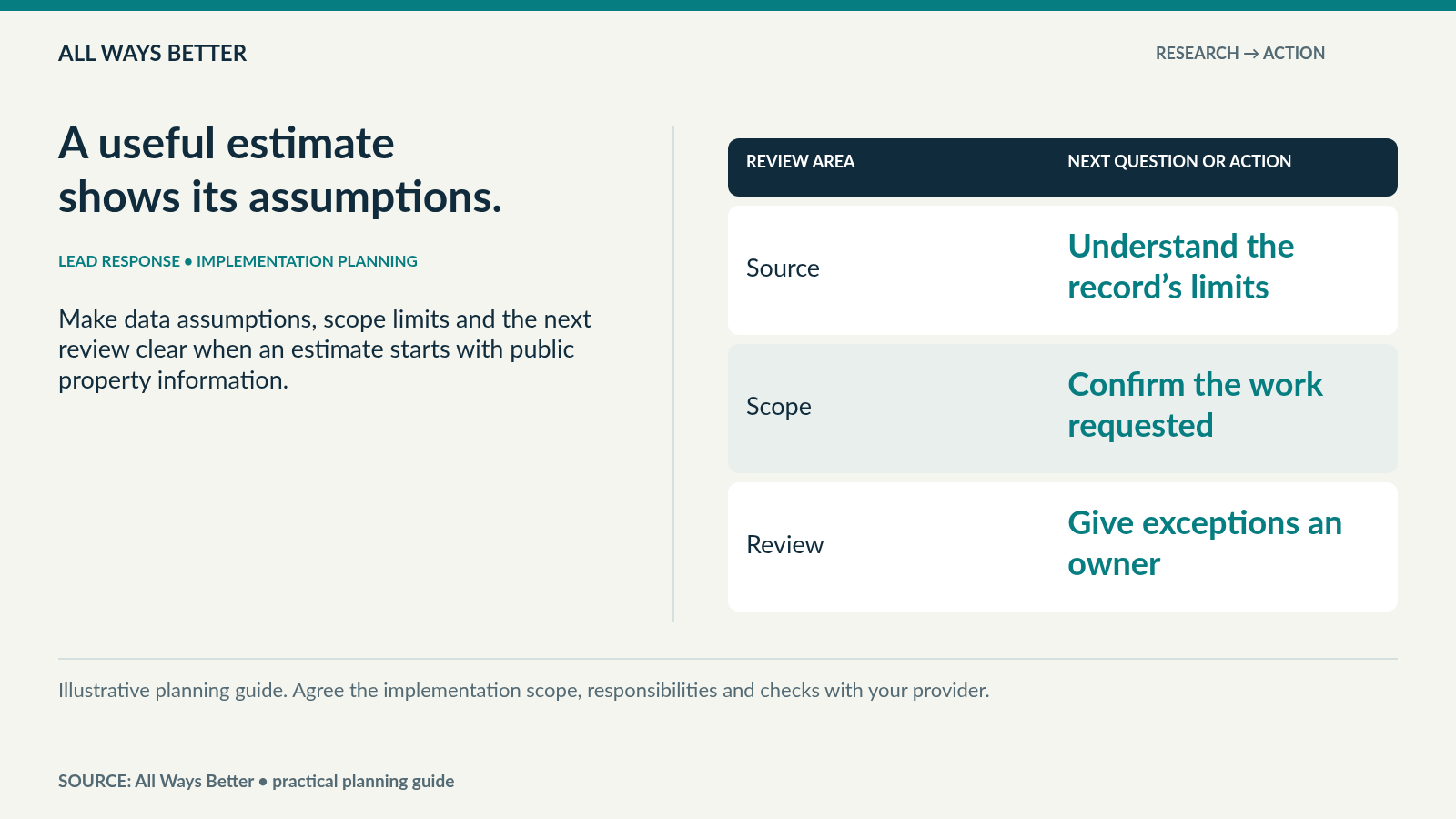
Keep the source and its limits visible in the workflow. Wayne County's published data terms describe its extracts as reference information without a warranty of accuracy. A business using records should review the applicable terms and decide what needs verification for its own service. An estimate should not silently turn a reference value into a confirmed site measurement.
State the assumptions behind the figure
Explain what information the calculation uses and which details could change the result. For a property service, that may include the work area, access and the condition or scope the customer describes. Use language the customer can understand before they decide whether to request a conversation.
Distinguish an initial estimate from a confirmed quote or appointment. Tell the customer which step follows and who reviews exceptions. If a particular request requires a visit or another check, make that boundary part of the process. The estimate should help someone assess whether to continue, without promising work the provider has not agreed to deliver.
Give incorrect information a useful route
A customer should be able to say that the address or proposed work area is wrong. Ask only for the information needed to resolve the discrepancy. Keep that correction attached to the request so the next employee understands why the initial calculation may no longer apply.
Use the same care with requests outside the usual service area or scope. An exception needs an owner who can explain the options. Automatically producing another number can make the conversation harder if the business cannot provide the requested work.
Test the estimate as part of a handoff
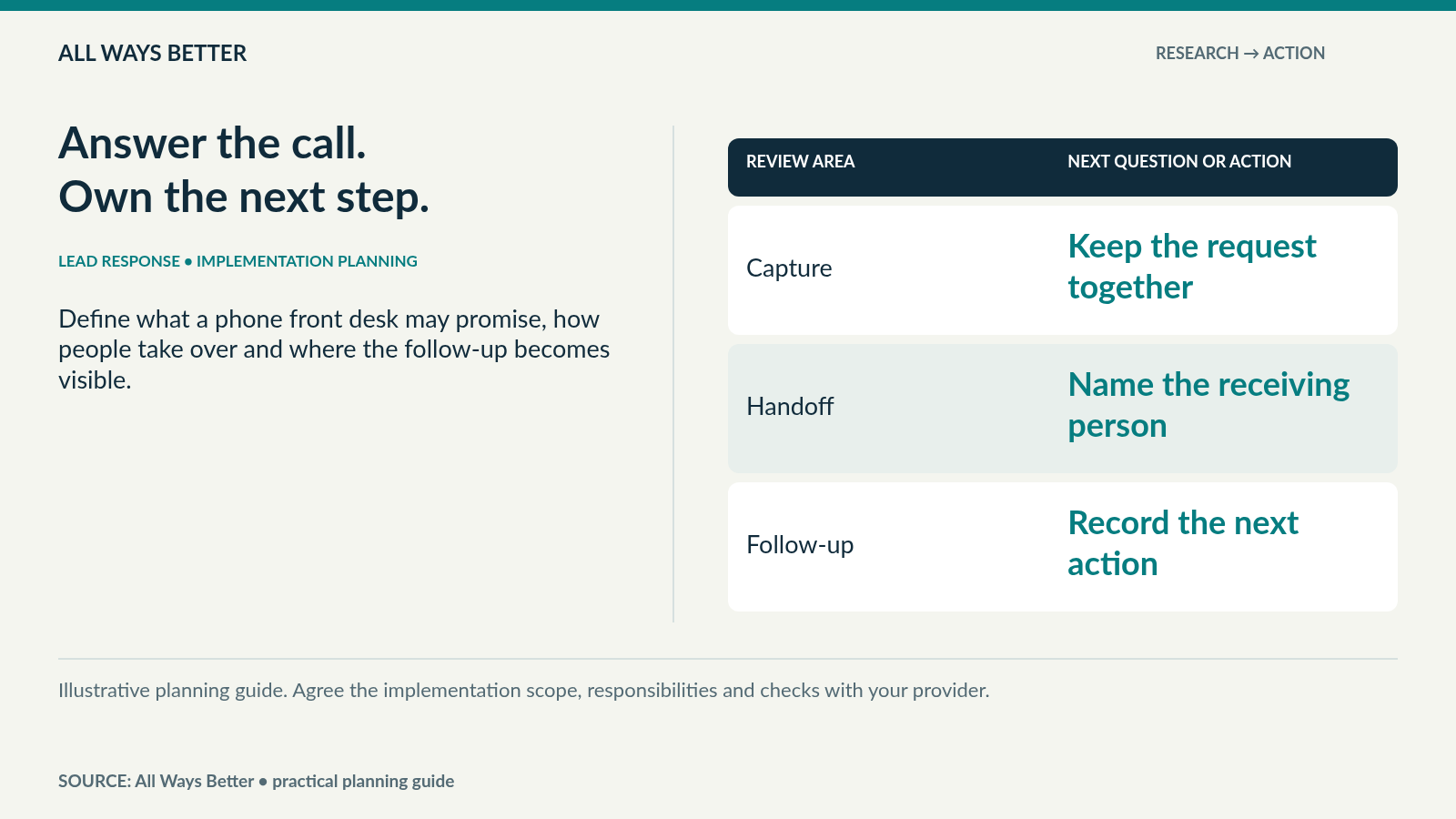
Use an authorized example to check the full path. Confirm what the customer sees, what reaches the team and which information is retained with the estimate. Include an example with an incomplete or disputed record. Staff should be able to identify the assumption that needs checking before they discuss a confirmed scope.
Review the result with the person who prepares the final quote. Their questions can show which form fields are useful and which details are better gathered in a conversation. Keep the estimate, later corrections and agreed next action connected so the customer does not need to explain everything again.
Discuss an estimate workflow that fits the service
All Ways Better can help map the request, calculation, review and follow-up process. Bring a general description of the service, the data source and the situations that need a person's decision. A suitable provider can then confirm the implementation scope and the ongoing responsibilities involved.
Request a free initial consultation through the article's contact offer. Our team will follow up to arrange a call. The initial conversation is free. Data access, technical assessment, site verification and implementation work are separately agreed and priced. Avoid sharing private property-owner information or customer records in the signup form.