A new enquiry can wait in an inbox while the right person is on a job. By the time someone calls back, the customer may have explained the same problem to another business. Improving that handoff starts with deciding who owns the request and how quickly they can make a response.
Find the handoff that holds the enquiry
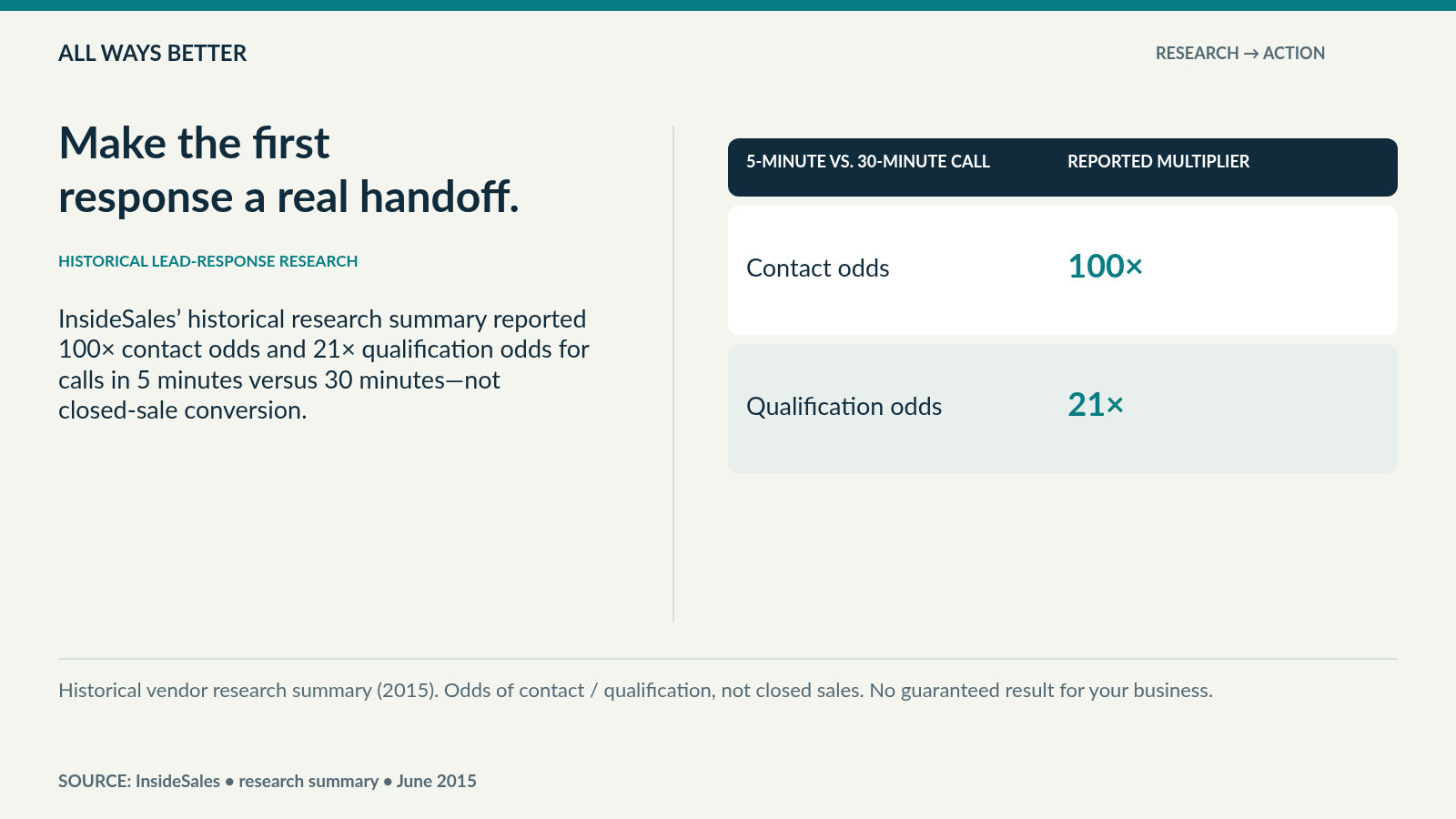
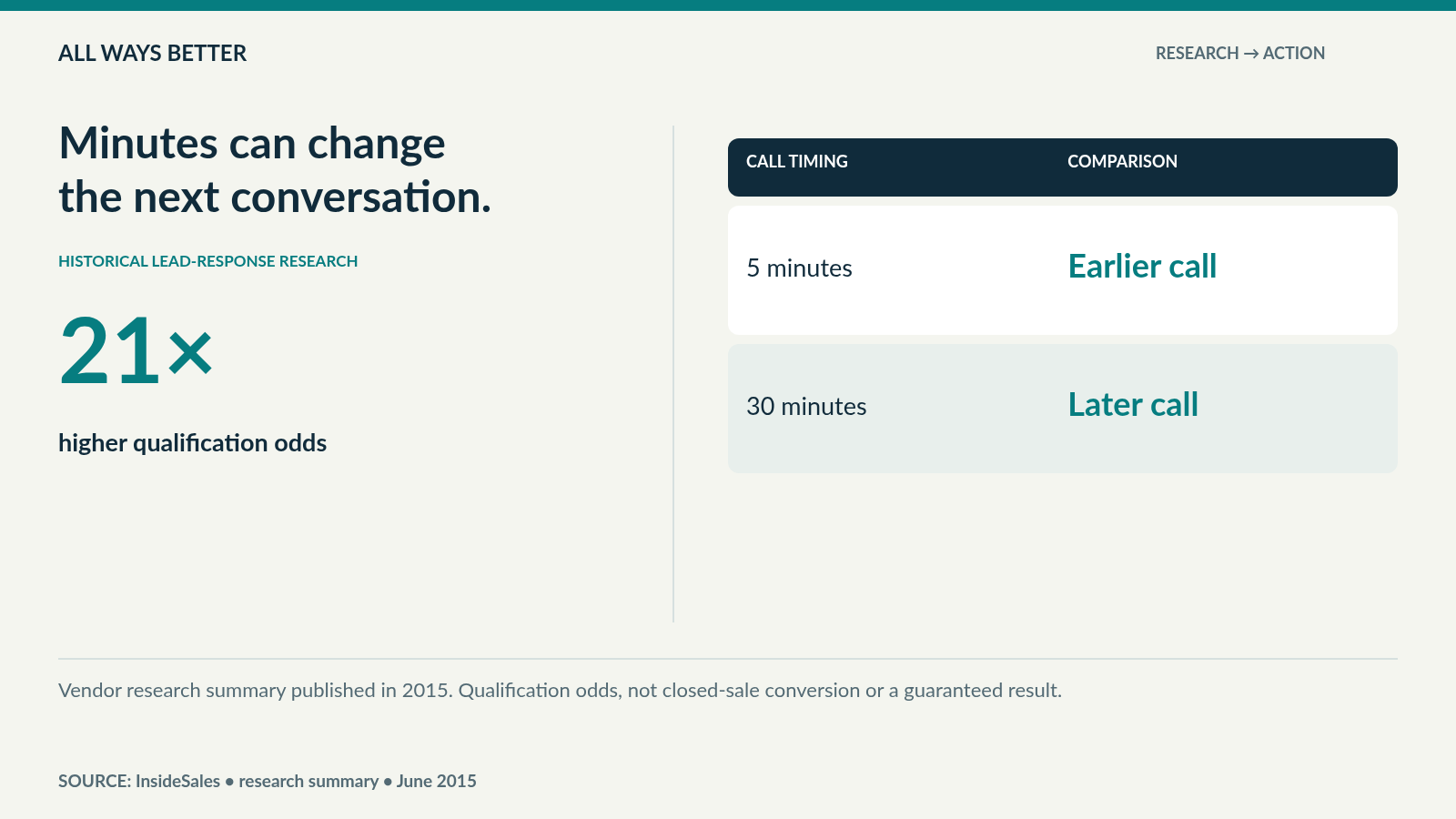
InsideSales' historical research reported higher qualification odds for calls within five minutes. That finding describes the research behind its published summary; it is not a promised result for your business. Your own response times and qualified conversations provide a better basis for deciding what to change. Start by reviewing last ten enquiries, noting when each arrived, when someone first replied, and whether the customer had a clear next step.
Look closely at the gaps. A website form might reach an address nobody checks during the day. A missed call might appear on one employee's phone while the customer record sits somewhere else. A quote request might be acknowledged promptly but remain unassigned until the following morning. These are different problems. Naming the handoff that failed helps you choose a change your team can maintain.
Give the first response a clear job
Give each incoming request an owner, a backup, and a response target appropriate to your working hours. Keep the original message beside the contact details. The first reply should establish what the person needs, confirm the right number or email, and explain what will happen next. If a visit or price needs a person's approval, make that boundary clear. An acknowledgement should not imply that an appointment has been confirmed.
Automation can support that process by capturing an enquiry, alerting the right person, and creating a follow-up task. It needs the same service rules your staff use. Define the areas you serve, the information needed before a quote, and when a request should go straight to a person. Test the workflow with an ordinary enquiry and an exception before relying on it for customers.
Check the workflow before expanding it
Review results after a trial. Compare time to a useful response, the number of enquiries with an assigned owner, and the conversations that reached a defined qualification stage. Keep the stage consistent so an increase in activity does not get mistaken for an increase in suitable opportunities. Ask staff which alerts helped and which simply created another interruption. A response workflow should fit the people doing the work.
Walk through an enquiry between jobs
Consider an enquiry that arrives while the owner is driving between jobs. The office can see the message, but nobody knows whether they should call or wait. A useful rule might assign the office to confirm the type of work and callback details, then give the owner a task to review suitability. That avoids leaving the whole conversation dependent on one person's availability.
Write an acceptance check for the proposed workflow. A test request should appear in the customer record with its arrival time, original message, assigned owner, and next action. Then try an enquiry outside your service area. The process should route that exception to a person who can explain the options, without automatically promising work the business cannot provide.
Discuss your response process
The All Ways Better Company can help you map that process and identify suitable implementation support. Bring a few anonymized enquiries and describe where they stalled. We can discuss the intake path, the follow-up rules, and the systems that need to share information. Any delivery work, pricing, or schedule will be agreed separately with the relevant team.
Sign up today to receive a free initial implementation consultation. The conversation is a chance to review your needs and decide on a sensible next step; it does not include a paid assessment or implementation project. Use the article's signup form to request a call, and our team will follow up to arrange a suitable time.