Answering a business call is useful only if the request reaches someone who can help. A caller may explain the same issue again, wait for a callback that nobody owns or assume an appointment has been booked when it has not. A phone front desk needs clear handoff rules alongside a way to answer the call.
Choose the calls it should handle
Begin with an ordinary request your team understands, such as asking for an appointment or discussing a type of work. Identify the information needed to arrange the next conversation. A name, a suitable contact route and a short description may be enough at first. Collecting a long history can make the call harder without helping the next employee.
Set boundaries around what can be promised. The person or system taking the call should know which questions require approval and which requests need a specialist. An acknowledgement should not sound like a confirmed appointment or an agreed price. Describe the next step in language the caller can recognize when it happens.
Make the transfer to a person usable
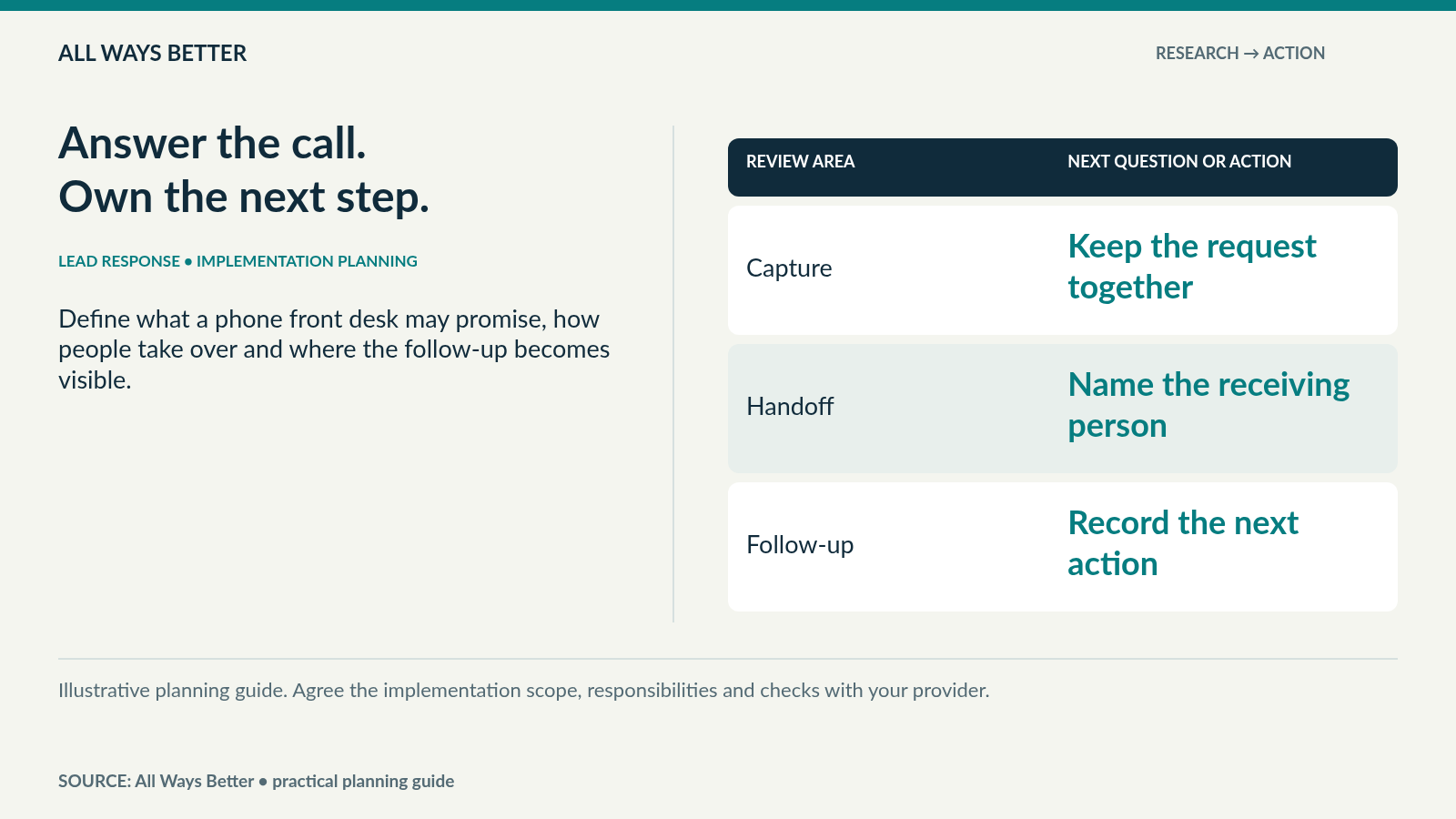
Decide what happens when a caller asks for a human. The route needs to reflect your team's availability, rather than relying on a transfer destination that nobody monitors. Agree what the caller should hear if the responsible person cannot answer and how the callback request will be recorded.
The receiving employee needs the original request and enough context to continue. Ask where that information will appear and who owns the next action. If several people can help, define how one becomes responsible. A shared notification is easy to overlook when everyone assumes someone else has already replied.
Keep records with a defined purpose
Agree what the business needs to retain after a call. Contact details and a note naming the next action may serve a different purpose from a recording. Establish the appropriate notices, permissions, access and retention arrangements with the people responsible for them. Do not assume that collecting more material automatically makes the record more useful.
Use authorized test examples to check the record. Confirm that the right team can find the request and that unrelated staff cannot browse information they do not need. If recordings or transcripts form part of the agreed service, include their handling in the scope and verify the result through the approved process.
Walk through an unavailable-owner example
Consider a caller asking for a quote while the usual reviewer is away. Someone must confirm what the caller needs, explain when the team can respond and assign the review to an available owner or backup. The workflow should show that the request is still waiting. It should also tell the next employee what was already communicated.
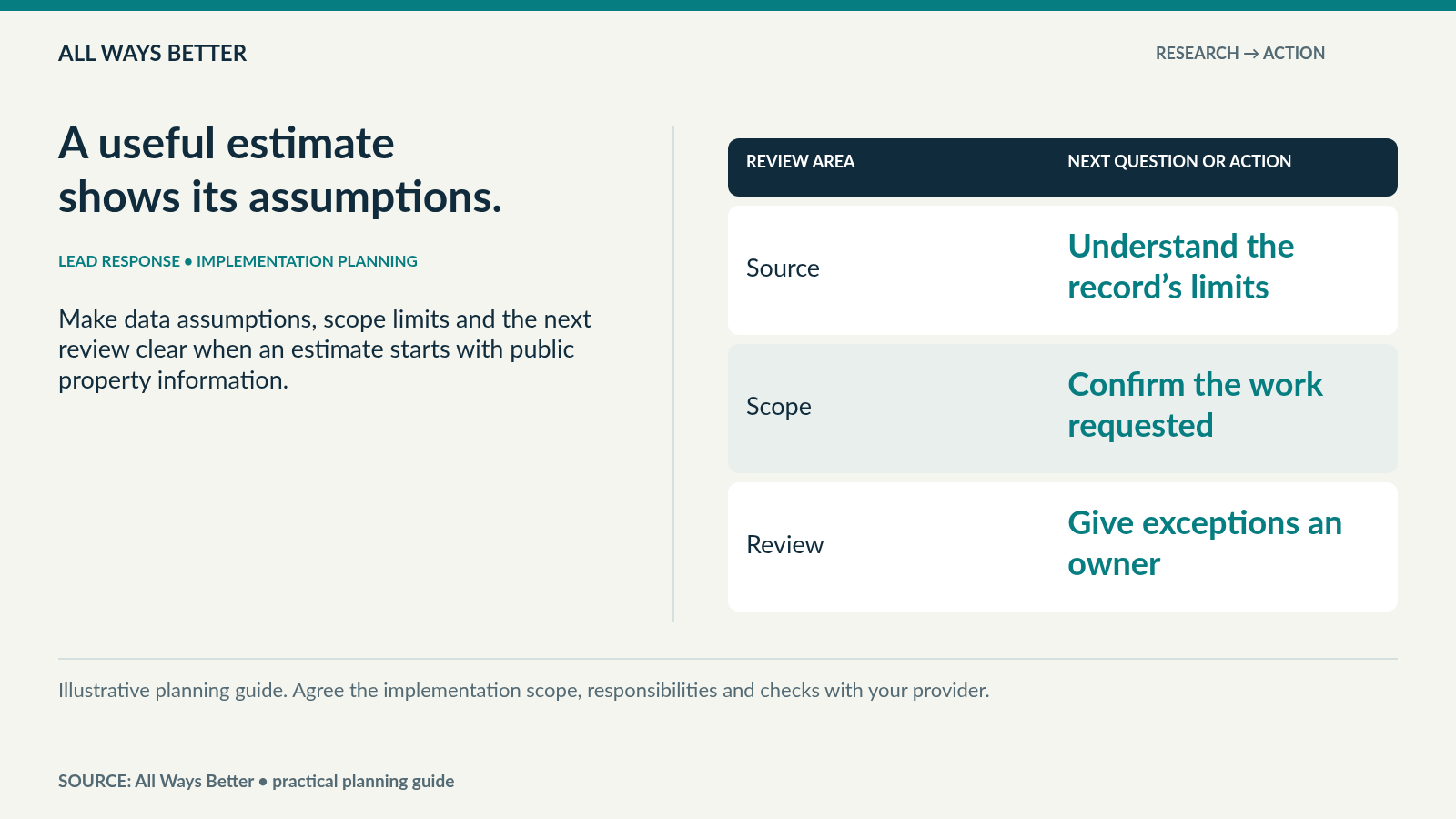
Review the process with the people who will use it during a busy day. Check whether they receive enough detail, whether alerts arrive in a useful place and whether completed callbacks are recorded. Those observations help choose the next improvement before adding more call types or another intake channel.
Plan a first implementation step
All Ways Better can help map the path from the incoming call to an owned follow-up. Bring a recurring call type and describe where the handoff becomes difficult. We can discuss the information, service boundaries and system connections a delivery team would need to understand.
Request a free initial consultation through the article's contact offer. Our team will follow up to arrange a suitable time. The offer covers the first requirements conversation. Phone services, technical assessments, recordings, integrations and implementation work require separately agreed scope and pricing. There is no need to send private call recordings or customer details with your initial request.