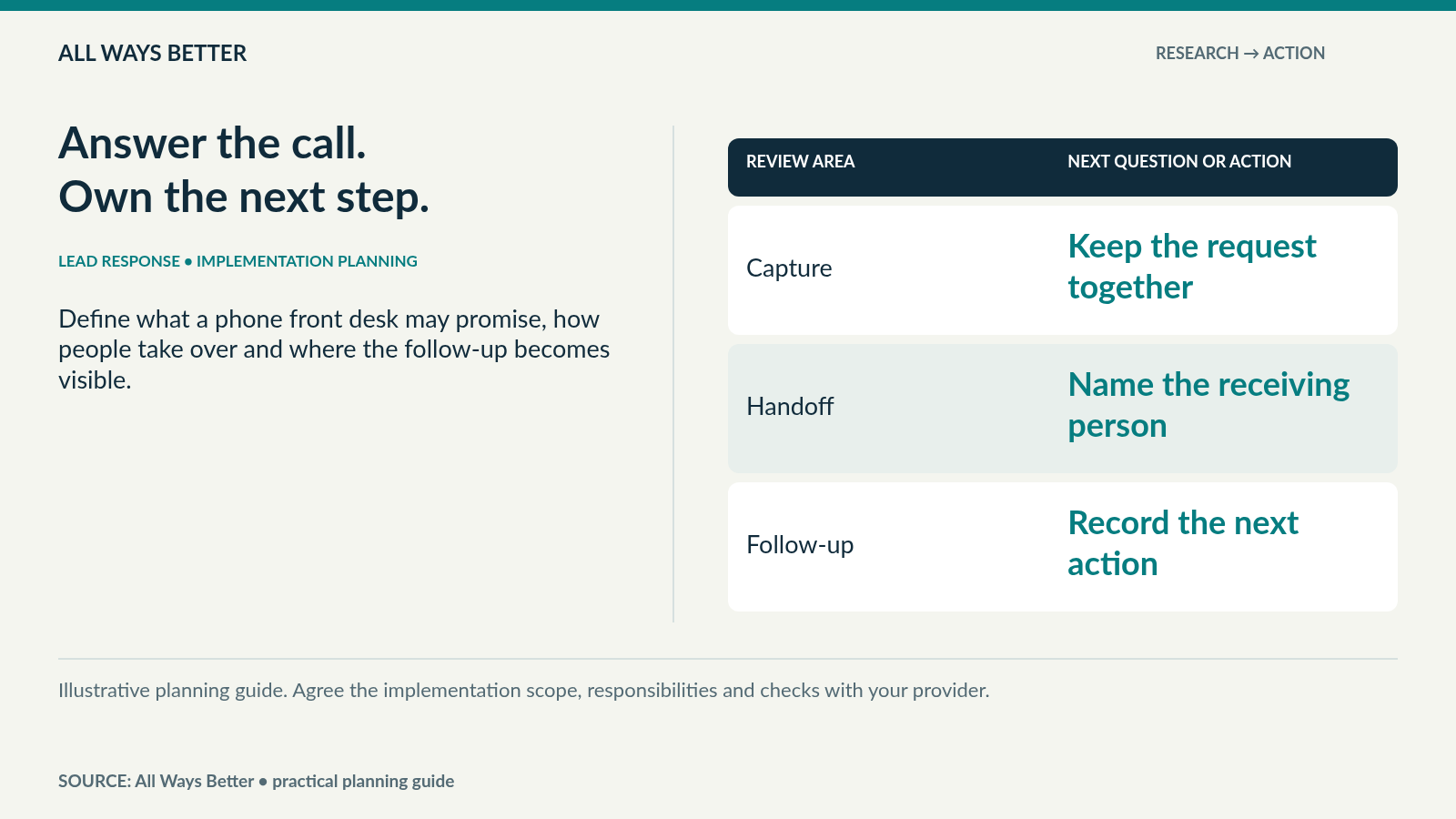
An automatic acknowledgement can tell a customer that a form arrived. It cannot, by itself, establish whether your business can help. The next response needs someone who understands the request, can ask a useful question, and knows what they are allowed to promise. Improving lead contact means connecting those steps rather than measuring the speed of an email alone.
Define a useful customer response
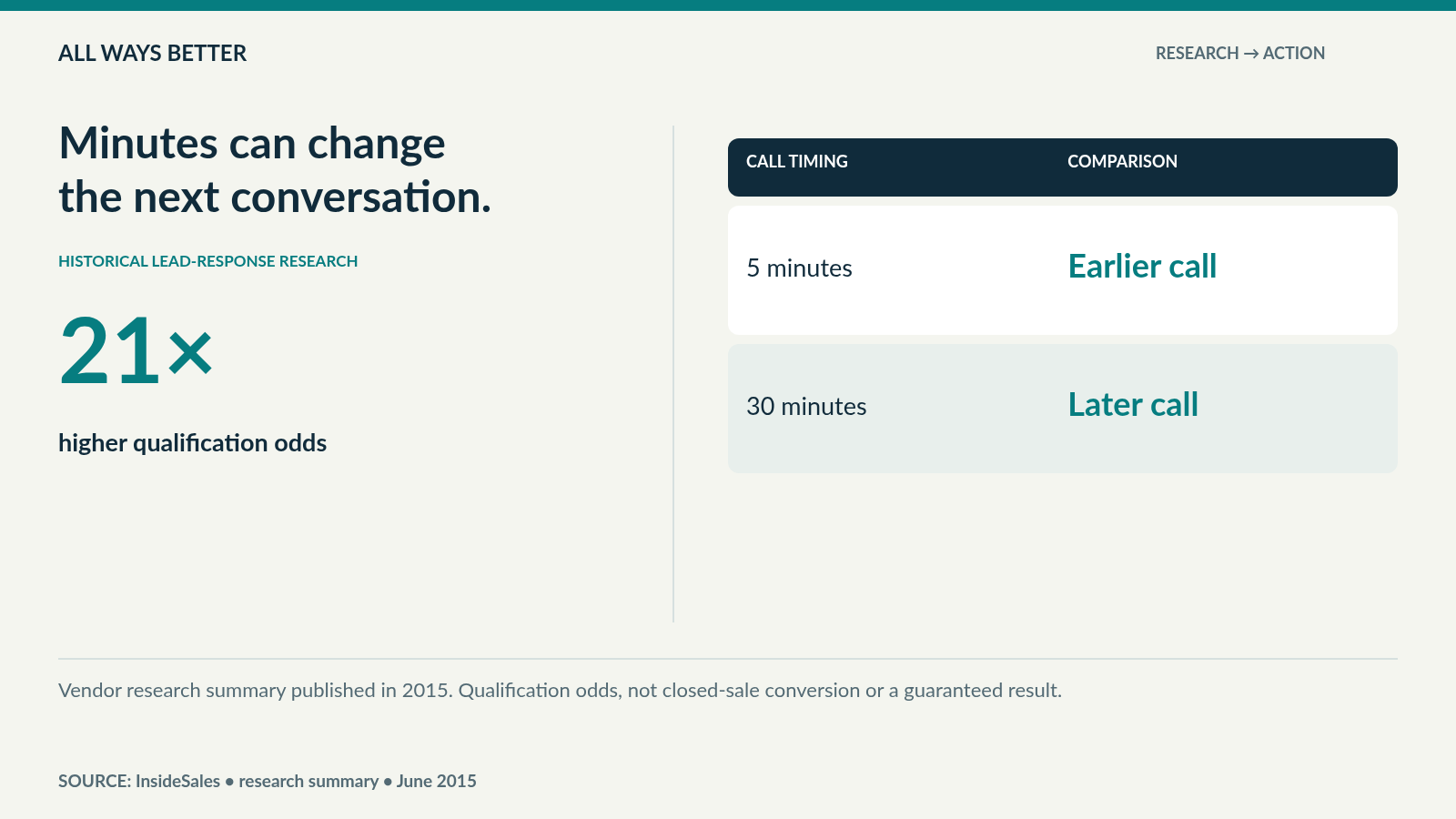
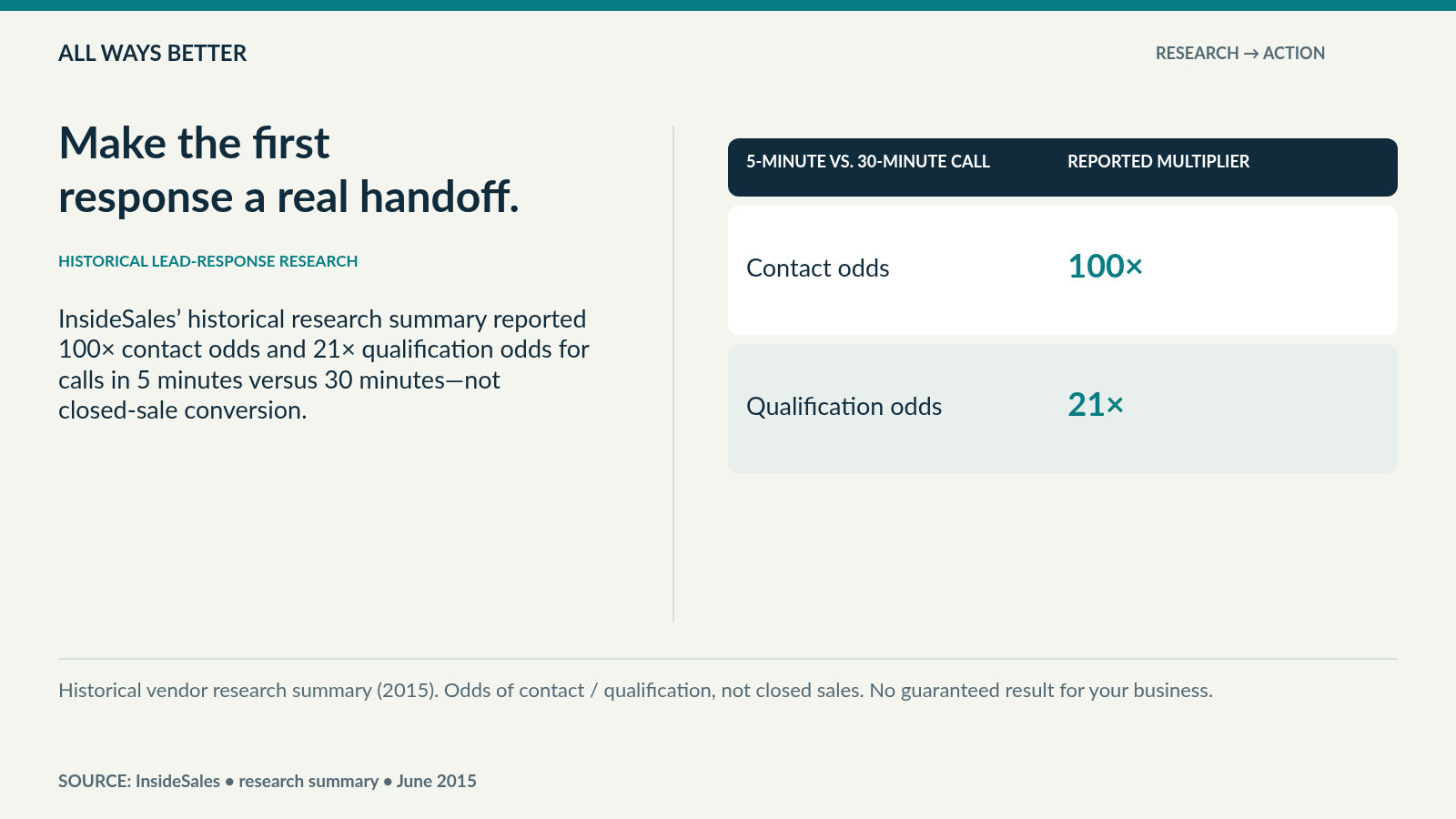
InsideSales published research linking faster calls with higher contact odds. The figures come from historical vendor research and should not be treated as a forecast for your business.
A useful local measure is how long a new enquiry waits before the customer receives a response that moves the conversation forward. Keep automated acknowledgements and those substantive responses separate in your reporting.
Test delivery and ownership
Start with the questions your team needs answered. A property-service request might need an address, the type of work, and a suitable callback number. Another business may need information about the customer's systems or an existing agreement. Ask for enough detail to arrange the next conversation without making the first form exhausting. Explain why a detail matters when the reason is not obvious to the customer.
Then inspect the route from that form to the person who can act. Confirm the request reaches the right place, keeps its source, and creates an assigned follow-up. Test a submission from a phone as well as a desktop. Include a failed delivery in the test: the website should not announce success merely because it attempted to send data. A customer needs a clear way to retry or contact the team directly.
Use conversations to improve the form
Agree how your staff handle requests that arrive outside normal working hours. An acknowledgement can explain when the team expects to respond, provided that expectation reflects the service you can deliver. Give the next working shift a visible list of requests needing attention. If urgent matters follow a different route, state that route clearly and avoid describing an ordinary website form as an emergency service.
Once the process works, review a small sample of conversations. Check whether customers had to repeat their details, whether the contact information was usable, and whether the next action was recorded. Ask the people handling the enquiries which fields helped them and which information they still had to chase. Those answers should guide the next form or workflow change. Record who checks delivery.
Try the form with incomplete information
Try the process from the customer's side. Send a test request with an incomplete address and check what happens next. The recipient should be able to ask for the missing detail without losing the original enquiry or making the person start again. Use that result to decide which fields belong on the first form and which can wait for a conversation.
Discuss your enquiry workflow
All Ways Better can help map your enquiry process and identify suitable automation or CRM implementation support. Bring examples with personal details removed, along with your current form and follow-up rules. We can discuss which handoffs need clearer ownership and where your systems need to share information. The provider doing any delivery work will confirm its scope, pricing, and schedule separately.
Sign up today to receive a free initial implementation consultation. Our team will follow up to arrange a call about the request-to-response path in your business. The offer covers that initial discussion, helping you decide what to scope next. It does not include a paid assessment, a software subscription, or an implementation project.