A green status message can describe only the part of a workflow that one application observed. The business may still be waiting for a saved enquiry, a published post or information that can actually be recovered. Verification starts by deciding which result matters and following an authorized example far enough to observe it.
Name the result before running the check
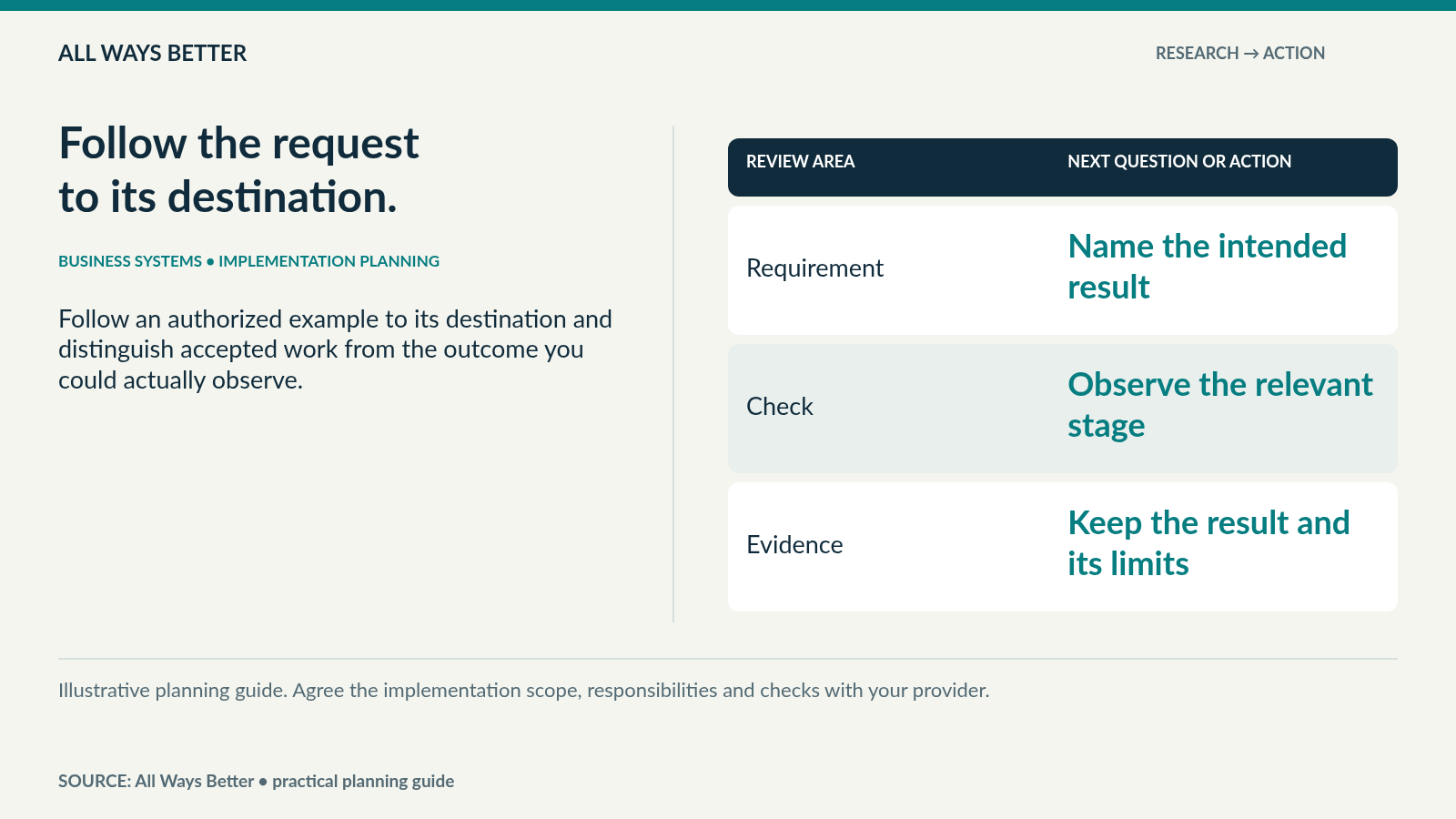
Choose a task with a recognizable destination. For a contact form, establish where the request should appear and who should receive the next action. For a publishing queue, identify the intended account, content and time. A clear requirement gives the reviewer something to compare with the result.
Record the intermediate stages separately. A request can be accepted, queued, processed and acknowledged by another service. Those events help explain what happened, but each supports a different conclusion. Ask the team responsible for the workflow which stage can demonstrate the result the business is relying on.
Follow an example to its destination
Use a test that is authorized and appropriate to the service. For an enquiry, use a clearly marked example with no real customer's private information. Confirm that it reaches the intended record with the original details and a named next action. Looking at the form or receiving a browser message cannot answer every question about the destination.
A published post needs its own check. Confirm the destination account and the public result where access permits. If a system offers only a provider acknowledgement, record that limit rather than describing an observation you could not make. Preserve the post reference so the team can investigate later without guessing which attempt is involved.
Include a case that cannot complete normally
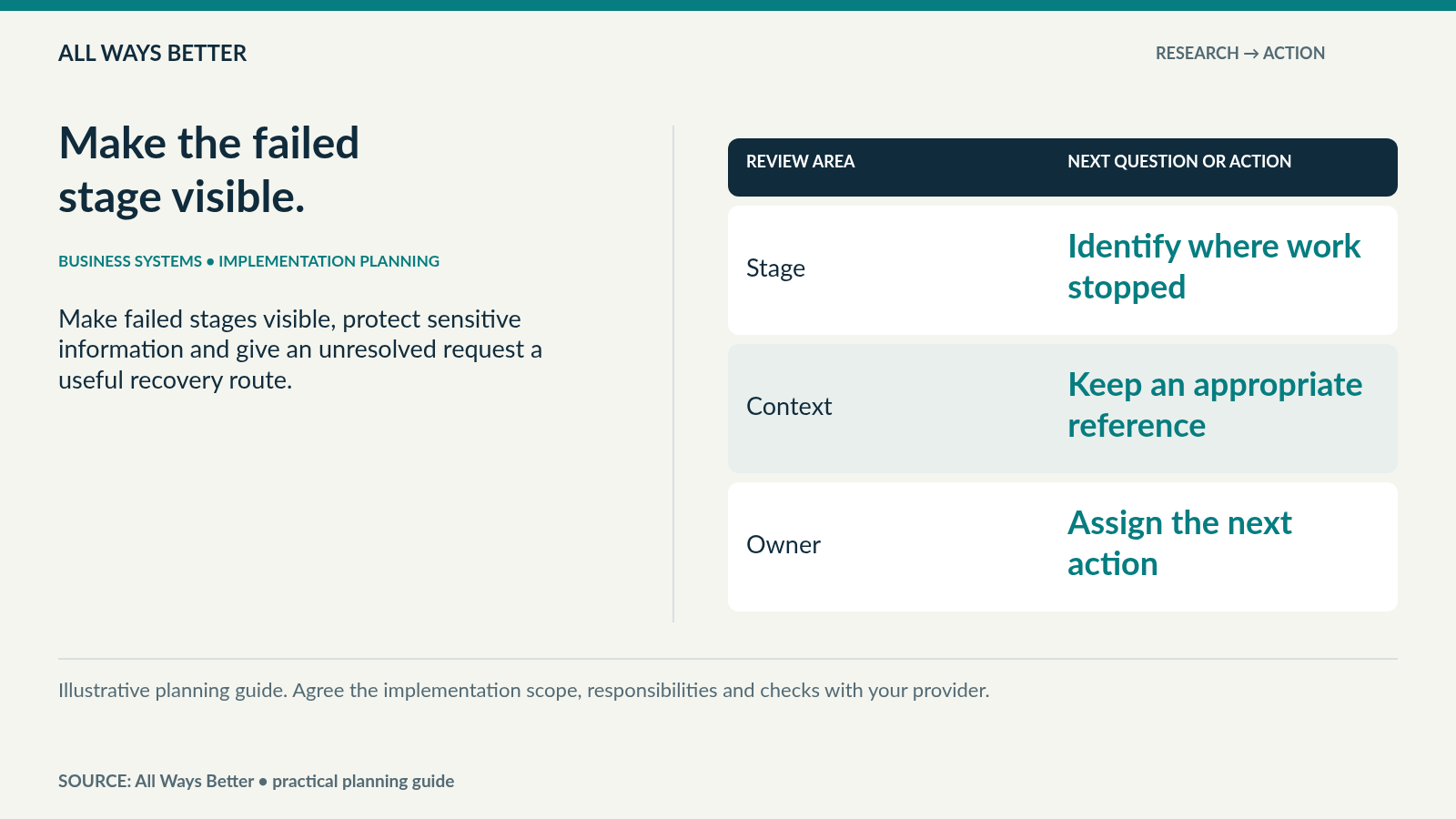
An unavailable destination or incomplete request can reveal how a process handles uncertainty. Staff should understand whether another attempt is appropriate and what information remains available. The customer needs a clear option to retry or contact the team, without a success message being used to cover an unconfirmed outcome.
Agree how duplicates will be avoided. A delayed acknowledgement may leave an application unsure whether an external action occurred. Ask the provider to explain the recovery approach and which cases require review before another action is issued. Repeating a request automatically can create a second problem if the first action actually completed.
Keep evidence that can answer a later question
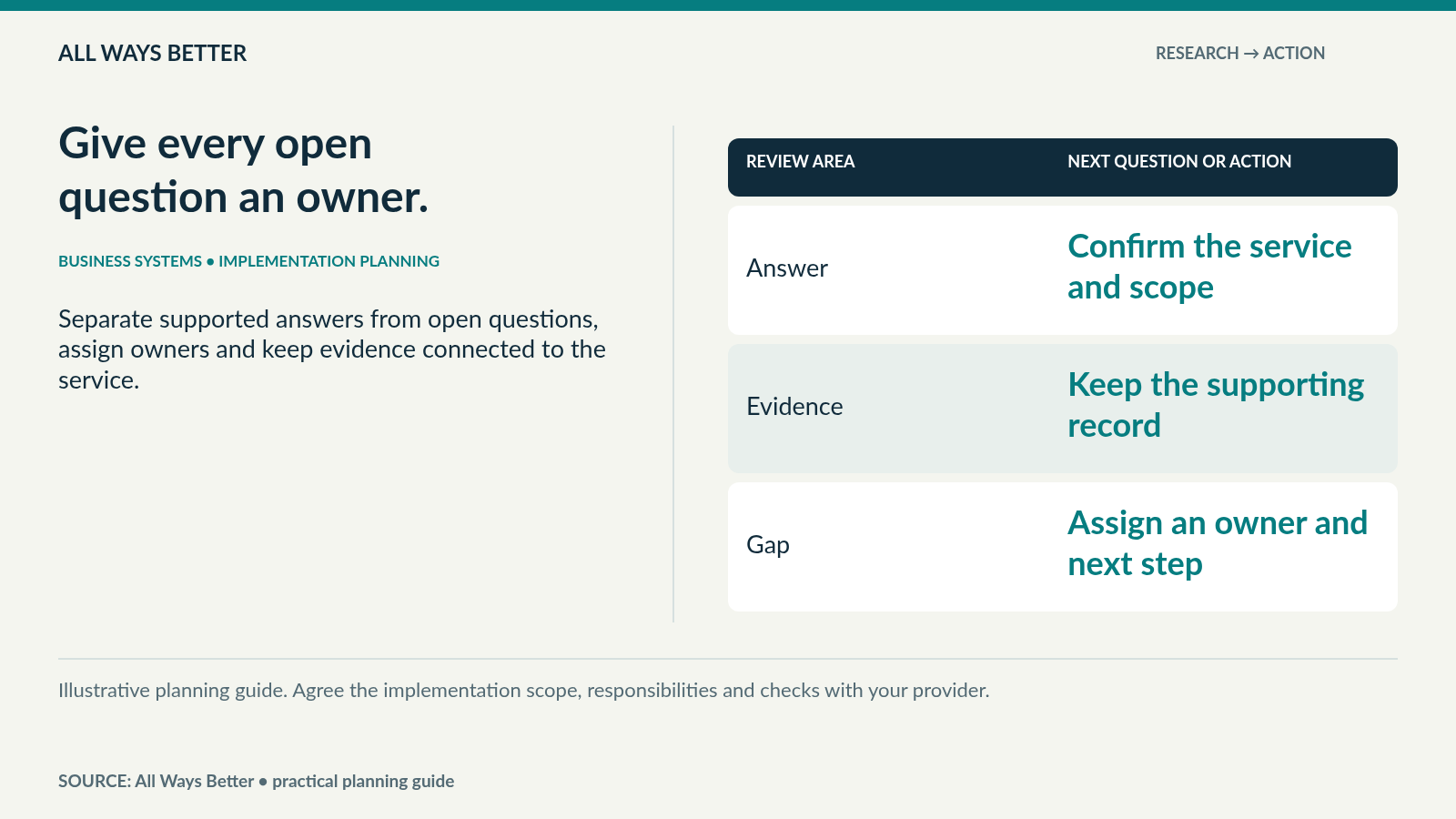
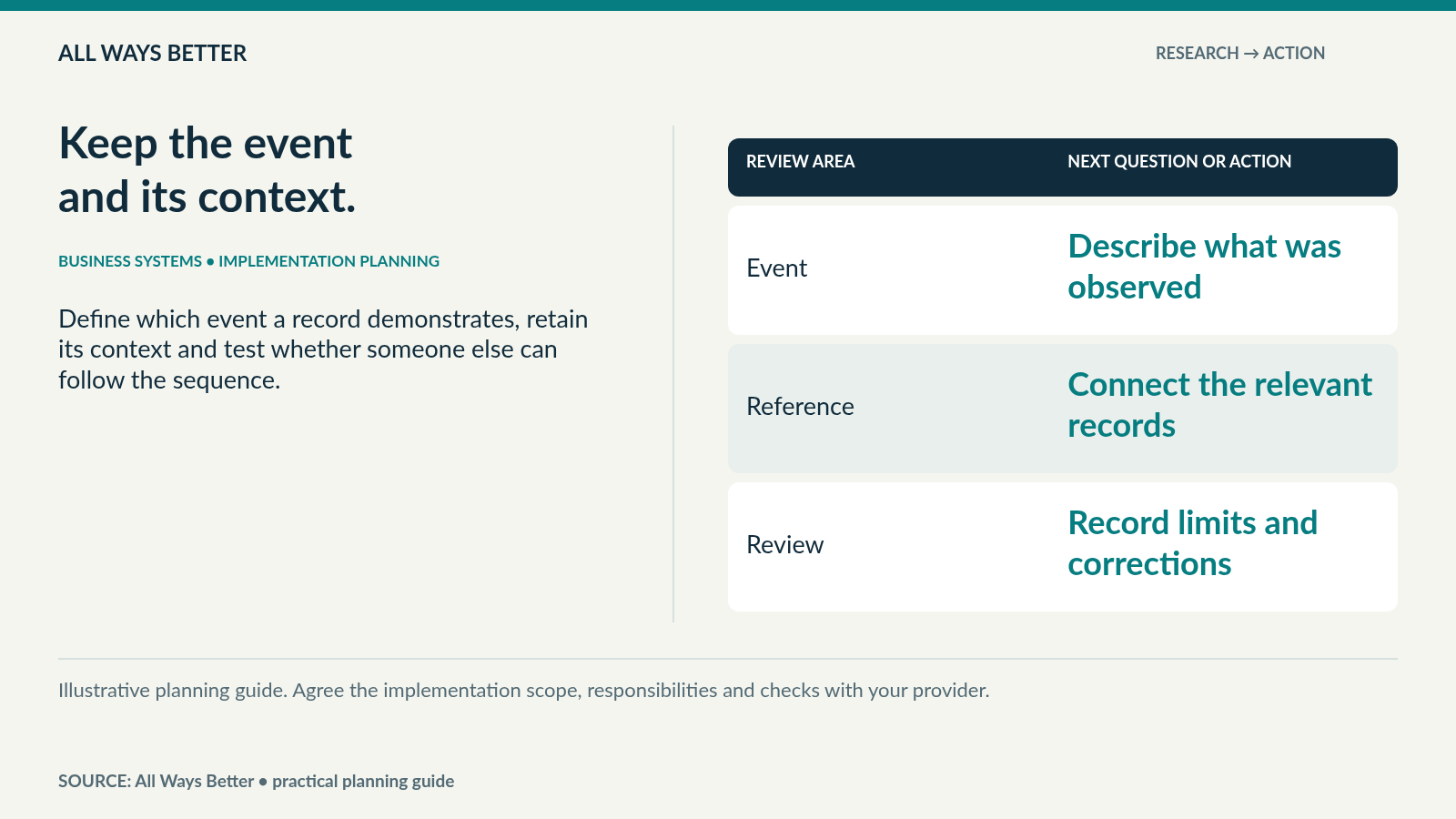
Record the requirement, test time, relevant references and observed result. Include remaining limitations and the person who reviewed them. Another employee should be able to understand what was checked without relying on the original tester's memory. Keep credentials and confidential payloads out of general test notes.
Recovery arrangements deserve an appropriately scoped check as well. Ask the technical provider what evidence demonstrates that agreed information can be restored for its intended users. A backup job and a restoration exercise answer different questions. Any exercise needs authorization, an appropriate method and protection for the services involved.
Turn an observation into the next action
If the result differs from the requirement, assign the gap to someone who can investigate it. After a repair, repeat the relevant check. Retain what was demonstrated and what still needs review so the same uncertainty does not return at the next handover.
All Ways Better can help map a workflow and frame the verification needed around it. Bring the result you expect, the systems involved and the point where your team loses visibility. We can discuss suitable implementation or specialist assessment support.
Request a free initial consultation through the article's contact offer. Our team will follow up to arrange a call. The initial discussion is free; technical testing, assessments and implementation are separately scoped and priced. A general description of the problem is enough to start.