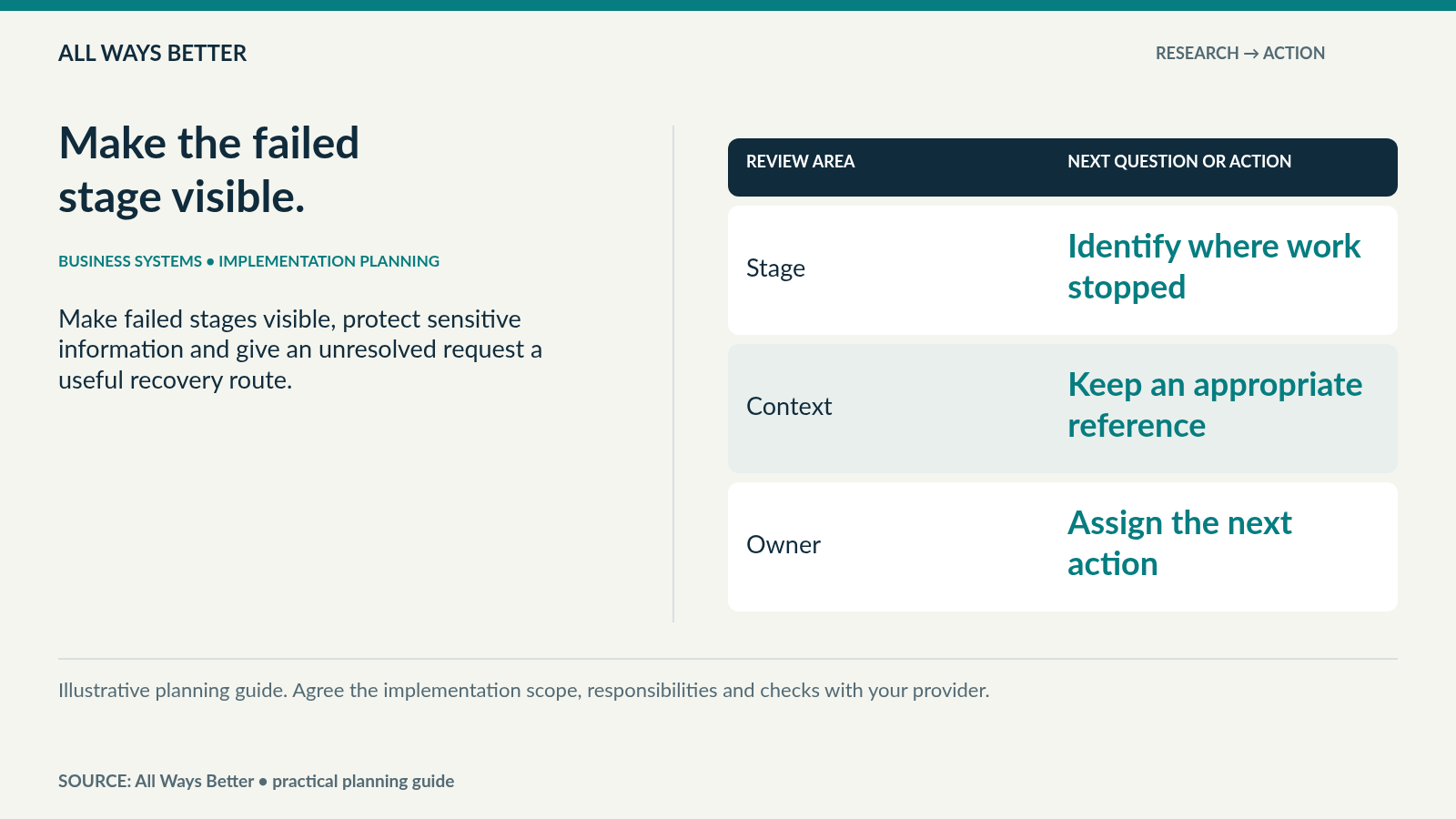
A customer submits a request and sees a success message. The office never receives it. Somewhere between the form, the connection and the customer record, a step failed without giving anyone a useful explanation. The first improvement is to make the failed stage visible to the person who can act on it.
Define what success means
Start with the result the business needs. For an enquiry, success might mean that the correct team has the request, contact details and an assigned next action. An application accepting a request is only part of that journey. Agree which system can confirm the required result before deciding what the customer should see.
Write down the intermediate stages too. A request may be received, checked, sent to another service and saved. Each stage should have a recognizable outcome. That gives staff a way to distinguish a rejected request from a connection problem or a failed final write. The explanation should identify the next step without asking a customer to understand the technical arrangement.
Record enough to investigate
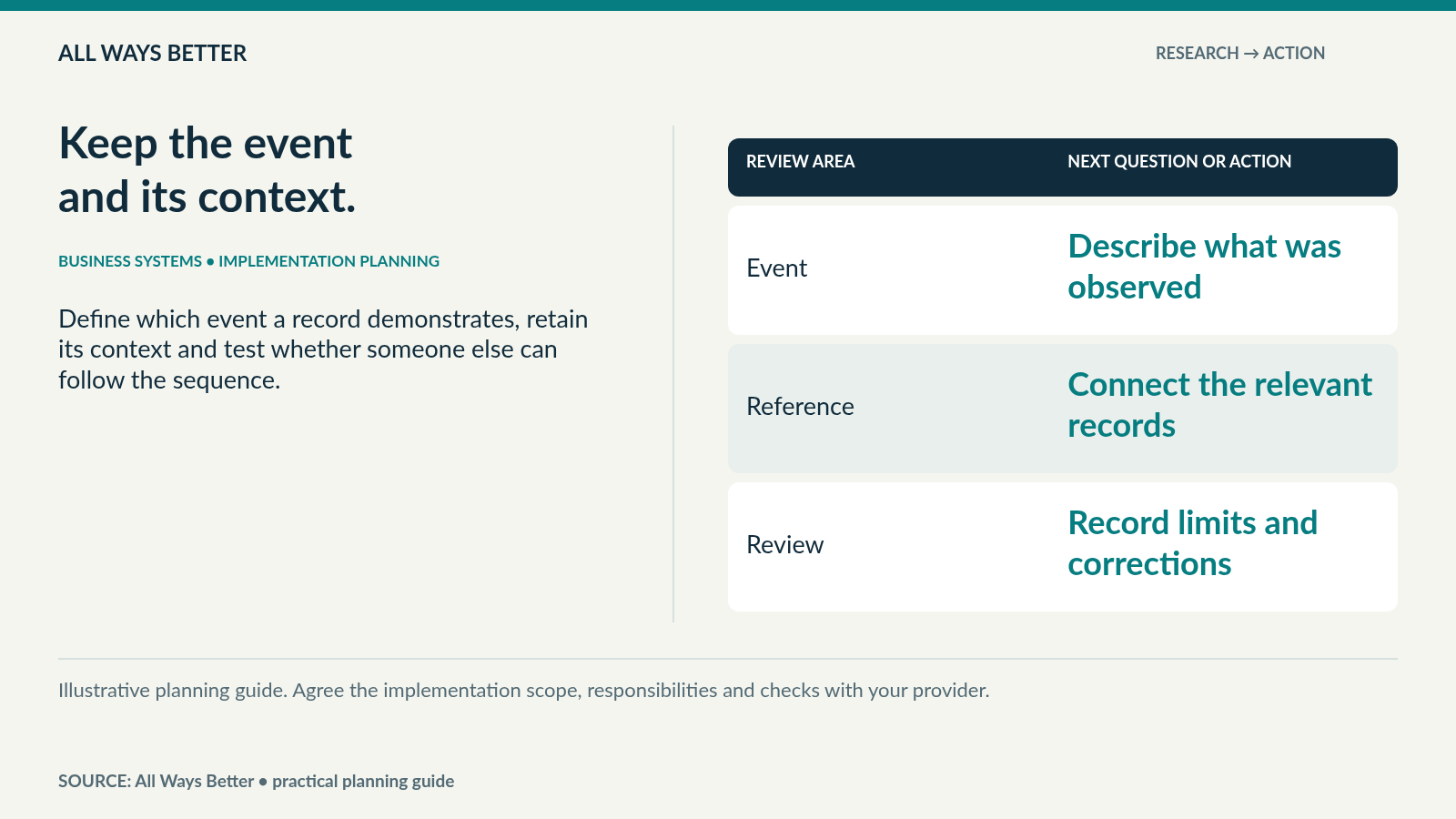
An operational record can identify when the attempt happened, which stage was reached and an appropriate reference for following it through. The responsible team should agree what information it needs to investigate a failure. Record the time zone as well as the time so people comparing records from different systems can understand the sequence.
Keep sensitive information out of diagnostic messages. Passwords, access tokens and entire customer submissions are poor substitutes for a useful stage identifier. Ask the technical provider to define how relevant records are protected and who may inspect them. A public error message should explain the customer's options; detailed diagnostic information belongs in an authorized support channel.
Exercise the paths that are usually quiet
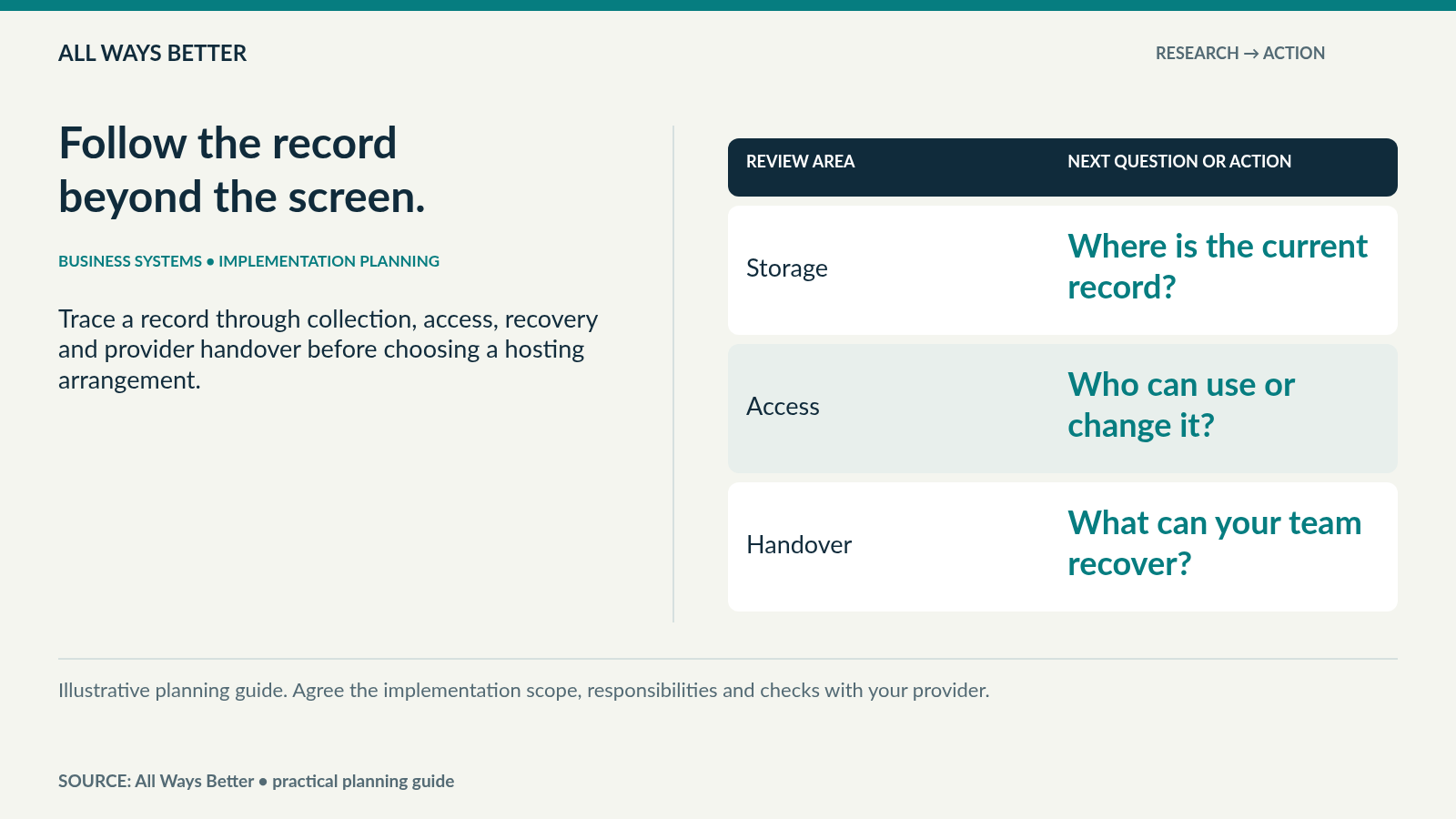
A connection can appear healthy simply because nobody has used it recently. Include occasional authorized checks of the complete workflow, including the permissions and destination account it needs. A permission requested by an application and a permission granted to its connection are separate things to verify. Staff need an owner for resolving that difference when it prevents work.
Try an expected exception, such as an incomplete test enquiry or an unavailable destination. Check that the system explains the outcome and leaves a sensible recovery route. It should retain information appropriately for an explicit retry, while avoiding repeated submissions that create duplicate work. The team should understand which situations require a person before another attempt.
Give failures an owner
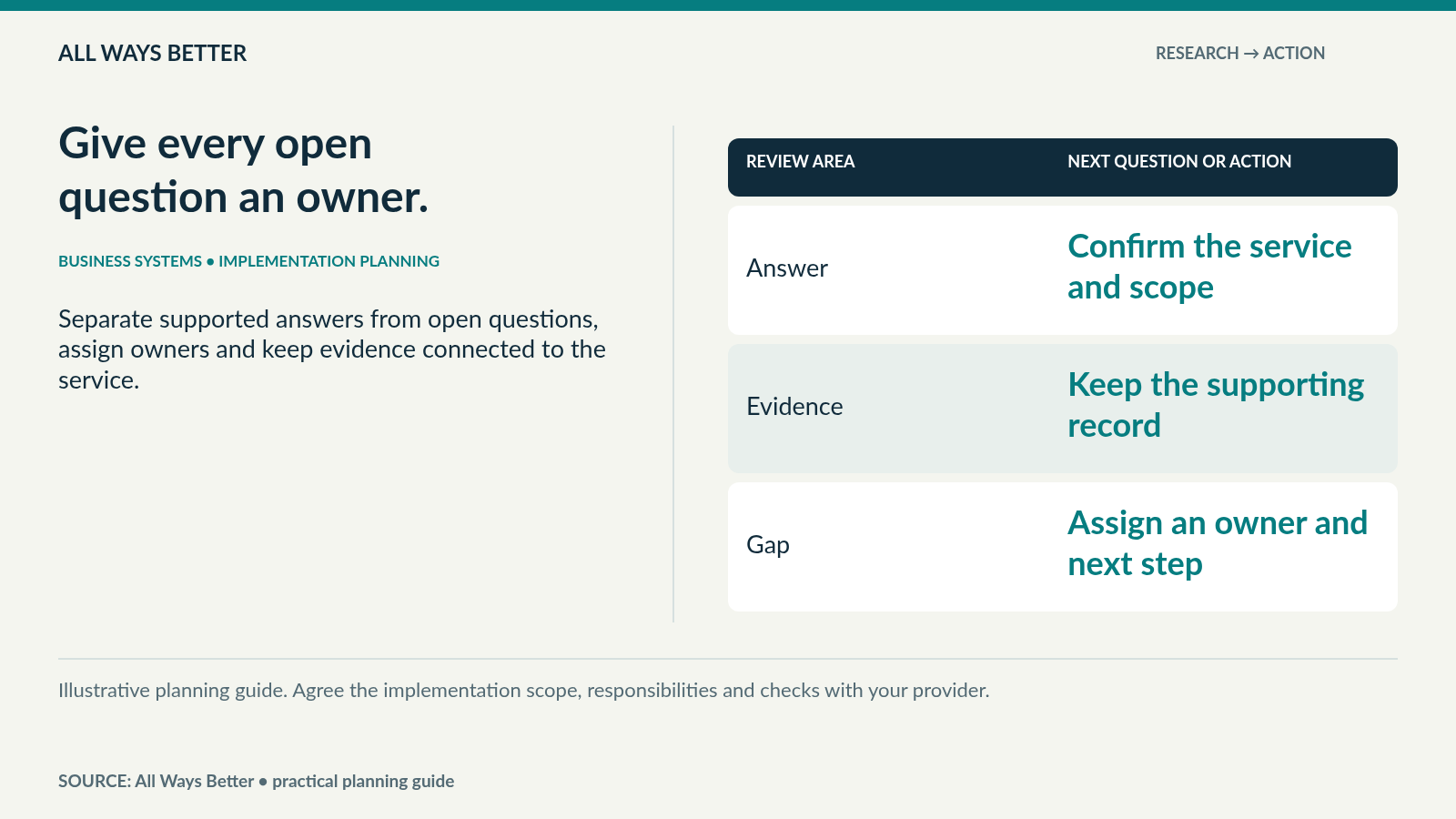
Someone must review the failed attempts and decide which need attention. Agree how that person will receive a concern, what a useful report includes and who can investigate further. A long list of errors is difficult to use if none has an assigned next action. Keep the report connected to the customer or business task affected.
After a repair, repeat the original check and confirm the result at the destination. Save the evidence needed for the next review. A corrected setting is useful progress, but the business still needs to know that the request can complete its intended path.
Discuss the workflow you need to trust
All Ways Better can help map the handoffs and frame suitable implementation work. Bring a general description of a process that sometimes appears successful without producing the expected result. We can discuss what should be acknowledged, where failures should be reported and which provider needs to participate.
Sign up for a free initial consultation using the article's contact offer. Our team will follow up to arrange a call. The initial conversation is free; technical investigations, assessments and implementation are scoped and priced separately. Use anonymized examples and keep credentials or confidential records out of the signup form.