A customer asks what happened to a request. One application says it was completed, a message suggests it was still waiting, and the employee involved remembers a different sequence. Useful records should help the business reconstruct the event, including the limits of what each system actually observed.
Decide which question the record must answer
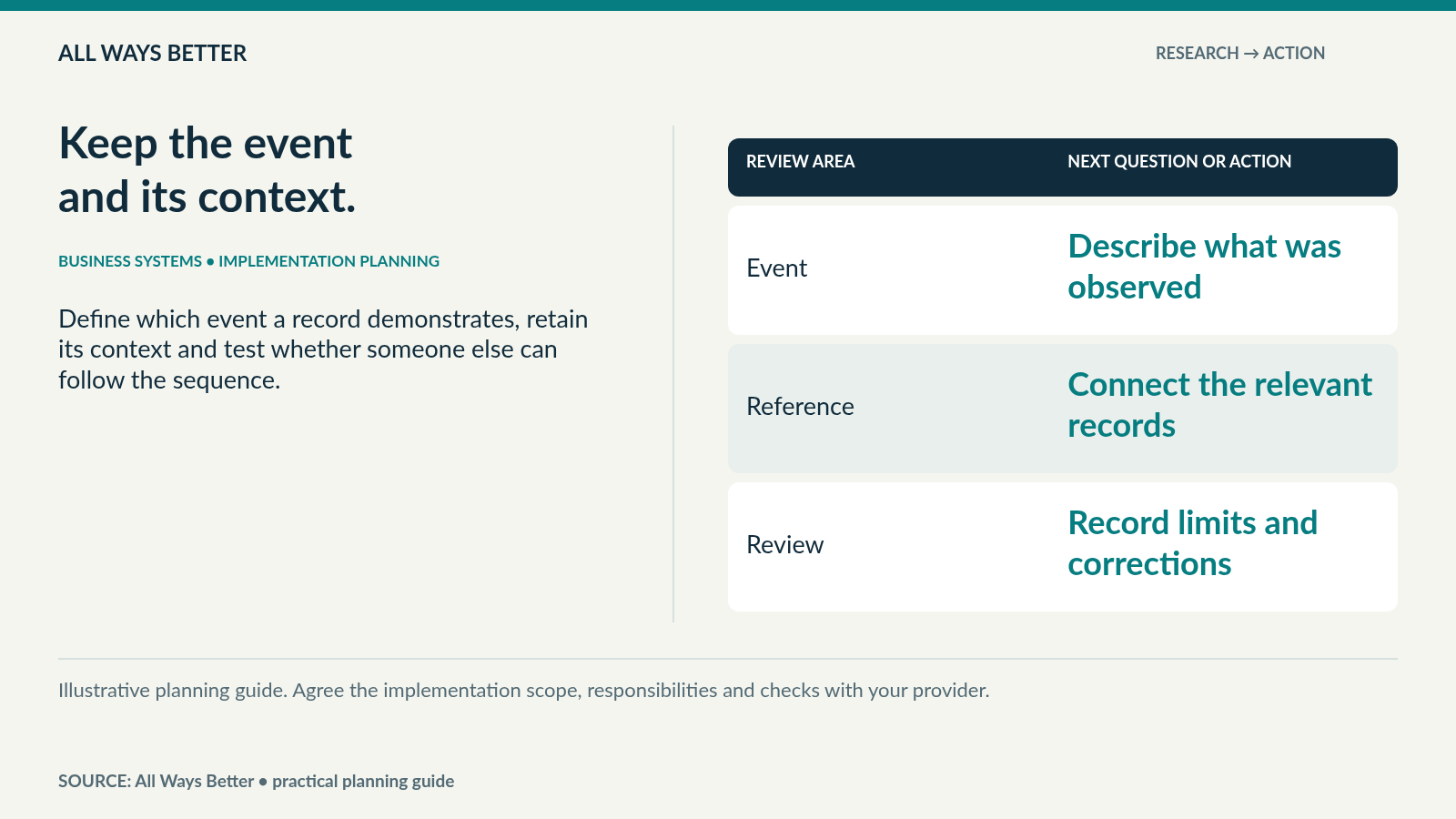
Choose a recurring business event, such as receiving an enquiry or handing a task to another person. Define what you need to establish afterward. Arrival, assignment and completion are different events. A record that confirms the first should not silently become a claim about the last.
Identify which system observes each step. A website can record that it accepted a submission while a destination system records whether the request was saved. Keeping the relevant references connected makes the sequence easier to follow. Agree how timestamps and time zones will be interpreted when records from several services are reviewed together.
Keep the context needed for a later review
A useful event record can identify the action, the responsible account or service and the outcome reported at that point. Ask the team who would investigate a discrepancy what additional context is necessary. It is often more helpful to retain an appropriate reference than to copy an entire customer conversation into every system involved.
Record corrections visibly. If someone resolves an incorrect contact detail or changes the next action, the team should understand which information was updated and which earlier event remains part of the history. An unexplained replacement can make a current screen look tidy while leaving a later reviewer unable to explain the sequence.
Understand what integrity checks demonstrate
Technical mechanisms can help detect certain changes to records. Their value depends on their design, operation and the information available to the reviewer. Ask the provider to explain what a proposed mechanism can establish, what it cannot establish and who controls the relevant systems or verification material.
An unchanged record does not by itself demonstrate that the original entry was accurate or that the underlying action was appropriate. Keep those questions separate when reviewing a product claim or commissioning work. If a customer, regulator or professional reviewer requires particular evidence, agree the requirements with the qualified people responsible before assuming a technical feature satisfies them.
Test a business question from beginning to end
Use an authorized example with no confidential customer content. Submit a request, follow its assignment and record the agreed completion step. Ask someone who did not perform the test to reconstruct the sequence using the approved records. Note where they need an explanation that the records do not contain.
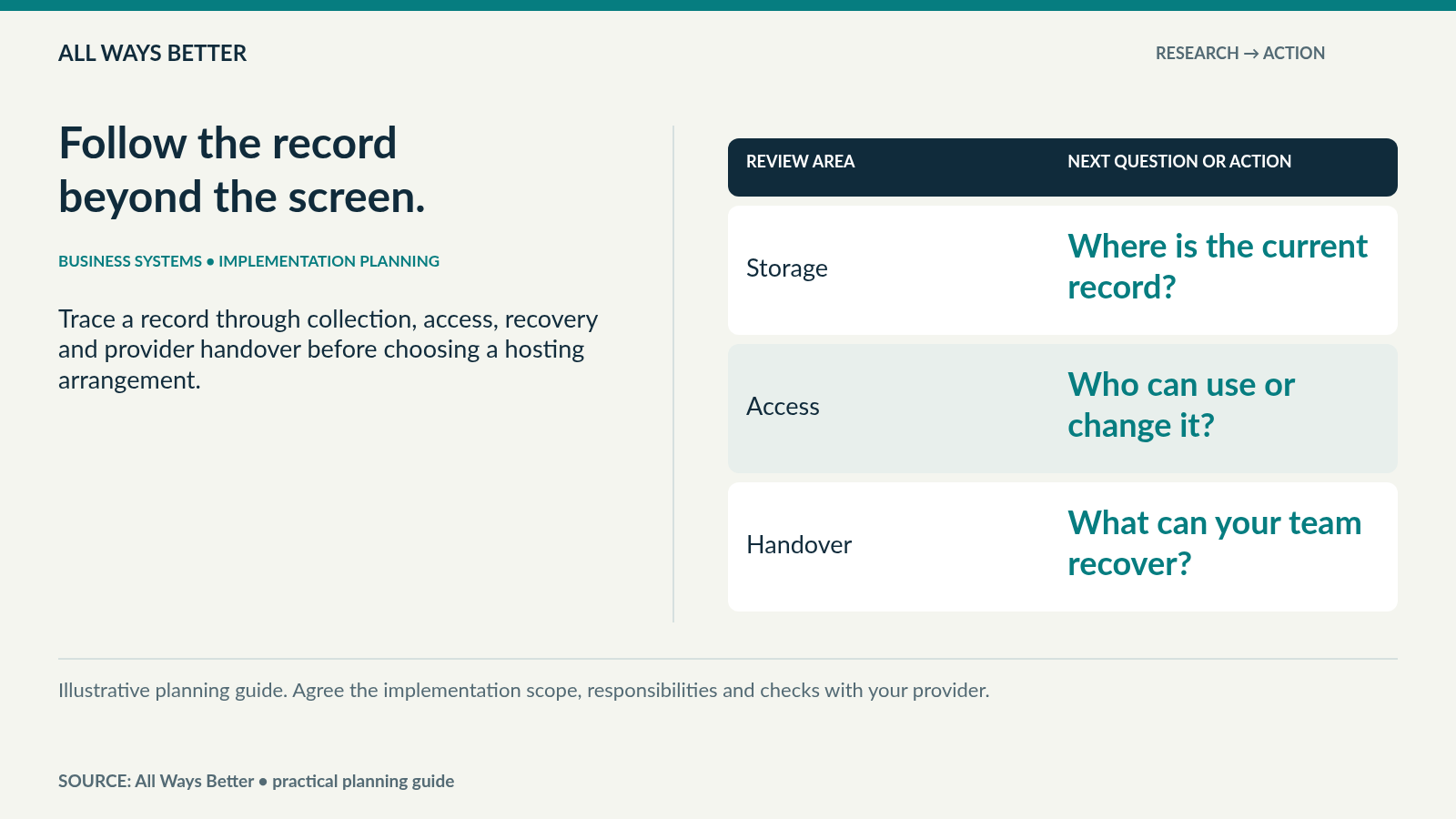
Include access and retention in that discussion. The people who need to investigate should have an appropriate way to find the information, while unrelated staff should not receive unnecessary access. Establish who maintains the record and who approves any retention or disposal arrangement. More copied data can create another problem without resolving the original question.
Bring an event you need to explain
All Ways Better can help map the evidence needed around a workflow and discuss suitable implementation support. Bring a general example of a question your current records cannot answer clearly. We can help identify the systems involved and the specialist input needed to scope further work.
Request a free initial consultation through the article's contact offer. Our team will follow up to arrange a time. The initial discussion is free; assessments and implementation are separately scoped and priced. It does not provide a legal opinion, establish that a particular record will be accepted by another party or promise a compliance outcome.