A buyer wants to proceed, but its security questionnaire is waiting for answers. Sales knows the deadline. Engineering knows the systems. Neither team has a complete, current account of which answers are supported and which questions still need work. Treating the questionnaire as one large task makes that gap difficult to manage.
Separate known answers from open questions
Read the request with the people responsible for the proposed service. Establish what the buyer is asking about and which systems fall within that scope. An answer about the office network may not explain how a particular customer application is operated. Keep the service and the relevant environment visible beside the questions.
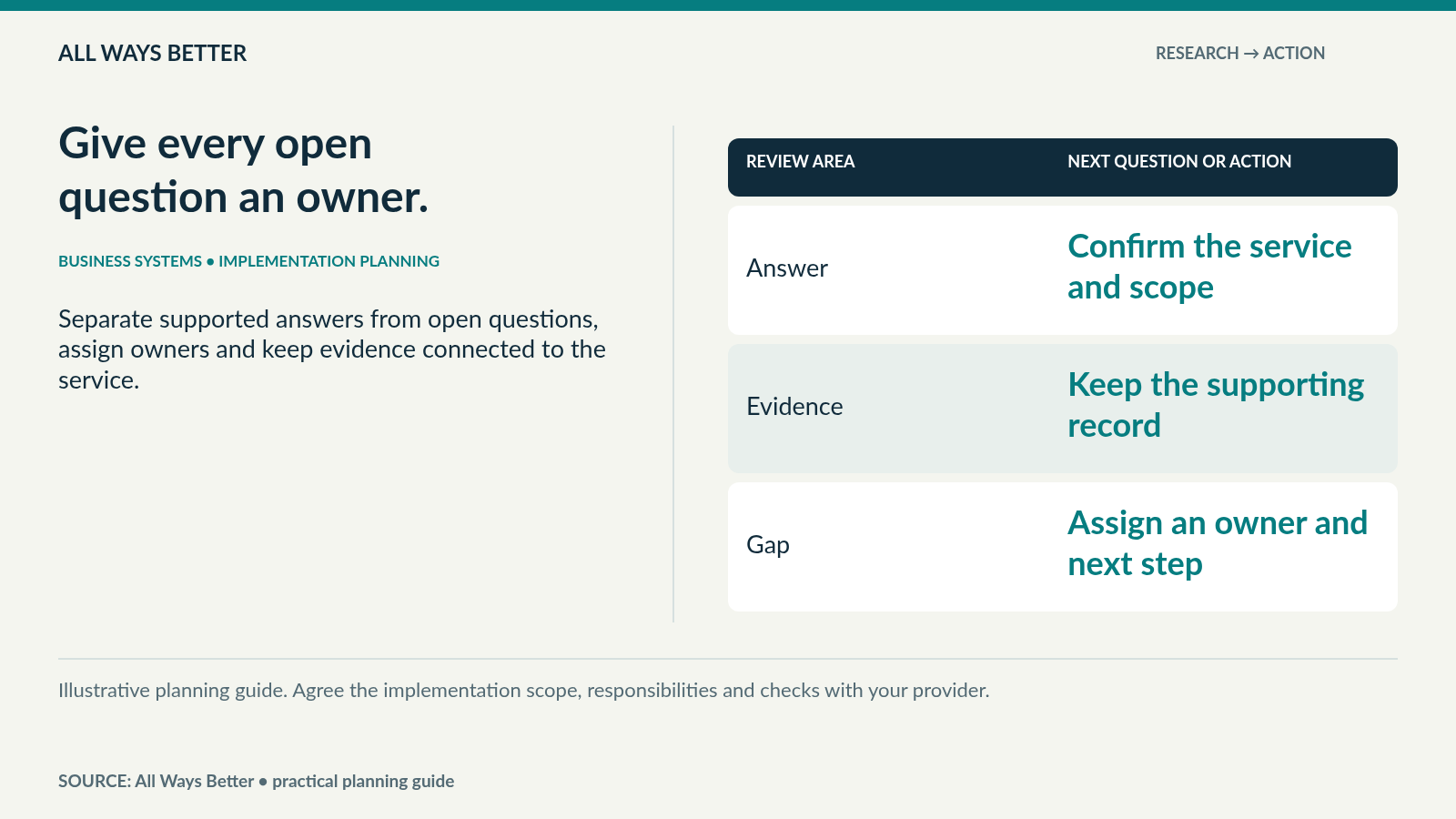
For each answer, identify its owner, the supporting information and the date it was checked. Reuse approved material when it still describes the service accurately. A previous answer can save time, but its age and context matter. Someone should confirm that a change in provider, configuration or working practice has not made it misleading.
Turn uncertainty into assigned work
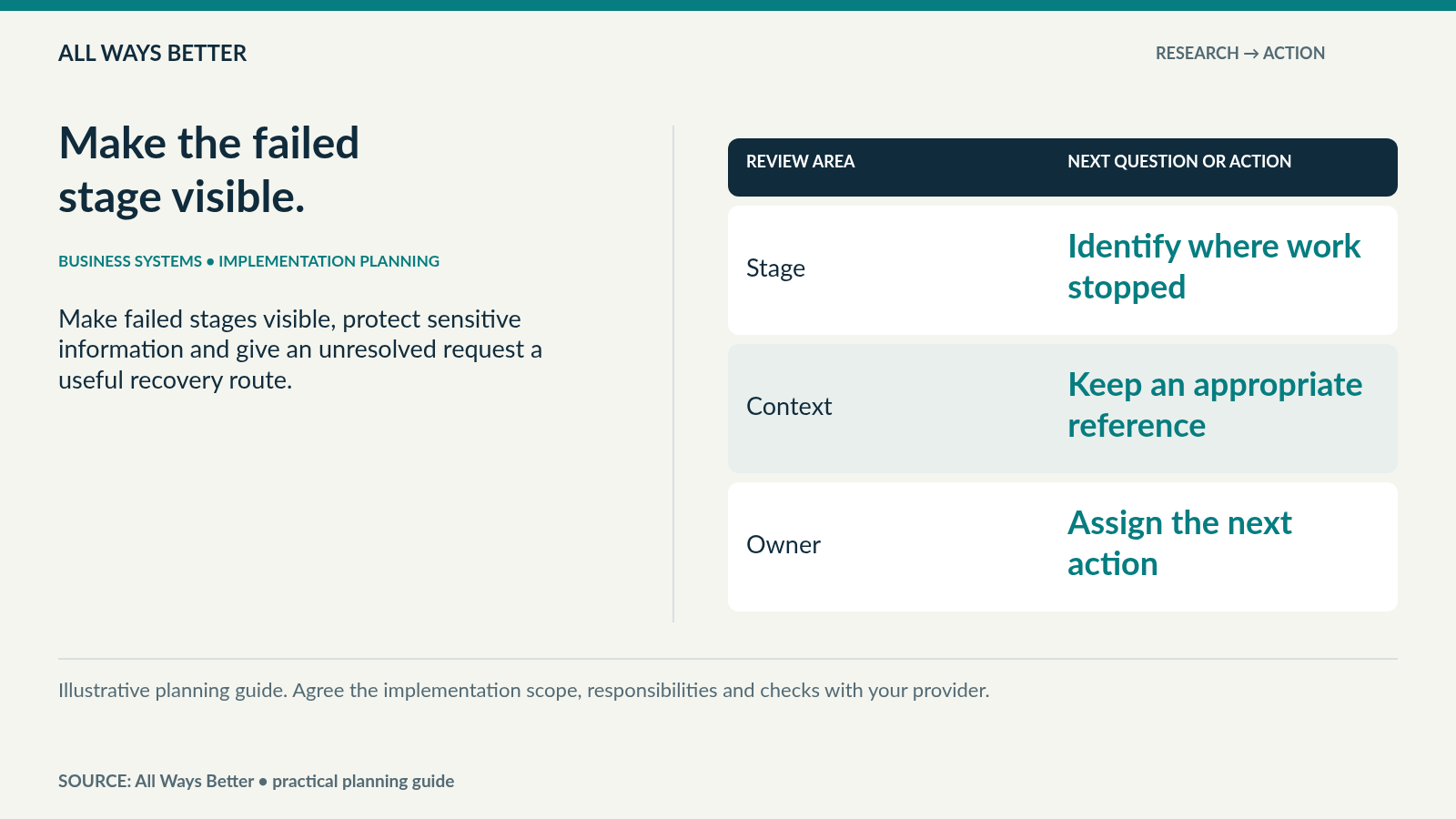
An unanswered question needs a next action. The owner might need to consult a supplier, locate an existing record or ask a qualified specialist to review the arrangement. Record which action is needed and who can settle it. That lets sales explain progress without turning an incomplete technical answer into an assurance.
Keep a distinction between a control that exists and work the business intends to undertake. A planned improvement should be described as planned. Agree who can approve the final response and how limitations will be explained. The person coordinating the deadline should not have to invent wording for a technical condition they cannot verify.
Make the evidence practical to review
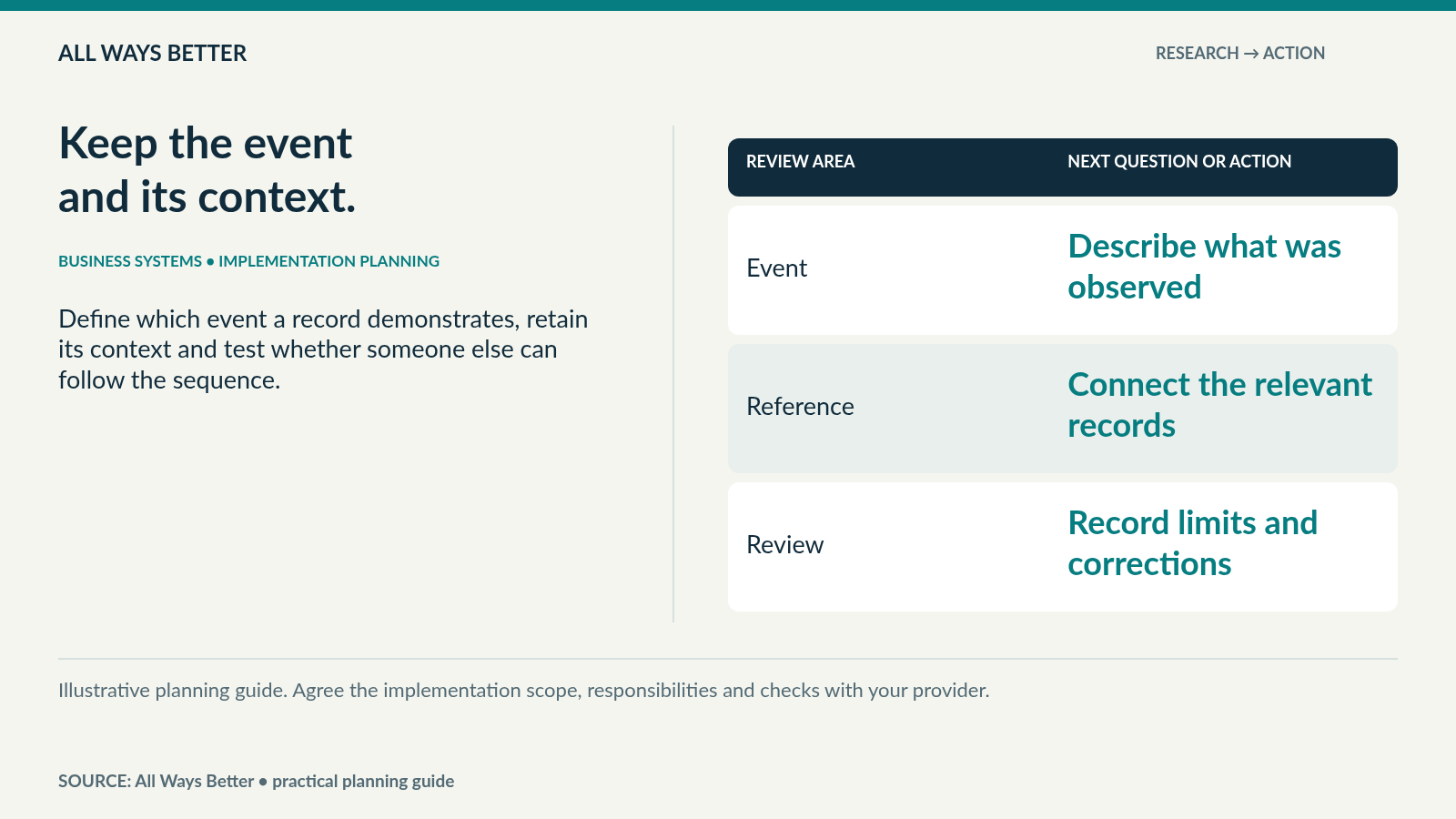
Organize supporting records so the authorized reviewer can connect them to the answer. A procedure, provider agreement and test result demonstrate different things. Explain which part of the response each record supports. Collecting a large folder without that connection may leave the buyer with the same unanswered question.
Use an agreed channel for sharing sensitive information. Establish what the buyer needs, who is authorized to release it and whether a summary would be suitable. Public contact forms and general email introductions are poor places for confidential customer documents or detailed system configurations. The first scoping conversation can use a general description of the gap.
Plan the next questionnaire before it arrives
After submitting the response, keep the approved answers and unresolved actions under a named owner. Review the material when the service changes. A useful answer library records why an answer was accepted and when it needs checking again, rather than preserving a collection of unexplained yes-or-no responses.
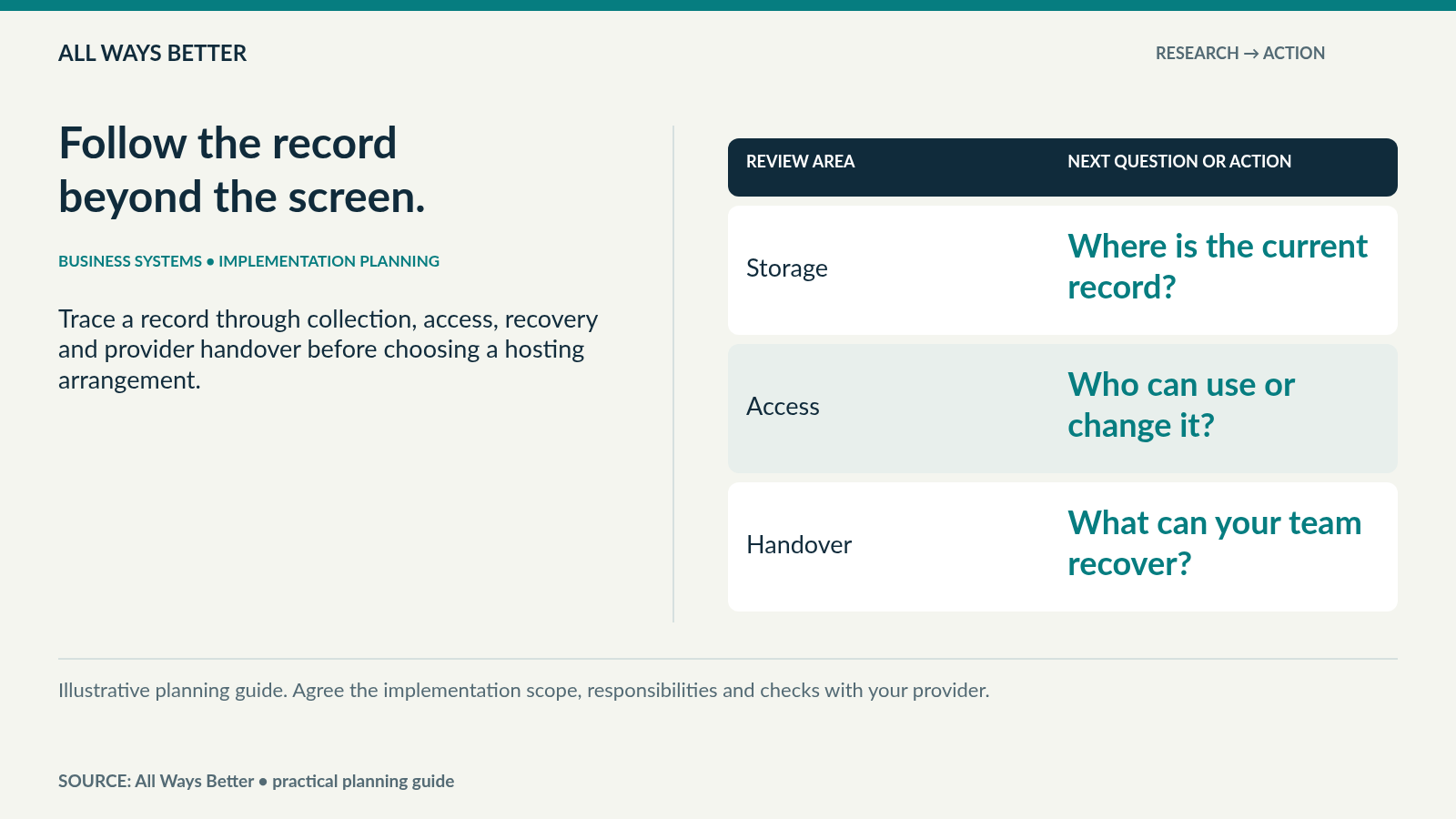
Consider a buyer asking who can administer its hosted service. The answer may require the application owner, infrastructure provider and the person approving support access. Assign those dependencies early. If the review finds an improvement is needed, agree a separate scope and completion check instead of quietly treating the questionnaire itself as evidence that the work is done.
Discuss the question holding up the conversation
All Ways Better can help clarify the requirements and coordinate suitable specialist support, including an assessment conversation with Third Level IT where appropriate. Bring the service involved and a general description of the questions your team cannot yet answer. The provider confirms its own scope, responsibilities and commercial terms.
Use the article's contact offer to request a free initial consultation. Our team will follow up to arrange a call. The first conversation is free; technical assessments, delivery work and professional opinions are separate services. This discussion does not promise certification or replace the buyer's review requirements.