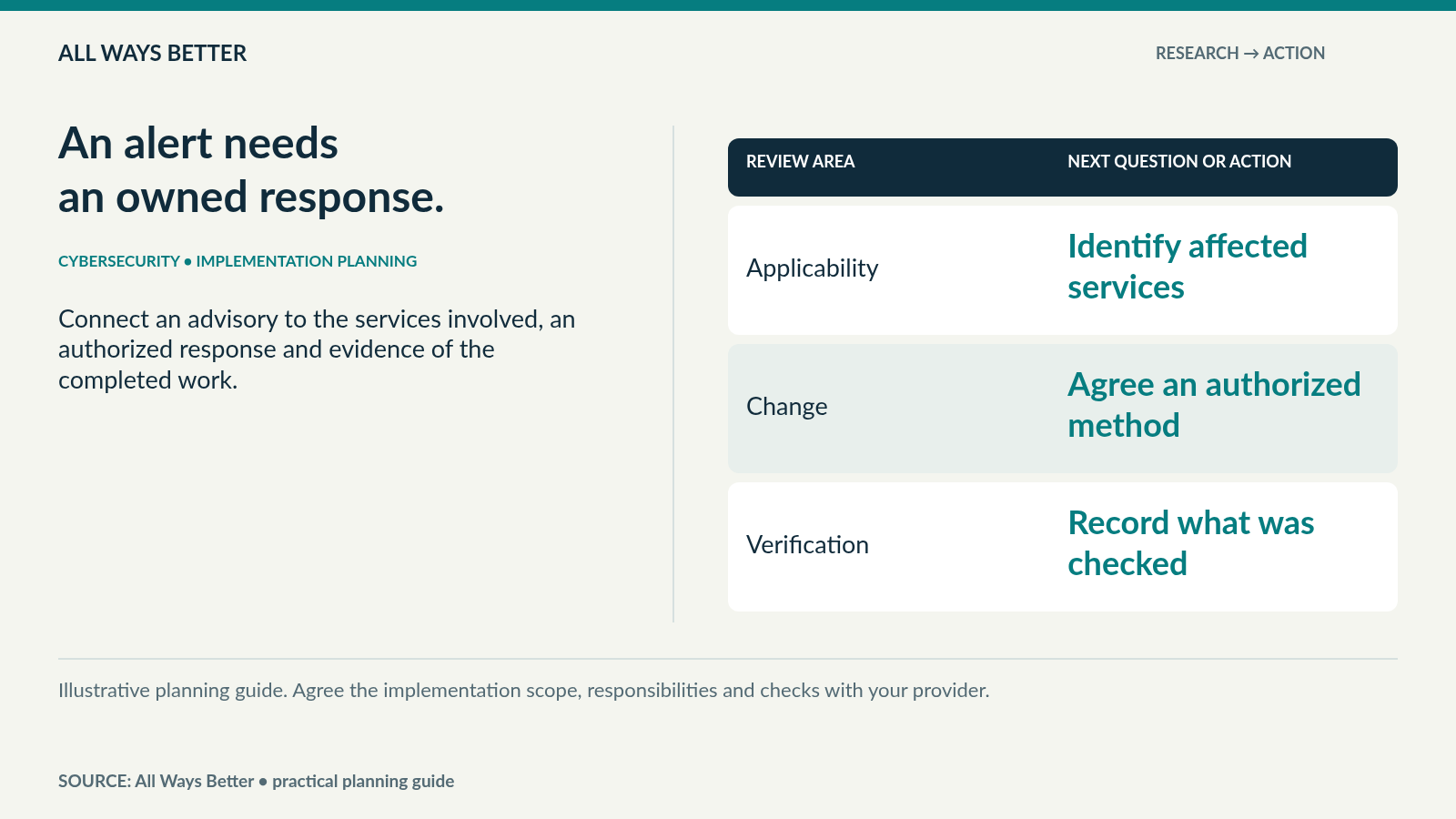
A website can remain available while an important security advisory requires attention underneath it. The business needs a route from the notice to the systems concerned, an authorized response and evidence that the agreed work was completed. An alert arriving in someone's inbox does not establish who will carry it through.
Use the original advisory and its dates
Two October 2026 announcements illustrate the coordination problem. Canonical published guidance about the eMudhra certificate-authority compromise and associated trust-store updates. Separately, the PHP Foundation announced releases addressing two critical vulnerabilities, with impact depending on the affected environment and conditions.
Those are distinct issues with their own technical guidance. Their dates matter when discussing the original social posts, and later vendor updates may change the appropriate response. Use the current primary advisory with the responsible provider rather than treating an older headline as a complete instruction for every system.
Identify the systems behind the business service
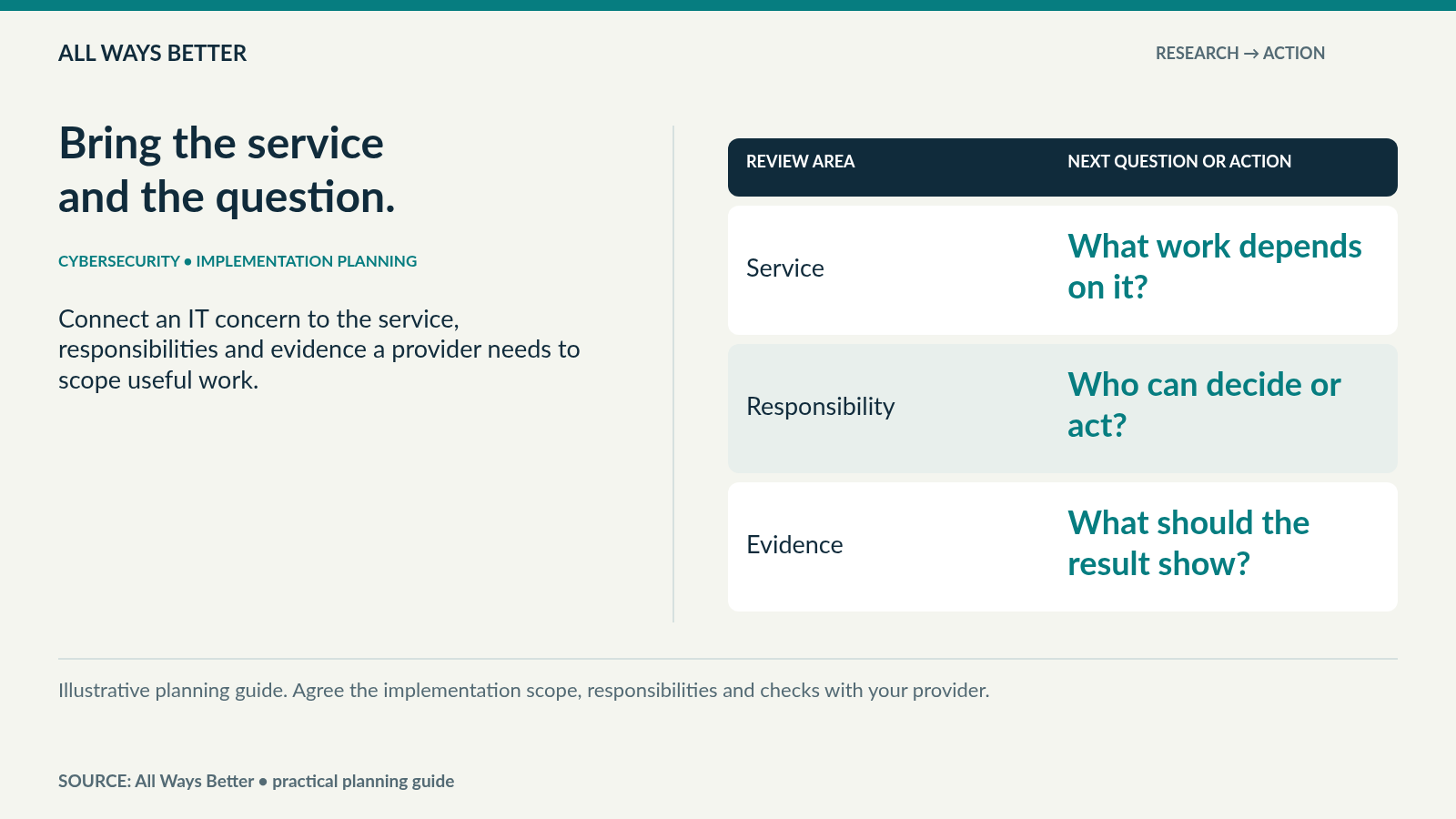
Ask the technical team which applications, operating environments and external services need review. A visible website can depend on components maintained by several providers. The business should know who owns the affected service and who has the authority and access to assess it.
Keep the review connected to work customers or employees need to complete. Logins, contact forms and integrations may depend on different parts of the environment. Identifying those dependencies helps the responsible team plan the work and establish which business checks will be useful afterward.
Agree the response before changing the service
The qualified provider should confirm applicability, the relevant vendor guidance and a suitable method for the environment. Agree who authorizes changes, which suppliers must participate and how the team will handle availability requirements. A general article cannot establish the condition of a particular server or replace that assessment.
Include recovery and escalation arrangements appropriate to the work. The provider should explain what will happen if an expected service behaves differently during the change. Staff need an agreed reporting route and a person coordinating decisions, especially where responsibility crosses a hosting, application or infrastructure boundary.
Check the result at the right level
A useful completion record explains the service reviewed, the work performed and the evidence supporting the result. Ask the provider to identify any remaining limitation. A completed task in a ticketing system should remain connected to the technical and business requirements that prompted it.
Use authorized examples to check the functions people rely on. A page loading successfully may leave other questions about an enquiry form, account access or an integration. The business owner and provider should agree which checks are appropriate, who performs them and where the outcome will be recorded.
Keep the follow-up visible
Some questions may need additional review or a separate project. Give those items an owner and a decision date. Preserve the advisory reference and the scope of the completed work so another employee can understand what was addressed. Avoid turning a limited check into an assurance about every system the business operates.
All Ways Better can help frame the requirements and coordinate a suitable IT or security service conversation, including an introduction to Third Level IT where appropriate. Bring a general description of the service, the advisory and the responsibility you need to clarify. The specialist provider confirms its own work and commercial terms.
Sign up for a free initial consultation through the article's contact offer. Our team will follow up to arrange a call. The initial discussion is free. Technical assessments, incident response, remediation and implementation require separate scope and pricing; this signup form is not an emergency response channel.