A small business may call the same provider about an unavailable printer, an unexpected login and a website that has stopped accepting enquiries. Those problems need different work, even when they involve the same systems. A useful first conversation establishes what is affected, who depends on it and which question the business needs answered.
Begin with a service people use
Choose a process that matters during an ordinary working day. For a professional service firm, that could be receiving a new client request. For a credit union, it might be helping a member use an approved service. Ask the staff involved which applications, accounts and suppliers must be available to complete the task.
Record the concern in operational language. Describe the missing result or the uncertainty you want examined. An intermittent application failure, unclear administrator access and an untested recovery expectation are separate issues. A provider can scope work more clearly when the request identifies the decision behind the general wish to review IT.
Establish what you already have
Prepare a current list of the systems supporting the process and the people responsible for them. Include outside services and supplier access. The business owner and technical provider may each know a different part of the arrangement. Resolve missing ownership information before treating an application list as a complete picture.
Ask which maintenance and security responsibilities are already covered by an agreement. Someone may be applying routine updates without being responsible for investigating a particular concern. Another supplier may manage part of the environment that your main provider cannot change. Put those boundaries in the scoping discussion so important work is assigned deliberately.
Separate the questions a proposal must answer
An assessment should explain what will be examined, the information needed and the result you will receive. Ask how findings will be described and how the team will discuss priority. A broad promise to improve security gives you less to review than a defined question about an identified service or access arrangement.
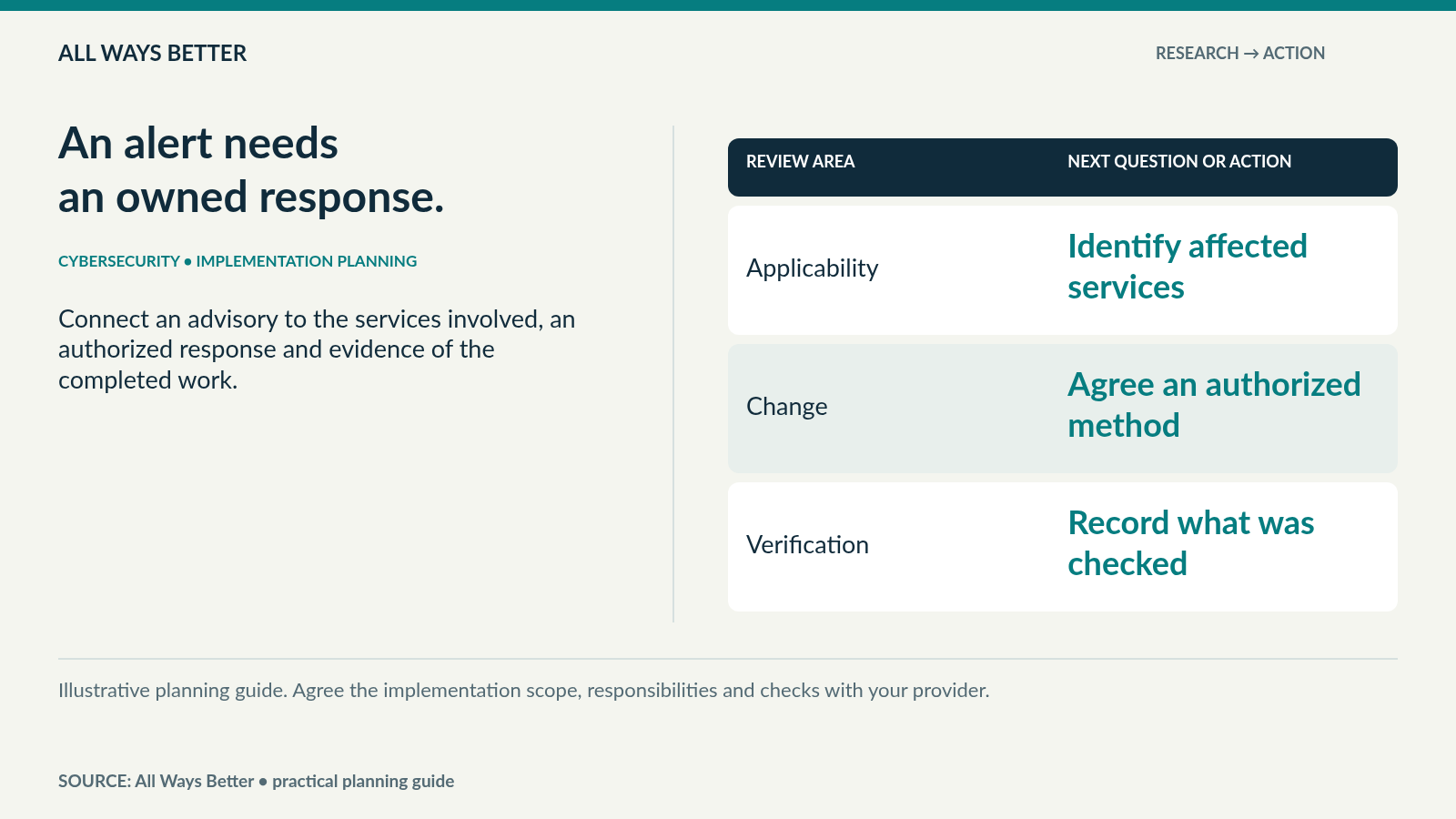
Delivery work needs its own boundaries. Establish who will authorize changes, how availability requirements will be respected and what evidence will demonstrate completion. Include the time your staff must contribute. A proposal can depend on interviews, supplier responses or approved test windows that are easy to miss when comparing prices alone.
Check that the result can be used
Consider a provider finding that an important account has no agreed recovery owner. The useful outcome is a decision about responsibility and a way to check the approved arrangement. Buying another tool may leave the original question unanswered. Ask the provider to connect each recommendation to the concern it addresses.
Keep unresolved limitations beside the completed work. If an assessment covers one application, do not read the result as an assurance about every system in the organization. Give any follow-up a named owner and a review date. The business should be able to explain what was examined and what remains open.
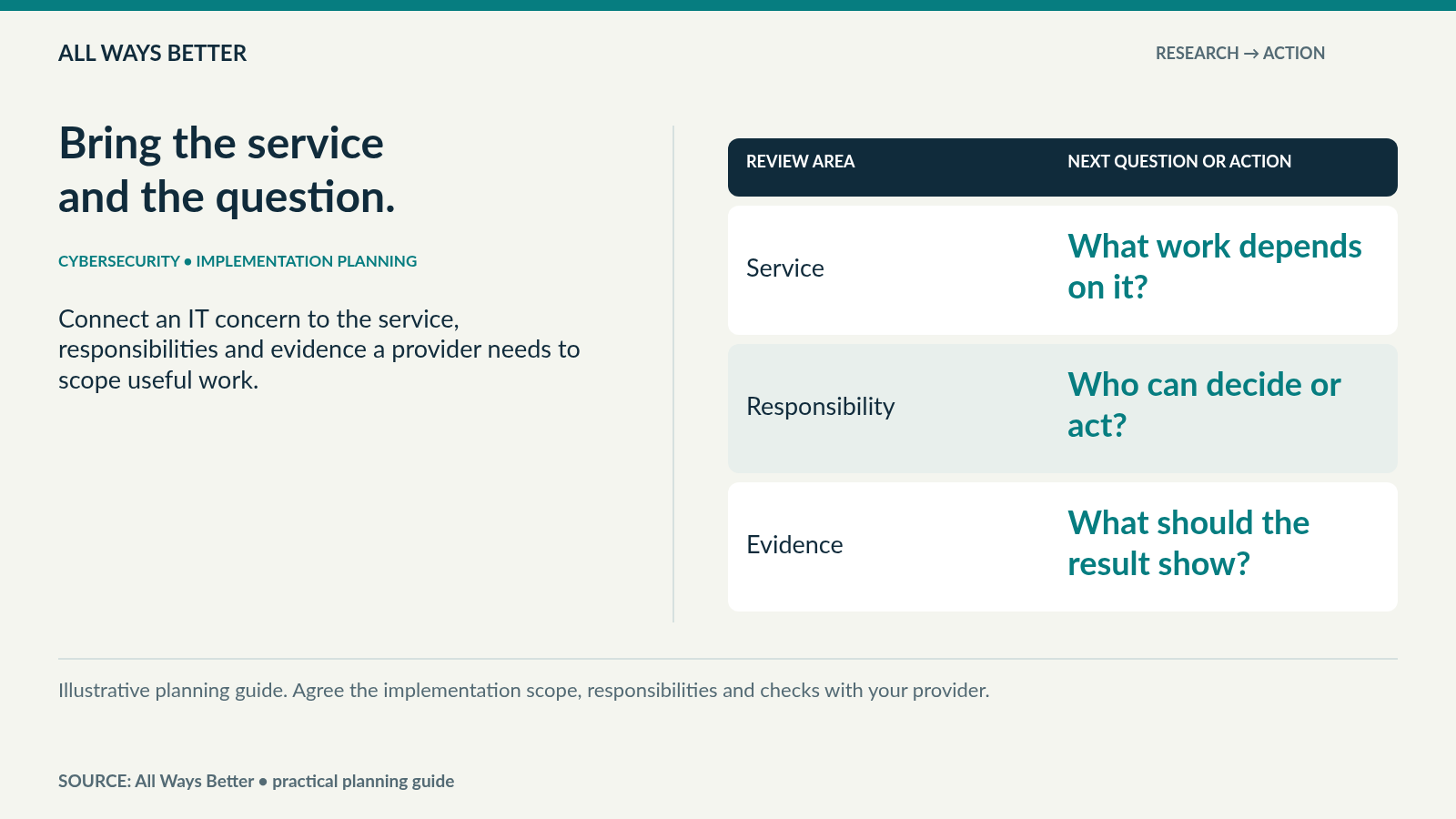
Bring the process and the question
All Ways Better can help clarify your requirements and coordinate a suitable service conversation, including an introduction to Third Level IT where appropriate. Bring the process you want to review, the systems involved and the concern your team cannot yet resolve. The provider agrees its own assessment or implementation scope, responsibilities, fees and timing.
Sign up for a free initial consultation through the article's contact offer. Our team will follow up to arrange a call. This first conversation helps frame the next step; it does not include a security assessment, an audit opinion or delivery work. Further services are agreed separately before they begin.