A suspicious message often reaches someone who is trying to finish ordinary work. It might concern a shared document, an overdue invoice, or a request that appears to come from a colleague. A useful phishing response starts with giving that person a simple way to report the concern and get a clear answer about the next step.
Give staff a route for reporting uncertainty
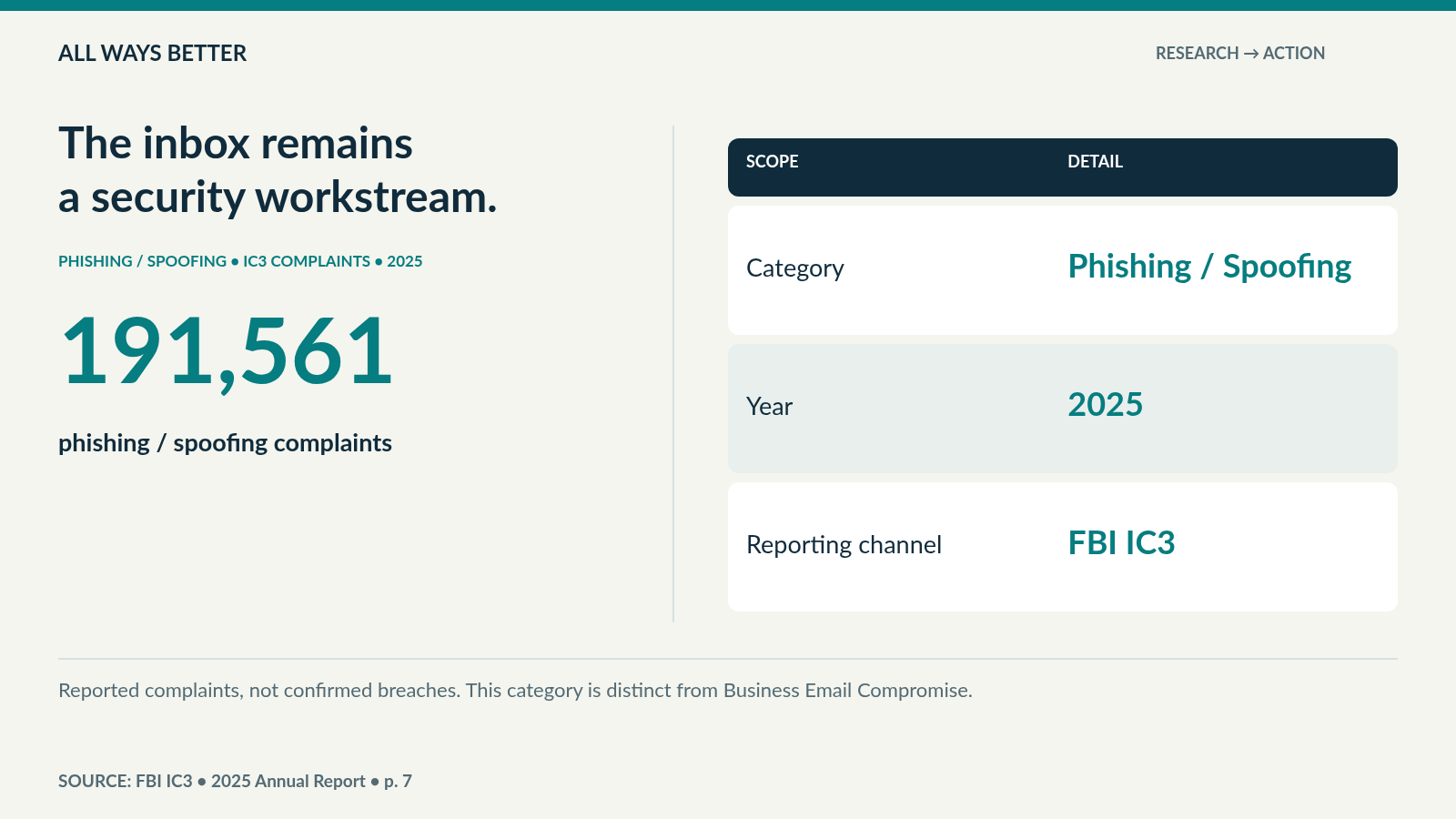
The FBI recorded 191,561 phishing and spoofing complaints in 2025. A complaint is not the same as a confirmed breach, and a national count cannot tell a business which message will arrive next. The practical question is whether staff know what to do when something looks wrong. That procedure should be easy to find without requiring employees to diagnose an attack themselves.
Choose a reporting route and explain what belongs in it. Staff should know where to send a concern, what information helps, and who will respond. Agree an alternative if the usual mailbox or messaging tool is unavailable. Keep the guidance short enough to use during the working day. An employee should be able to report a possible mistake as readily as a suspicious message they avoided opening.
Verify sensitive requests independently
Make sensitive requests easier to verify independently. Changes to payment details, account recovery, or access permissions deserve a process appropriate to the decision. Use contact information already held in a trusted record rather than details supplied by the questionable request. Define who can approve the change and how the result is recorded. A familiar name in the sender field should not replace the agreed verification step.
Ask your technical provider to review the accounts involved. Discuss suitable multifactor authentication, administrator access, and the arrangements for removing accounts when staff or suppliers leave. Include recovery methods and responsibility for monitoring unusual activity. The proposed work should fit your applications and working requirements, with testing and communication planned before changes affect the team.
Check how the response works in practice
Review the process using an authorized discussion or exercise that respects staff and customer information. Check whether reports reach the right person, whether the response is understandable, and whether the team can find the relevant contacts. Record gaps as assigned actions. The exercise should help improve the process rather than reward employees for hiding uncertainty or discourage them from reporting an error. Check that a new employee can find the reporting instructions without asking the person who originally wrote them.
Tell the reporting employee what happens next
Include a simple acknowledgement in the reporting procedure. An employee who forwards a concern should know it reached the responsible team and what to do while waiting for a response. Agree that instruction with the technical provider, including how staff should raise an urgent business question through the established route. Leaving the employee without an answer can leave the underlying work unresolved.
Discuss reporting and verification
All Ways Better can help clarify the handoffs between staff procedures and the systems supporting them. Bring an anonymized example and describe how your team currently responds. We can discuss the requirements for training, workflow changes, or an appropriate assessment introduction. The provider doing any delivery work confirms the scope, responsibilities, fees, and schedule separately with you.
Sign up today to receive a free initial implementation consultation. Our team will follow up to arrange a call about making suspicious-message reporting and verification easier to use. The offer covers the initial discussion. It does not include incident investigation, account recovery, a security assessment, or implementation services, which require a separately agreed scope of work.