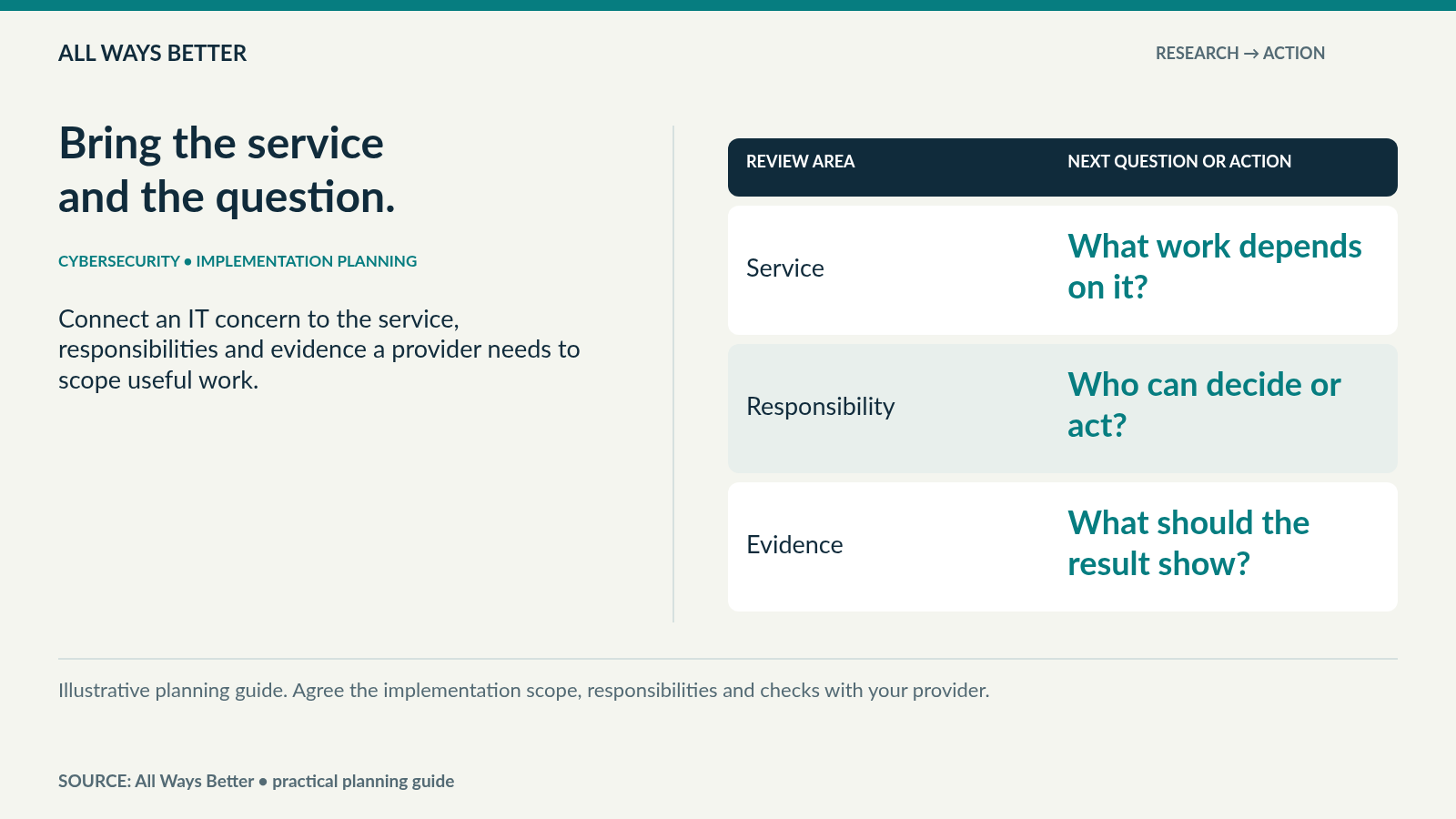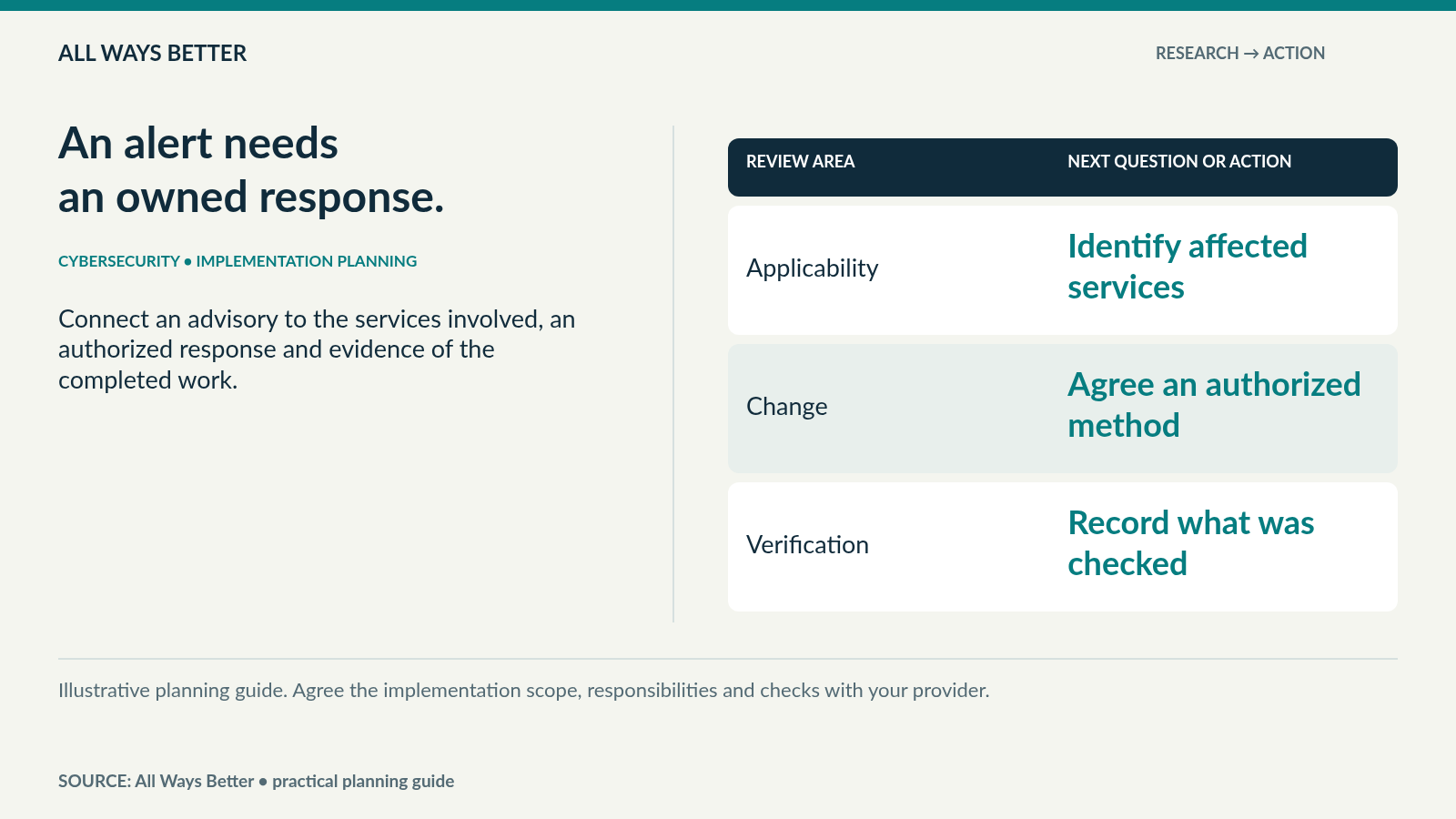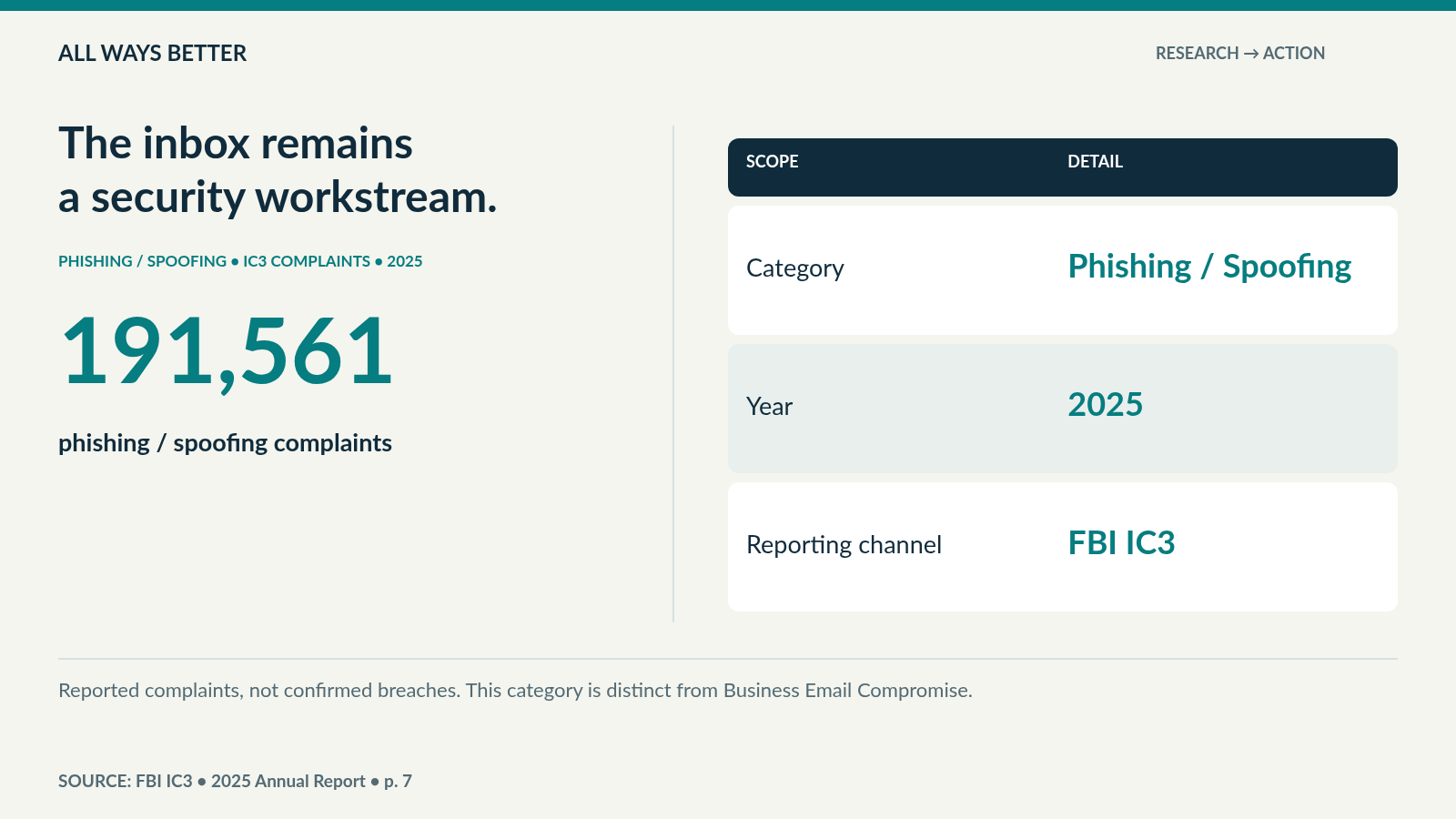
Ransomware planning becomes more useful when the discussion reaches the work your team must keep doing. A locked scheduling system, an unavailable shared drive, or a missing supplier record can interrupt operations long before anyone decides how to respond to a ransom demand. Start by identifying the services that would be difficult to deliver without those systems.
Map the work behind the systems
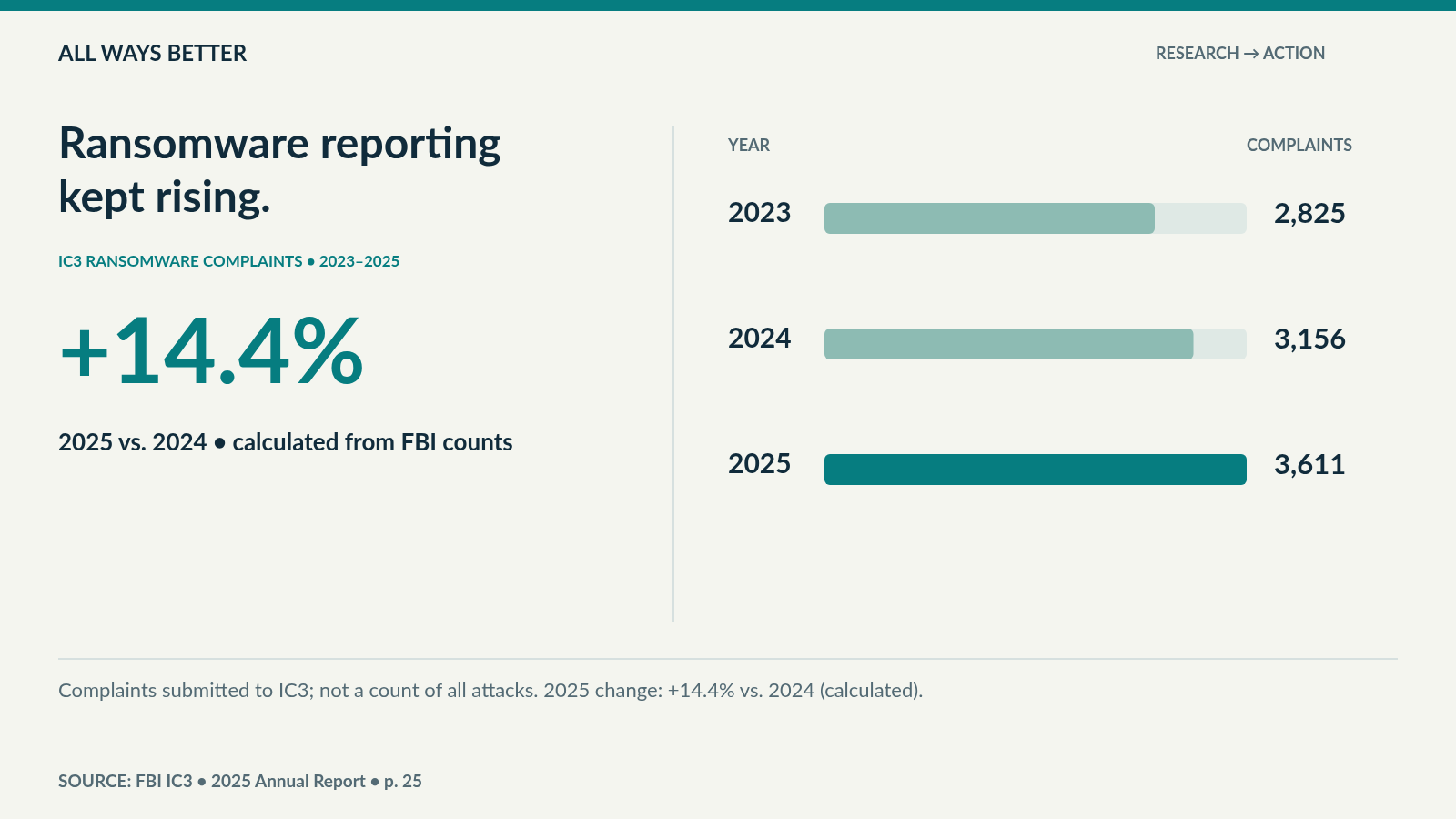
The FBI recorded 3,611 ransomware complaints for 2025. Complaint totals describe reports received by IC3; they do not measure every incident or predict whether a particular organization will be attacked. Use the report as a reason to review your own arrangements, then base decisions on your systems, responsibilities, and ability to recover. A headline cannot tell you whether last week's backup can restore the files your team needs.
Choose one important business process and trace its dependencies. For a service company, that might include answering the business line, finding customer details, preparing a quote, and telling a field team where to go. Note which accounts, devices, and outside providers support each step. Ask who can authorize a change if the usual administrator is unavailable. Keep a copy of that information somewhere the affected systems cannot take offline together.
Establish what recovery has demonstrated
Backups need a defined owner and a practical test. Agree which information must be recoverable, how current it needs to be, and where a protected copy is kept. A qualified provider should confirm the test method and safeguards before touching production systems. Record what was restored, how long it took, and any information that was missing. Those observations make the next recovery discussion concrete.
Access deserves the same attention. Review administrator accounts, remote access, and the process for removing access when people or suppliers leave. Discuss multifactor authentication and suitable separation between systems with the people responsible for them. Operational equipment may require different precautions from office computers, so include the relevant operator before planning any change. Availability and safety requirements should shape the work.
Make the response plan usable
An incident plan should explain how staff report a concern, who decides whether to involve outside help, and how the organization communicates if ordinary email is unavailable. Test those contacts during a scheduled discussion. People should be able to find the next person to call without guessing which version of a document is current. Assign any unanswered questions to an owner and review date. Include supplier contacts in that scheduled discussion.
Use a confirmed job as the test case
A recovery discussion can begin with an ordinary question: could the team find tomorrow's confirmed jobs if the scheduling application were unavailable? Follow the answer beyond whether a backup exists. Someone must know which record is current, who can access it, and which person can authorize the temporary process. Write down where that answer depends on an assumption.
Give the provider a defined question to test. Instead of asking whether backups work, ask what evidence would demonstrate recovery of the agreed information for its intended users. The provider can then explain an appropriate test method and the limits of the result. Include staff who will check the recovered information; a technical completion message alone does not establish that the business can use it.
After the exercise, keep the unresolved questions beside the result. A successful check of one application should not become a claim about every system. Record what was covered and what still needs a decision before using the findings to approve further work.
Scope the next recovery improvement
All Ways Better helps organizations clarify these requirements and coordinate the right service conversation. For security assessment and IT delivery needs, we can discuss an introduction to Third Level IT. The provider confirms its scope, responsibilities, timing, and fees. You should leave the initial discussion knowing which questions need answering before selecting tools or approving work.
Sign up today to receive a free initial implementation consultation. Bring a short description of the process you need to protect and the recovery questions you cannot yet answer. Our team will follow up to arrange a call. The offer covers the initial conversation, while assessments, remediation, and implementation require a separate agreement.