A customer record, call note or business file can pass through several services before the team uses it. Knowing which application displays the information does not always explain where it is stored, who can access it or how the business would obtain it if the arrangement changed. Those questions belong in the purchase and implementation discussion.
Follow one record through the workflow
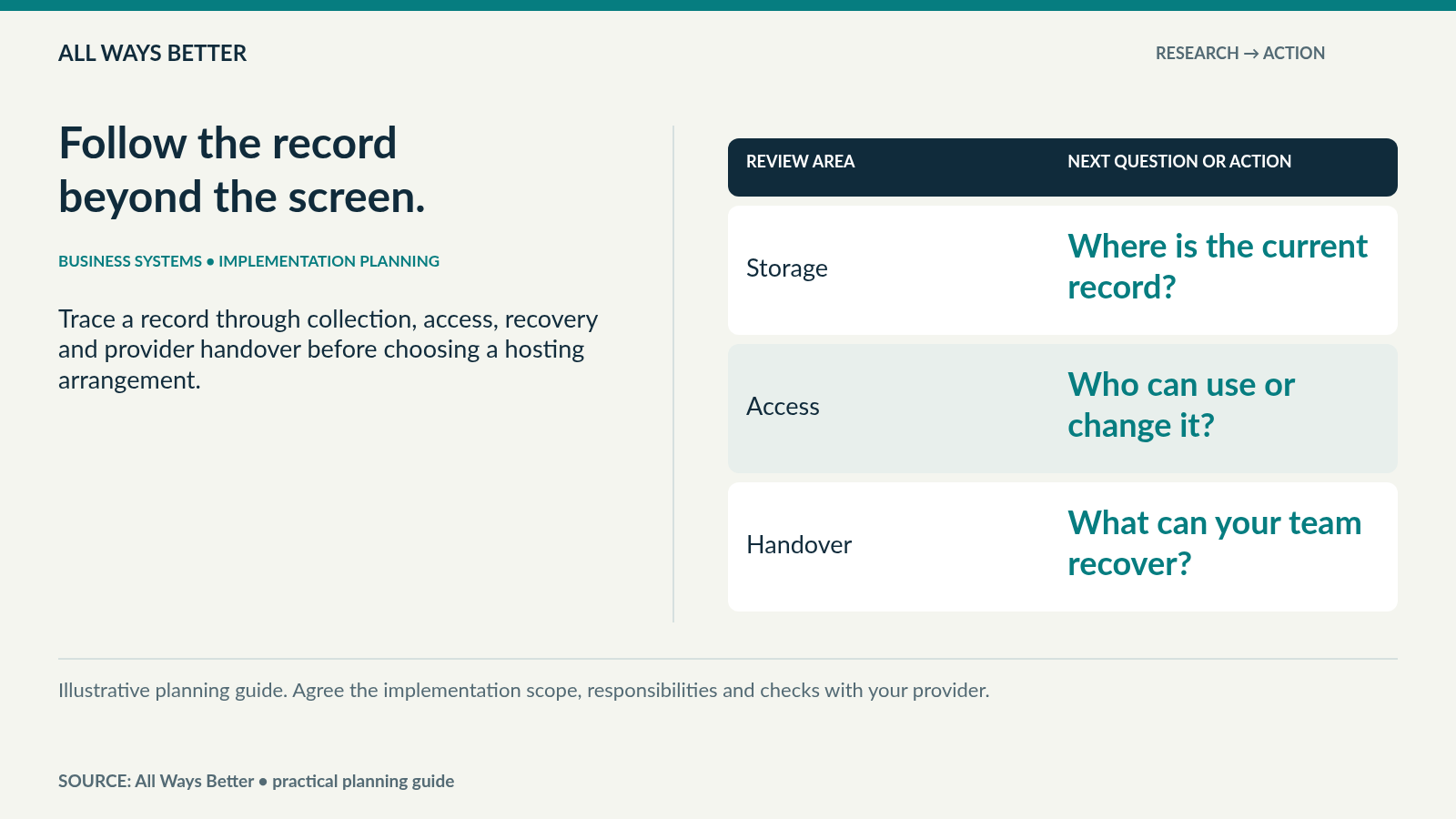
Choose a typical record and trace its path. Identify where it is collected, where it is sent and which system holds the version staff consider authoritative. Include integrations, backup arrangements and outside providers where they handle part of the process. A short map is easier to review when it follows an actual task instead of listing applications without their relationships.
Ask the business owner and technical provider to review it together. Each may know a different part of the arrangement. Establish who can answer questions about access, recovery and changes to the service. Keep any uncertainty visible rather than assuming a familiar application name settles responsibility for the underlying information.
Compare responsibilities across hosting choices
Running a system on equipment the business controls can change which responsibilities remain with the business. Hosted services have their own boundaries, contracts and dependencies. Neither arrangement removes the need to understand administration, updates, recovery and support. Ask a provider to explain the responsibilities attached to the proposed service in terms your team can use.
Consider who will maintain the arrangement after the initial project. Access to equipment or an administrative account is useful only when the organization knows how it will be managed. Include cover for staff absence and the process for changing providers. A delivery proposal should identify the business work needed alongside the technical installation.
Review access and recovery together
Identify which people or suppliers can view information, change settings or export records. Ask how those permissions are authorized and removed when responsibilities change. Include the organization's own administrator accounts. Avoid relying on a single employee's personal inbox to recover a service the whole business depends on.
Then discuss what happens if the usual system is unavailable. The team needs to understand which information is recoverable, how it can be accessed and what evidence supports that expectation. An export, a backup and a working replacement process serve different purposes. Ask the responsible provider to explain the limits of each arrangement before treating them as interchangeable.
Check the exit before agreeing the entry
Find out what the organization can obtain at the end of a service relationship. Establish the available format, any relevant constraints and who will coordinate the handover. Include how staff will confirm that important relationships between records remain usable. A folder of exported files may require further work before another system can support the same task.
Use a small authorized example to examine that handover where appropriate. Ask the proposed provider what can be checked safely and which requirements need specialist review. Keep sensitive information within an agreed channel. The first business conversation can describe the workflow without sharing customer records, account credentials or private recordings.
Discuss the information your team depends on
All Ways Better can help clarify data-handling requirements and discuss suitable assessment or implementation support. Bring the workflow, the records involved and the responsibilities you want to understand better. The relevant provider will confirm its delivery scope, fees, timing and any limits of the proposed arrangement.
Sign up for a free initial consultation using the article's contact offer. Our team will follow up to arrange a call. The offer covers the initial requirements conversation. Technical assessments, migrations and other delivery work are separately agreed. Decisions involving privacy, contractual obligations or specialist retention requirements remain with the qualified people responsible for them.