When several systems are unavailable, deciding what to restore first becomes a business question as well as a technical one. The application with the loudest complaints may depend on another service. Restoring a file store may achieve little if employees cannot sign in or confirm which information is safe to use.
Identify the services behind your obligations
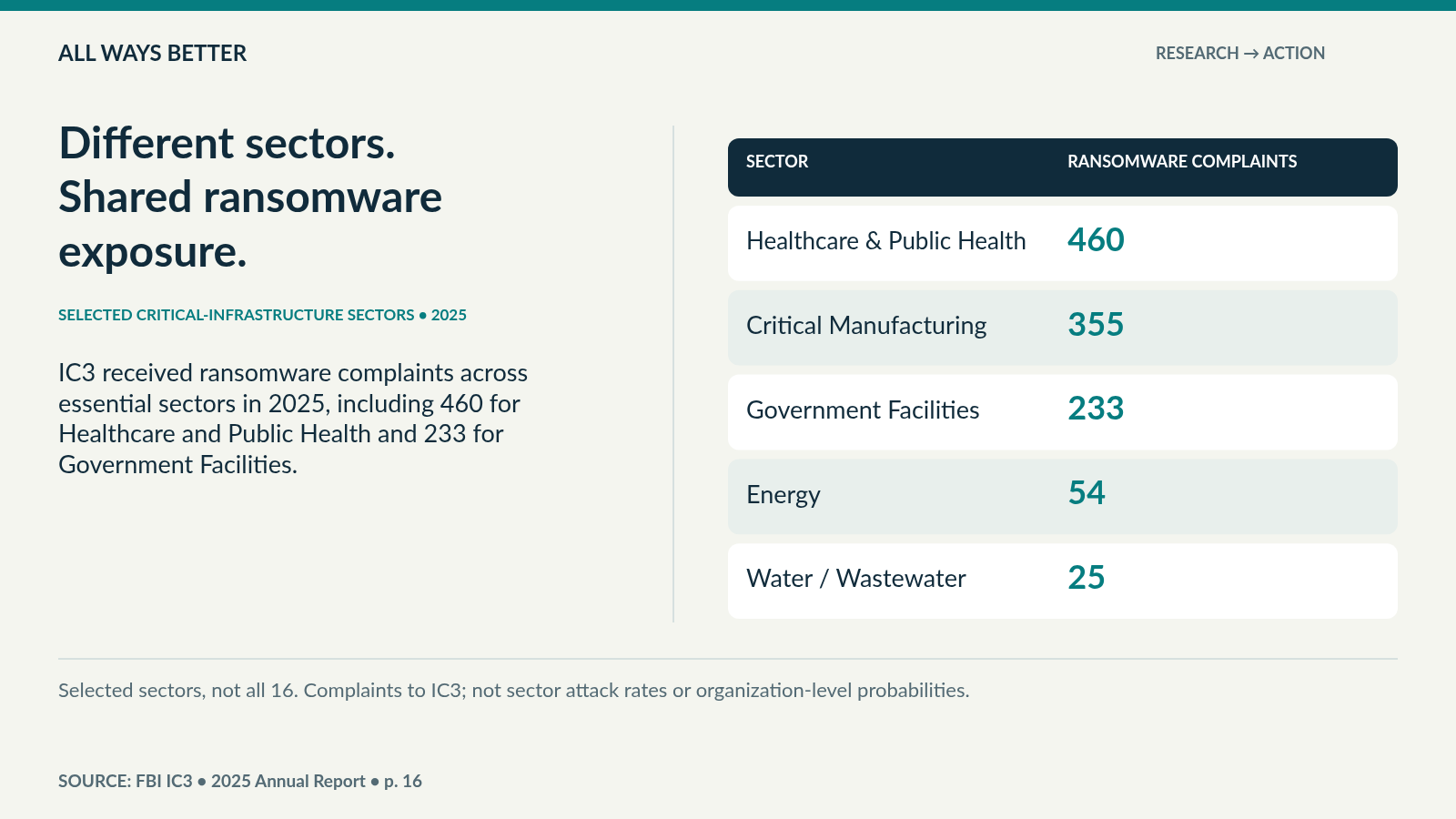
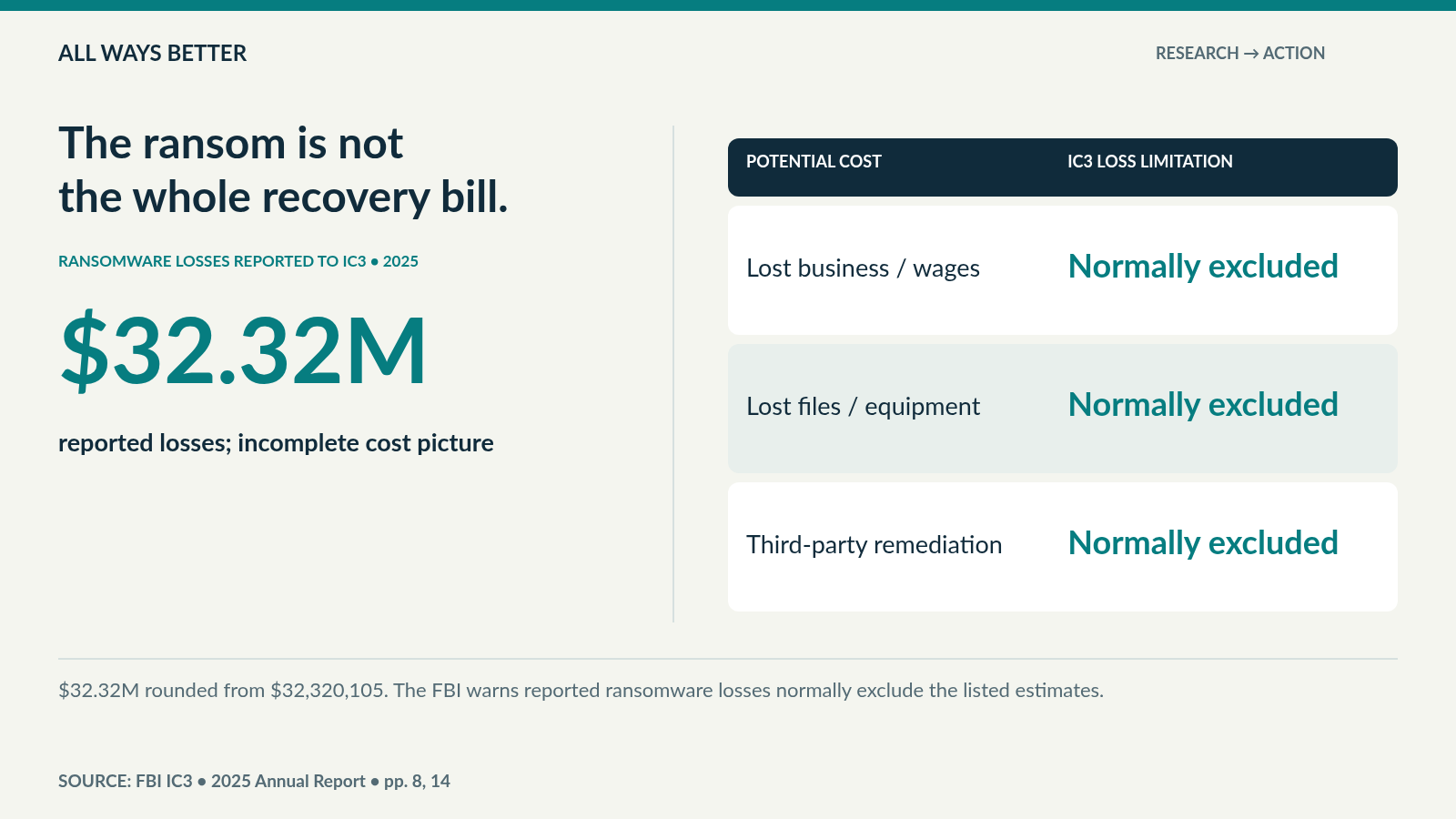
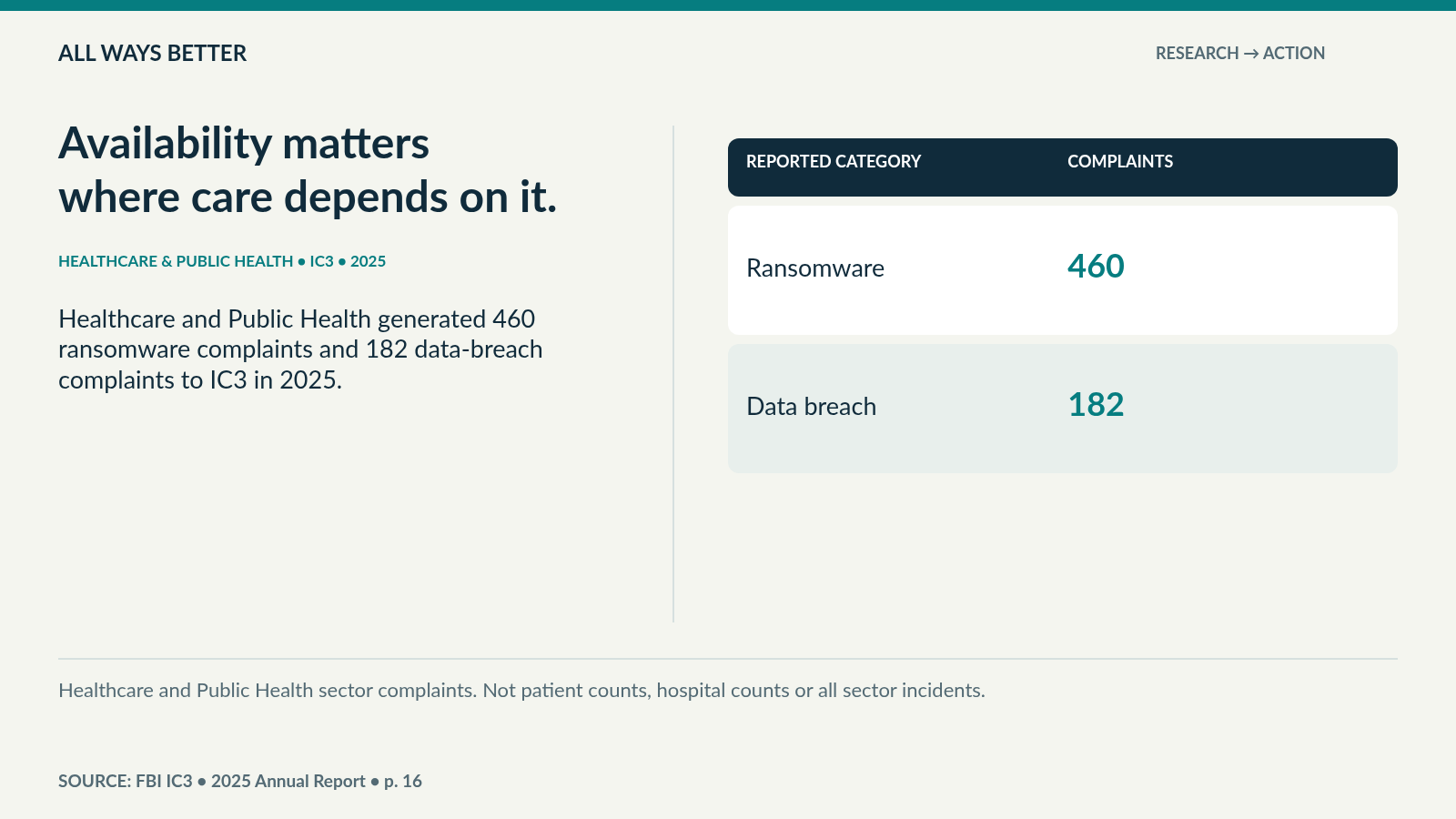
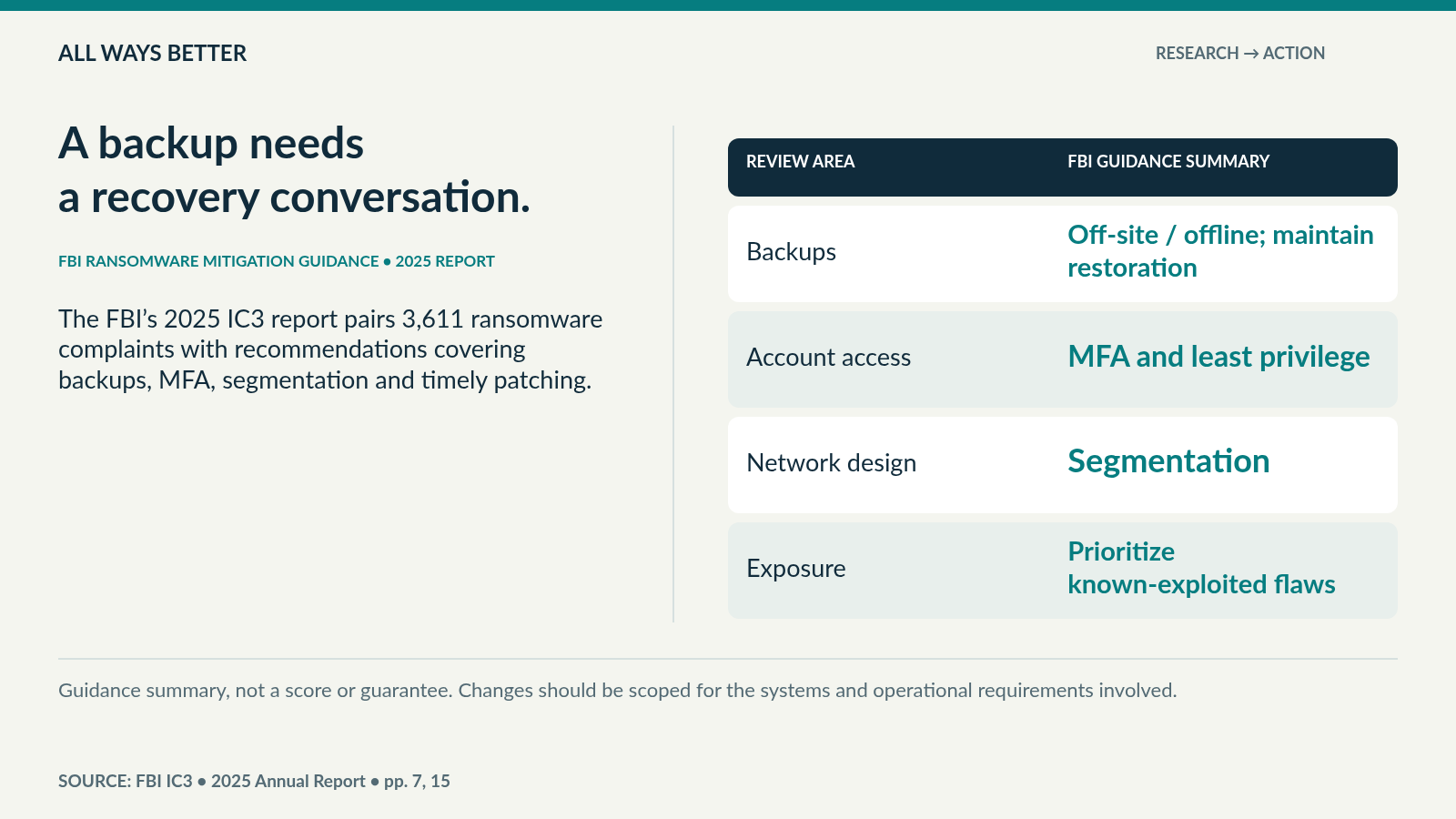
The FBI's ransomware reporting provides context for that planning discussion. It does not establish how long your organization would need to recover. Your own dependencies, recovery arrangements, and evidence from authorized checks matter more when setting priorities. Start by identifying the services the business needs to meet its obligations.
For each service, ask the owner what information is essential and what interruption would mean. Separate inconvenience from a missed payment, a delayed customer commitment, or an operational constraint requiring a specialist decision. Record who can authorize temporary arrangements. Avoid assuming that every process can move to paper or that an old copy of a record is suitable for current work.
Connect business priorities to technical dependencies
Ask the technical team to connect those priorities to system dependencies. Identity services, network access, supplier platforms, and configuration records may need attention before the application employees recognize. The business should understand these dependencies well enough to agree a sensible sequence. Technical staff should understand why a particular service matters and who can confirm that it works for its intended users.
Examine the evidence behind recovery expectations. A successful backup job reports that a process ran; it does not answer every question about restoration. Ask what was tested, when, by whom, and against which agreed requirements. Establish where the result is recorded and who owns any remaining action. Testing must be authorized and planned to avoid interfering with live services or exposing sensitive information.
Check evidence and coordinate decisions
Include communication in the plan. Someone must coordinate decisions, keep a record of what has been agreed, and update the appropriate people. Keep approved contact arrangements available if the usual collaboration tools are affected. Decide how the organization will explain uncertainty while work is being assessed. Promising a restoration time before the technical team has evidence can create another problem for staff managing customers and suppliers.
After a planning exercise, choose a few unresolved decisions and finish them. A named owner, a due date, and a clear question make follow-up possible. Review the plan when systems or suppliers change. Recovery priorities should reflect the business as it operates today, including the less visible services that support customer work.
Follow the first task after recovery
Consider the first task staff would need to perform after access returns. Finding a customer record, confirming its currency, and authorizing the next action may depend on different people or services. Ask those owners to describe the sequence together. That gives the technical team a clearer requirement than a request to restore an application as quickly as possible.
Keep disagreements visible until the responsible people settle them. If the business expects a temporary process that the technical plan does not support, record the gap and assign the decision. Avoid letting each team leave the meeting with a different understanding of what will be available.
Discuss the recovery questions you cannot answer
All Ways Better can help structure a conversation about those requirements and connect you with suitable implementation support. Bring the services you consider most important and the recovery questions you cannot yet answer. The relevant provider will confirm technical scope, responsibilities, timing, and fees before assessment or delivery work begins.
Sign up today for a free initial implementation consultation. Our team will follow up to arrange a call about the planning problem you want to address. The offer covers the initial conversation; recovery testing, incident response, assessments, and implementation work require separate agreements with the appropriate specialists.