The cost of a technology incident can extend beyond the amount demanded by an attacker. Staff may be unable to find records, customers may need updates, and ordinary work may have to be repeated. A useful recovery discussion makes room for those operational consequences before deciding which improvements deserve time and money.
Define the work an outage interrupts
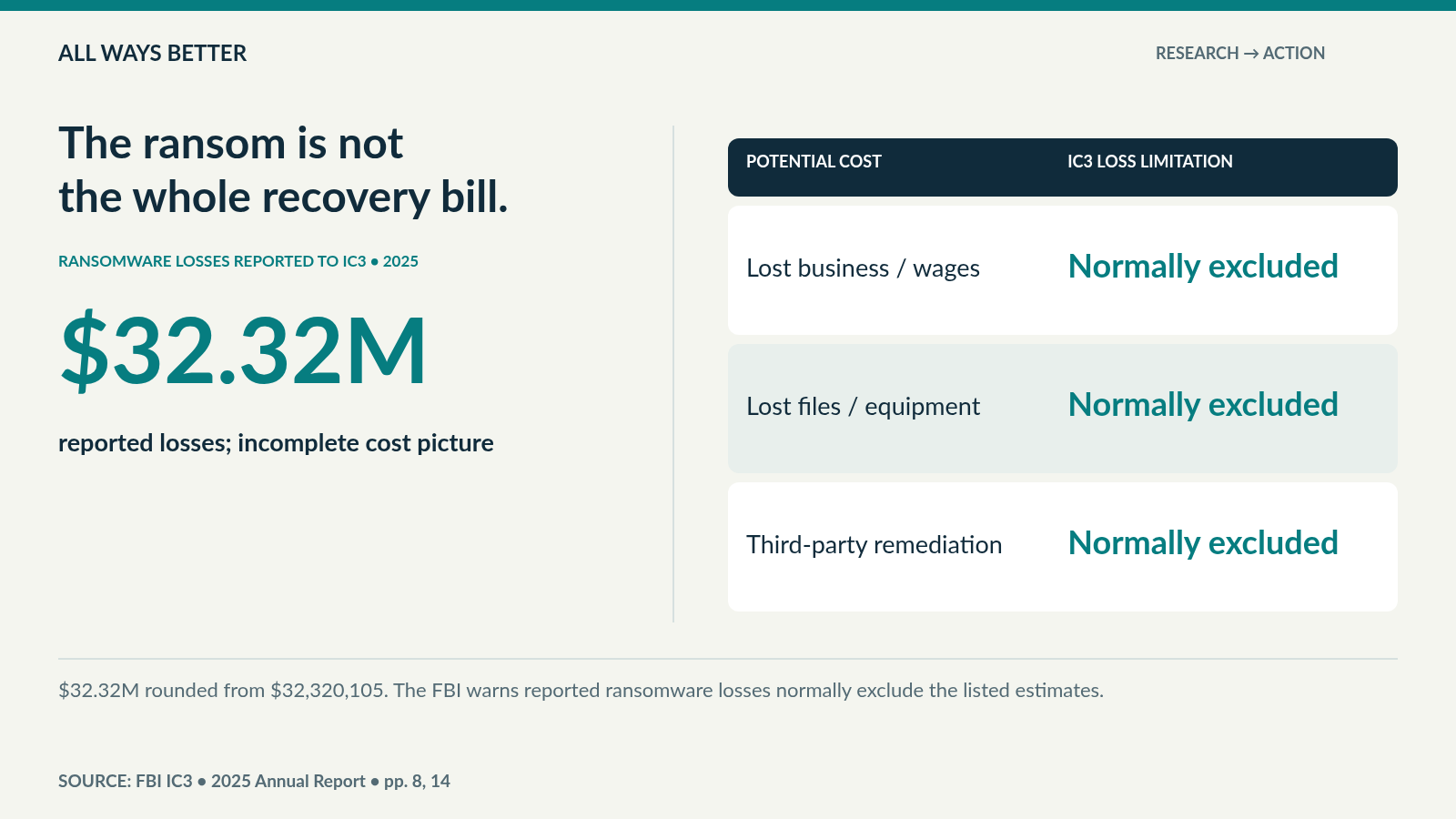
IC3 warns that its reported ransomware losses exclude many operational costs. That limitation matters when someone uses a national loss figure to estimate what an incident could mean for a particular business. The figure describes reported information within defined boundaries. Your planning needs a separate view of the processes that would stop, the people affected, and the effort required to restore dependable working arrangements.
Choose one important system and walk through a realistic interruption with its business owner. Identify what the team could still do, what would have to wait, and which customers or suppliers would need a response. Separate immediate tasks from work that appears during recovery. Re-entering orders, checking records, and reconciling temporary paperwork can consume time after the application itself is available again.
Check the assumptions behind recovery costs
Keep assumptions visible. If the discussion assumes that a backup is usable, identify the evidence supporting that assumption. If it assumes an outside provider can help promptly, confirm the relevant agreement and contact route. Note uncertainty instead of converting it into a precise financial forecast. A planning worksheet should help people compare options, not imply that an untested estimate is a known outcome.
Use the review to set recovery priorities. The application with the highest purchase price may not be the first one staff need. Ask which service supports the next essential task and what other systems it requires. Discuss the restoration order with the responsible technical team. That order needs to account for reliable access, information integrity, and the people who will confirm that work can resume.
Compare improvements against business priorities
Compare proposed improvements against those priorities. A clearer contact list, a tested recovery procedure, or a scoped access change may address different parts of the problem. Ask a provider to explain what each item changes, what evidence will demonstrate completion, and what remains outside the scope. Include the effort your own staff will need to contribute so an implementation plan fits the business. Include the staff time needed to check temporary records before ordinary billing or order processing resumes.
Include the work after access returns
For example, an order system may be available again while staff are still checking orders recorded during the interruption. Identify who will reconcile those records and how discrepancies will be resolved. The team may also need to explain revised dates to customers. Include that work in the discussion so recovery does not end on paper before ordinary service has resumed.
Keep estimates traceable to their assumptions. If a planning figure uses staff hours, record the tasks included and the basis for the estimate. Review it with the people who would perform those tasks. This makes the figure easier to challenge and update when the proposed recovery approach changes.
Discuss one recovery planning problem
All Ways Better can help you organize these questions and identify suitable assessment or implementation support. We begin with the process you need to protect and the uncertainties your team has identified. A relevant specialist confirms the technical work, responsibilities, pricing, and schedule. You can then consider proposals against an agreed business concern instead of relying on a headline loss number.
Sign up today to receive a free initial implementation consultation. Bring a description of one interrupted workflow you want to plan for, along with the recovery assumptions that need checking. Our team will follow up to arrange a call. The offer covers the first discussion; assessments, recovery services, and implementation projects require separate agreement.