A clinic's work can be interrupted by the loss of an application used well away from the consultation room. Appointment details, telephone contacts, shared instructions, and supplier systems all support the people delivering care. Continuity planning should identify those dependencies alongside the approved procedures for working when ordinary access is unavailable.
Find the records the workflow depends on
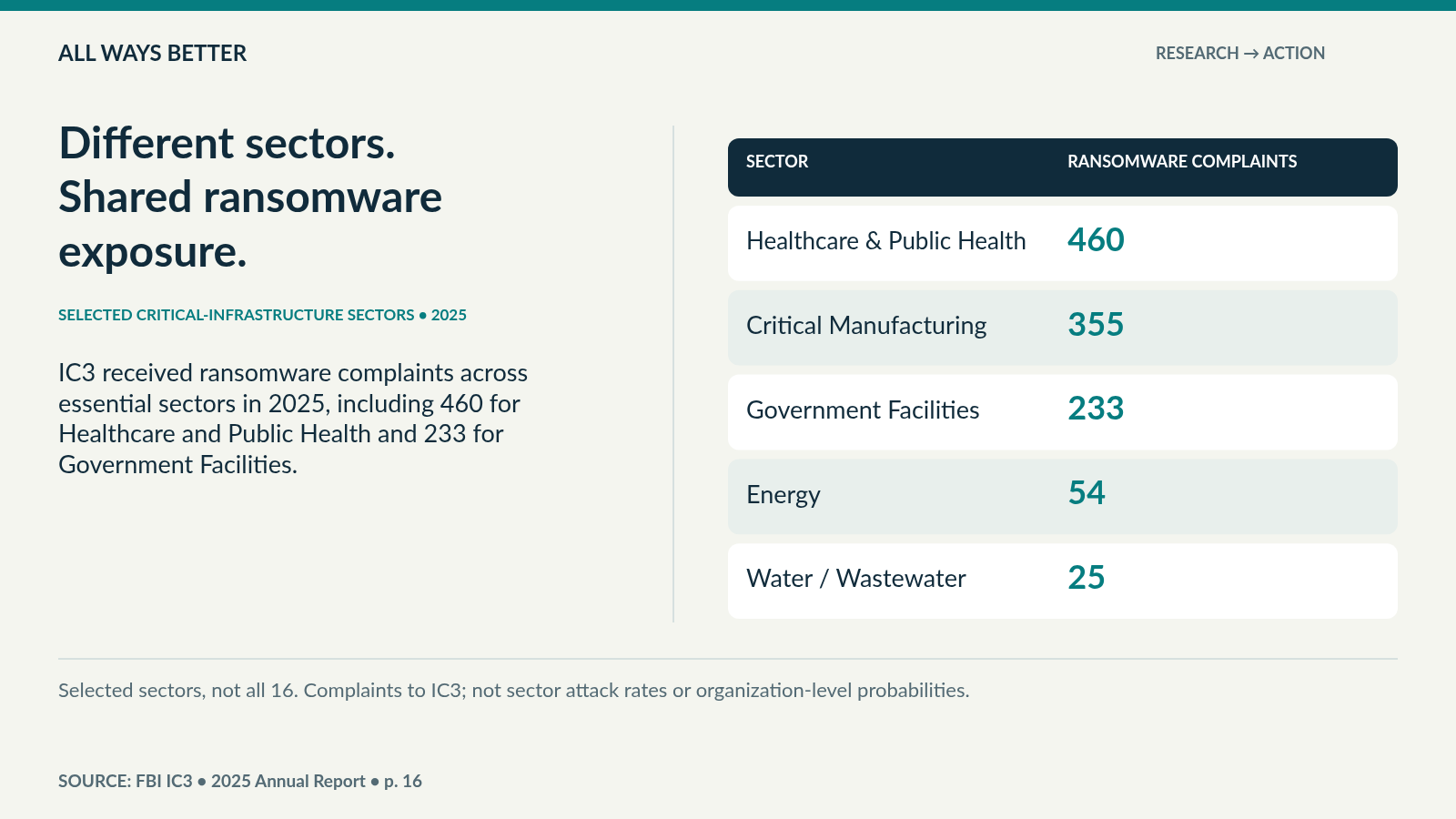
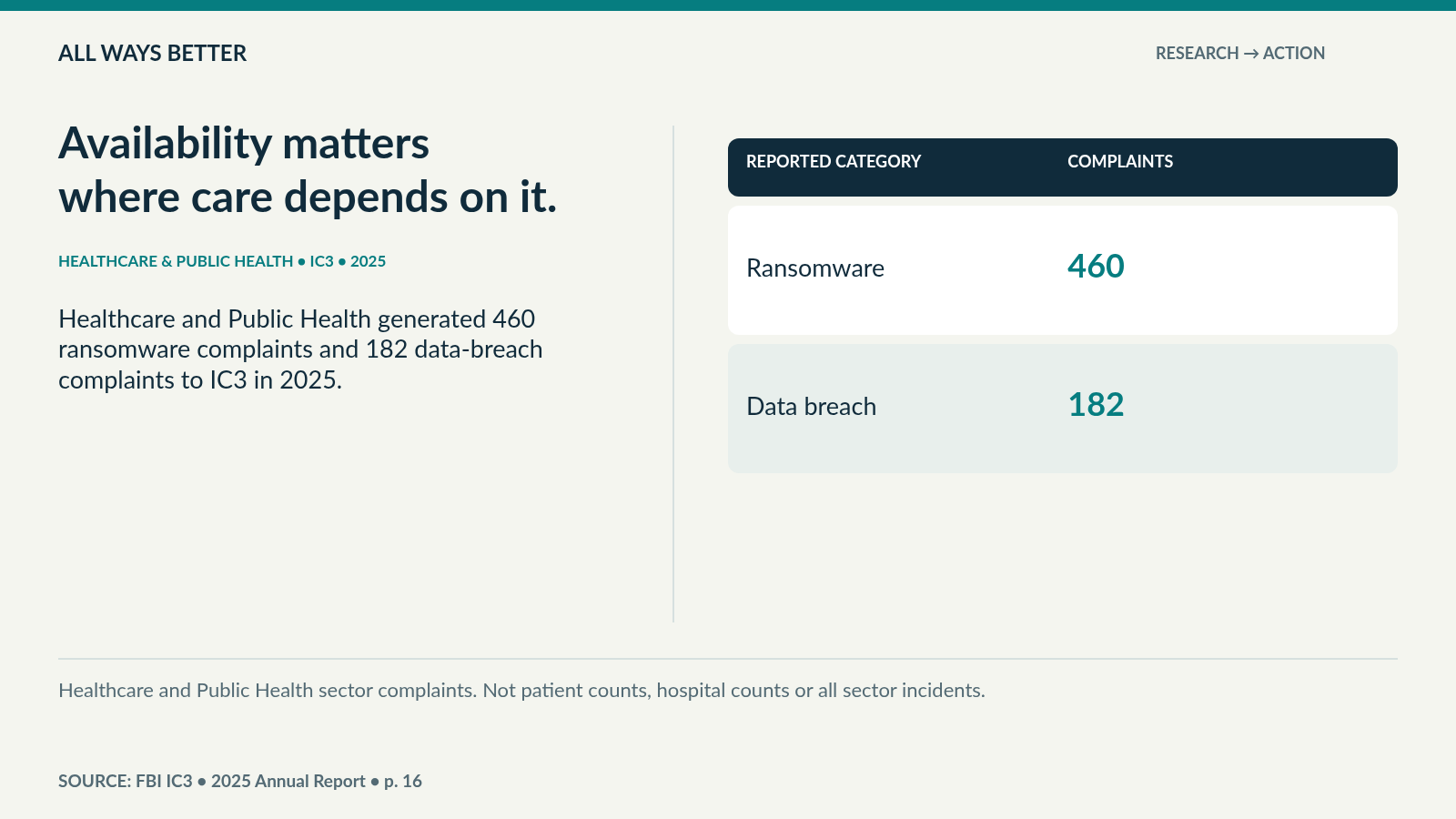
Healthcare and Public Health appears in the FBI's annual sector reporting. Those complaint figures provide background, rather than a finding about a particular organization. A local review needs the staff responsible for the service, the technical team, and the people accountable for information handling.
Begin with one workflow that employees would need during a normal day and trace the systems it depends on.
Review approved downtime procedures
Document which information the team needs and where the authoritative record is held. Include the process for identifying the current version of an instruction or contact list. Ask who can resolve a discrepancy and how staff obtain help if their normal sign-in route is unavailable. Keep patient information and detailed system configurations out of public forms and general planning documents.
Review existing downtime procedures with the responsible operational and clinical owners. Establish what has already been approved, who is trained to use it, and how temporary information will be reconciled afterward. The review should identify gaps for the appropriate team to address. General business planning cannot replace clinical procedures, privacy obligations, or professional decisions about patient care.
Check access, recovery and decision ownership
Ask the technical provider to explain access and recovery responsibilities. Relevant questions include who administers systems, how supplier access is authorized, and what evidence exists that important information can be restored. Clarify the organization's own responsibilities rather than assuming they are included in a service contract. Any proposed change should account for availability requirements and be agreed with the people using the service.
Exercise the contact and decision-making arrangements through an appropriately authorized discussion. Staff should know whom to call, what to report, and who can decide whether an alternative process is suitable. Record the questions raised and assign owners. A short list of unresolved decisions is more useful than a general reassurance that the organization has a continuity document somewhere. Ask a member of the administrative team to walk through the contact list, showing where they would find help if their usual application were unavailable.
Check the administrative handoff
For example, the administrative team may need an approved contact list when a supplier application is unavailable. Ask where the current version is kept, who maintains it, and how a colleague covering the role can find it. Keep the discussion about the supporting process; patient records and clinical decisions belong in the organization's authorized systems and procedures.
A supplier conversation should also identify the handoff back to ordinary working. Who confirms that access is suitable for use, who checks temporary information, and which unresolved questions need the service owner's decision? Record the answers against the workflow being reviewed. A general statement that an application is available again may not settle every administrative task created by the interruption.
Discuss the supporting workflow
All Ways Better can help organize an initial conversation about those requirements and identify relevant assessment or implementation support. We will ask about the workflow and the practical concerns your team wants to resolve. The specialist provider confirms its competence, responsibilities, scope, fees, and timing. Any clinical, legal, or privacy requirements need to remain with the qualified people accountable for them.
Sign up today to receive a free initial implementation consultation. Share a general description of a workflow you want to review and a business contact for follow-up. Our team will arrange a call to discuss possible next steps. The offer covers the initial conversation; clinical advice, incident response, assessments, and implementation projects are separate from that discussion and require appropriate professional scope.