An essential service depends on organizations outside its own walls. A healthcare team may rely on a technology supplier; a utility may depend on remote maintenance; a manufacturer may need a hosted scheduling application. Reviewing those relationships helps a business see where another organization's disruption could interrupt its own work.
Trace the service beyond the first supplier
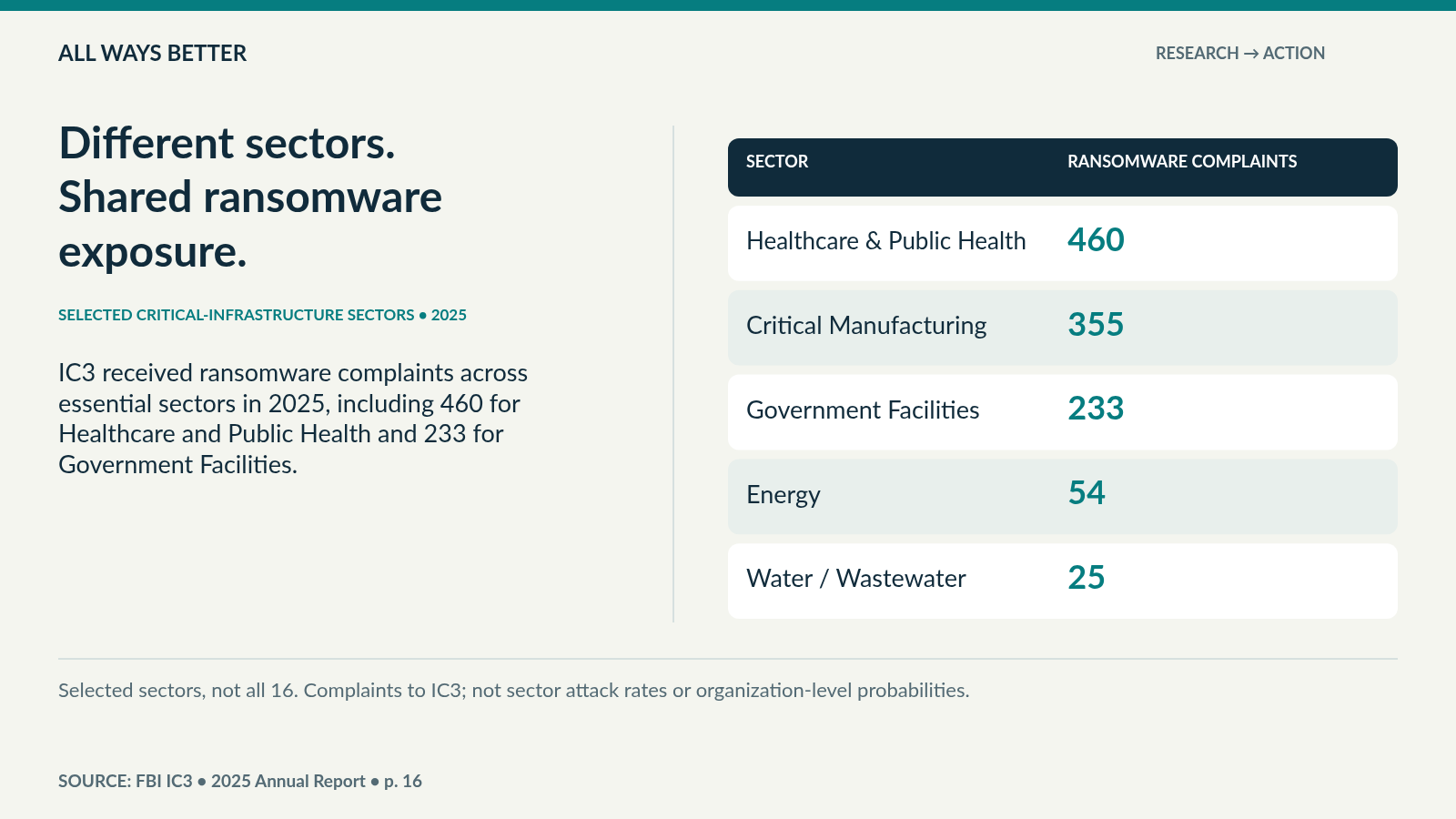
The FBI's IC3 reporting groups complaints across critical infrastructure sectors. A sector label is useful context, but it does not explain the dependencies in a particular organization. Your review needs the names of the services you use, the people responsible for them, and the work that becomes difficult when one is unavailable. Begin with a service your team would need during a busy day.
Trace that service beyond the first supplier. Ask which identity system allows people to sign in, where information is stored, and how staff receive support. Note any outside company that can change settings or access internal systems. A contract may describe part of the arrangement while an experienced employee knows another part. Bring those views together before deciding whether a gap needs technical work or a clearer agreement.
Agree responsibilities and alternatives
For each dependency, record a business owner and a technical contact. Agree how your team would learn about an outage and who would decide what to tell customers. Ask the provider which responsibilities it accepts and which remain with you. If the answer is unclear, write down the question rather than assuming the supplier covers it. A shared understanding is more useful than an untested expectation.
Review alternatives with the people doing the work. A temporary process may require paper records, a different contact channel, or a decision to suspend part of a service. Consider how information would be reconciled afterward and who would check it. Operational and safety requirements must shape any fallback. The purpose is to identify a workable response, not to announce that every service can continue without interruption.
Turn the review into assigned decisions
Turn the review into a list of decisions. An item should identify the service at risk, the unresolved concern, an owner, and the evidence needed to close it. That could mean a supplier meeting, a documented recovery test, or a scoped access review. Keep items specific enough that the person responsible knows what completion would look like. Review the list when a supplier or system changes.
Check the handover and shared dependencies
A dependency record should survive a change of account manager. Put the service name, business owner, provider contact, and agreed support route together in the organization's approved record. Avoid relying on one employee's familiarity with a supplier. Ask the person covering for that employee to locate the information and explain whom they would contact about an interruption.
Watch for a shared dependency hiding behind several different suppliers. Staff may describe separate applications, yet use the same sign-in service or communication channel to reach them. Ask the technical team to confirm those relationships. That can change which questions need to be settled first, even when each individual supplier has provided a satisfactory answer about its own service.
Discuss the dependencies you need to resolve
All Ways Better helps organizations clarify these needs and coordinate the service conversation. We can discuss where a dependency review has exposed questions about security, integration, or recovery. A specialist provider confirms the work it can undertake, its responsibilities, and the commercial terms. That discussion should help you commission work against a defined concern rather than a broad wish to improve resilience.
Sign up today to receive a free initial implementation consultation. Bring one service dependency your team wants to understand better and a description of what would happen if it failed. Our team will follow up to arrange a call. Assessments, implementation, and other delivery work are separate from this initial conversation and will be agreed before they begin.