An assistant that answers internal questions is doing a different job from one that watches for changes or prepares a reply to a customer. Comparing them only by a product name can hide the decisions that matter: which information they use, how an answer is checked and when a person must take over.
Describe the work before choosing the tool
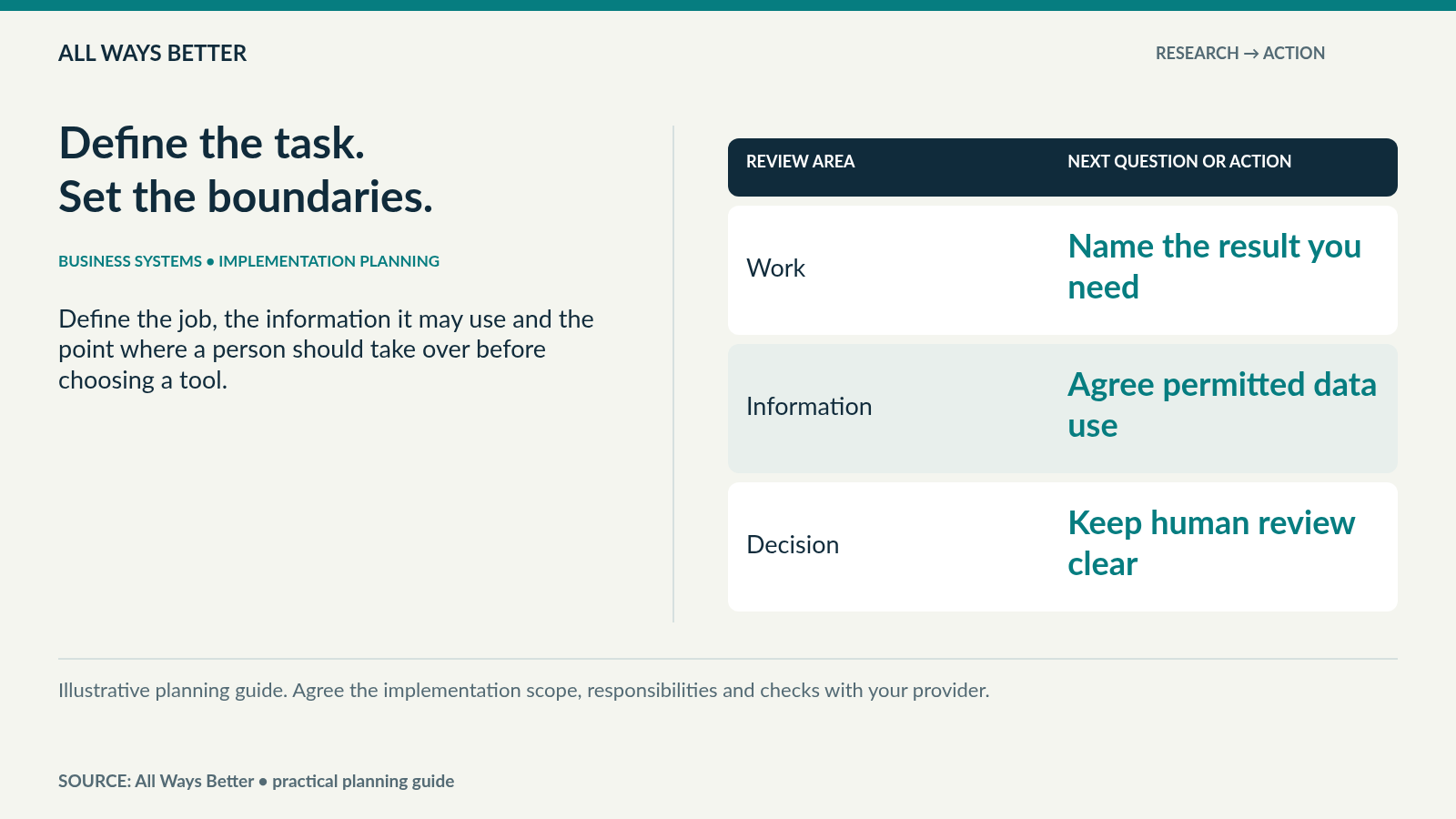
Start with a task staff already recognize. Identify the request, the information needed and the result that would be useful. A shop handling quote enquiries may need an assigned callback. An internal assistant may need to locate an approved document. Write the requirement without assuming that an AI feature is the only way to meet it.
Ask the people performing the task where the difficulty occurs. Missing information, an unclear owner and a slow search can require different changes. A clearer record or a better handoff may be enough for a first improvement. Keep that option available when discussing a proposed system, rather than treating additional automation as the result in itself.
Set the information boundary
Establish which records the proposed workflow may use and which it must not receive. Include access for staff, suppliers and administrators. The team should understand where information is processed, where it may be retained and who can explain the arrangement. A label suggesting that a system is private does not settle those questions on its own.
Discuss how the arrangement changes when someone leaves the business or a provider relationship ends. The process needs an owner who can review access and coordinate a handover. If sensitive information is involved, bring the appropriate privacy and technical requirements into the scope before sending real records through a trial.
Match the response to its evidence
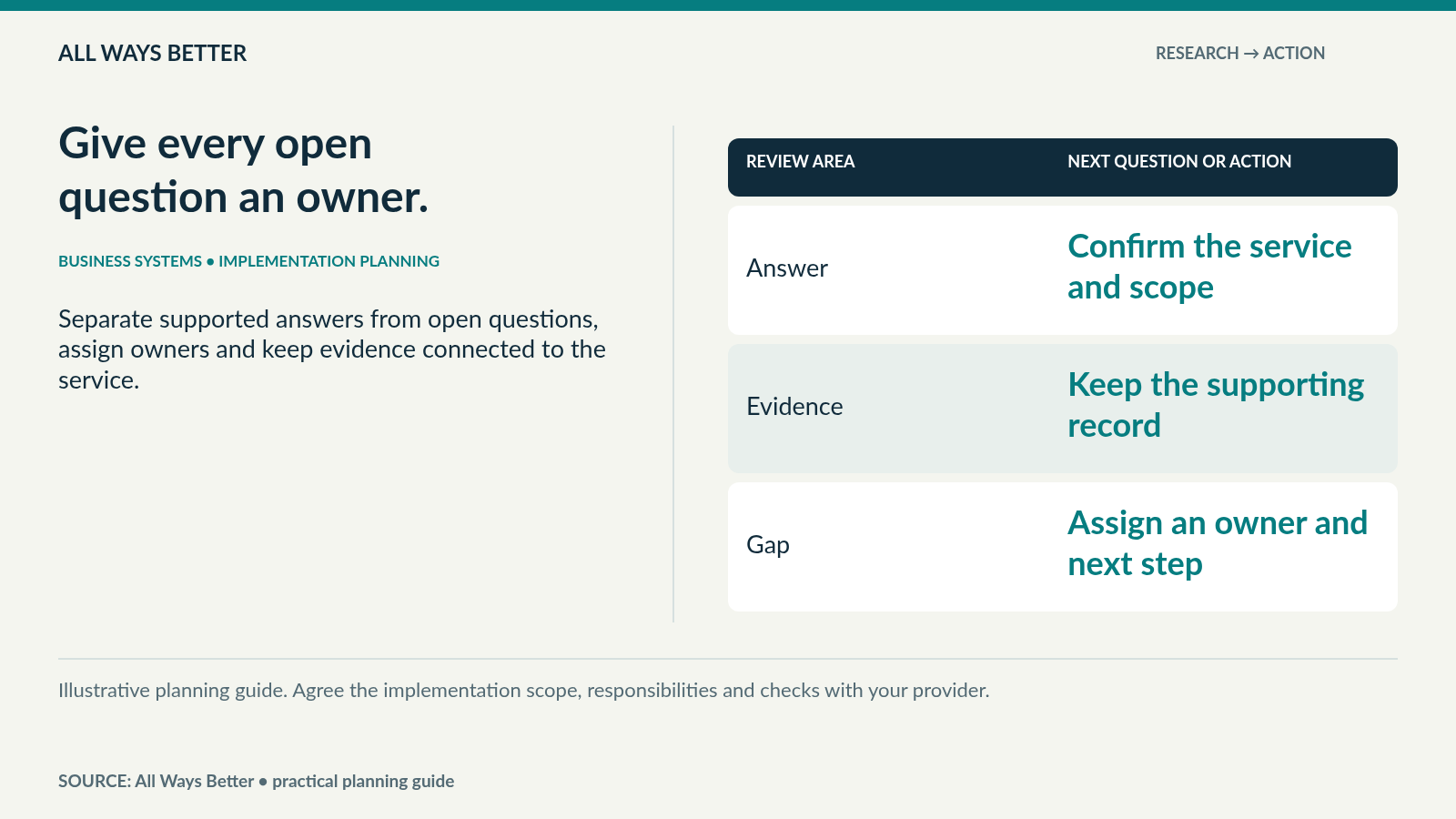
An assistant answering from an approved collection should help the reader identify the source supporting its response. Decide how staff will recognize current information and what should happen when the records do not answer a question. A confident sentence is not a useful substitute for a missing document or an unresolved exception.
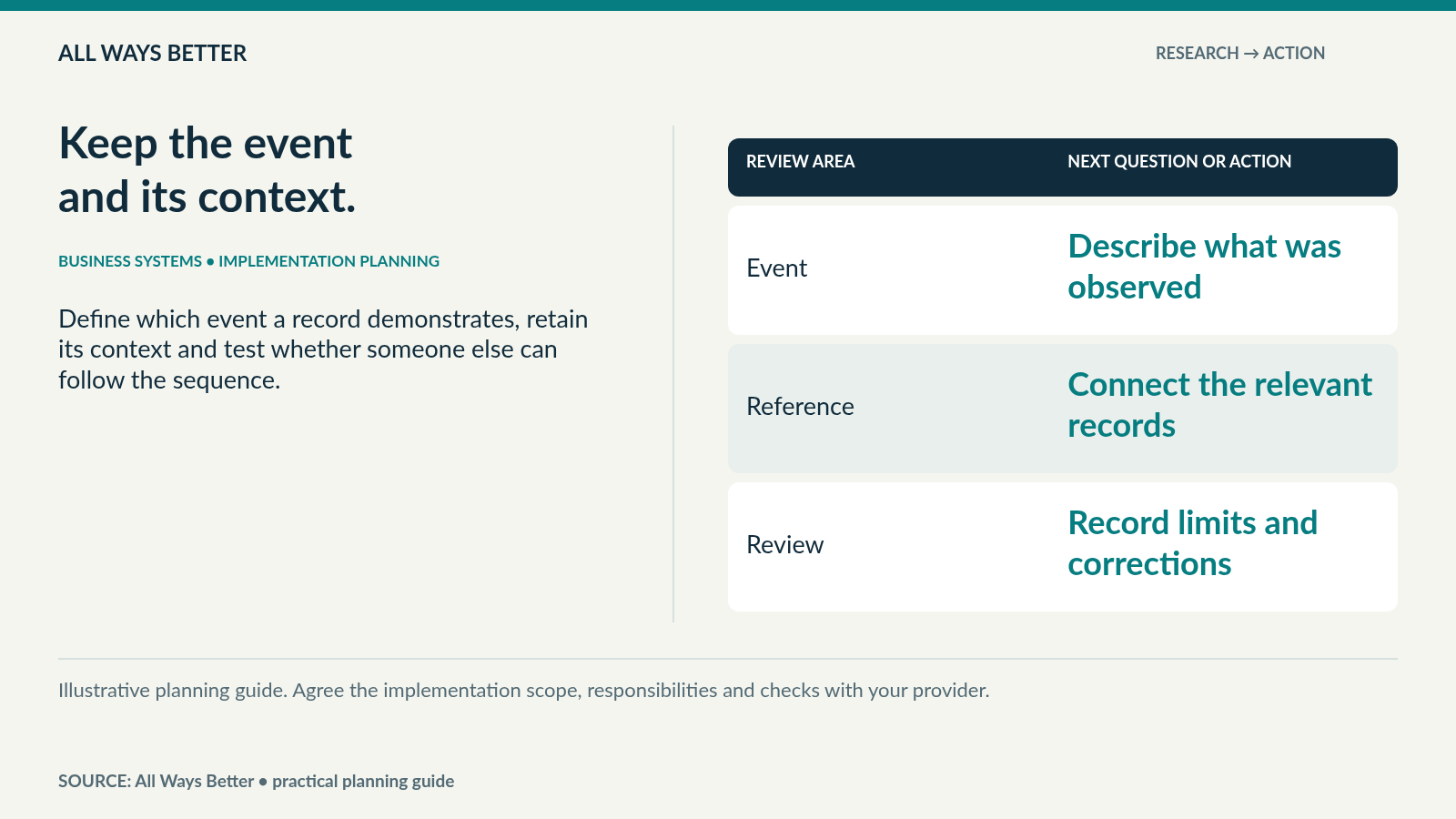
A monitoring workflow has another responsibility: explaining what changed and where that observation came from. Agree who receives the notice, what they should check and which actions require approval. An alert that nobody owns can leave the business with more messages and the same unanswered task.
Try an ordinary case and an exception
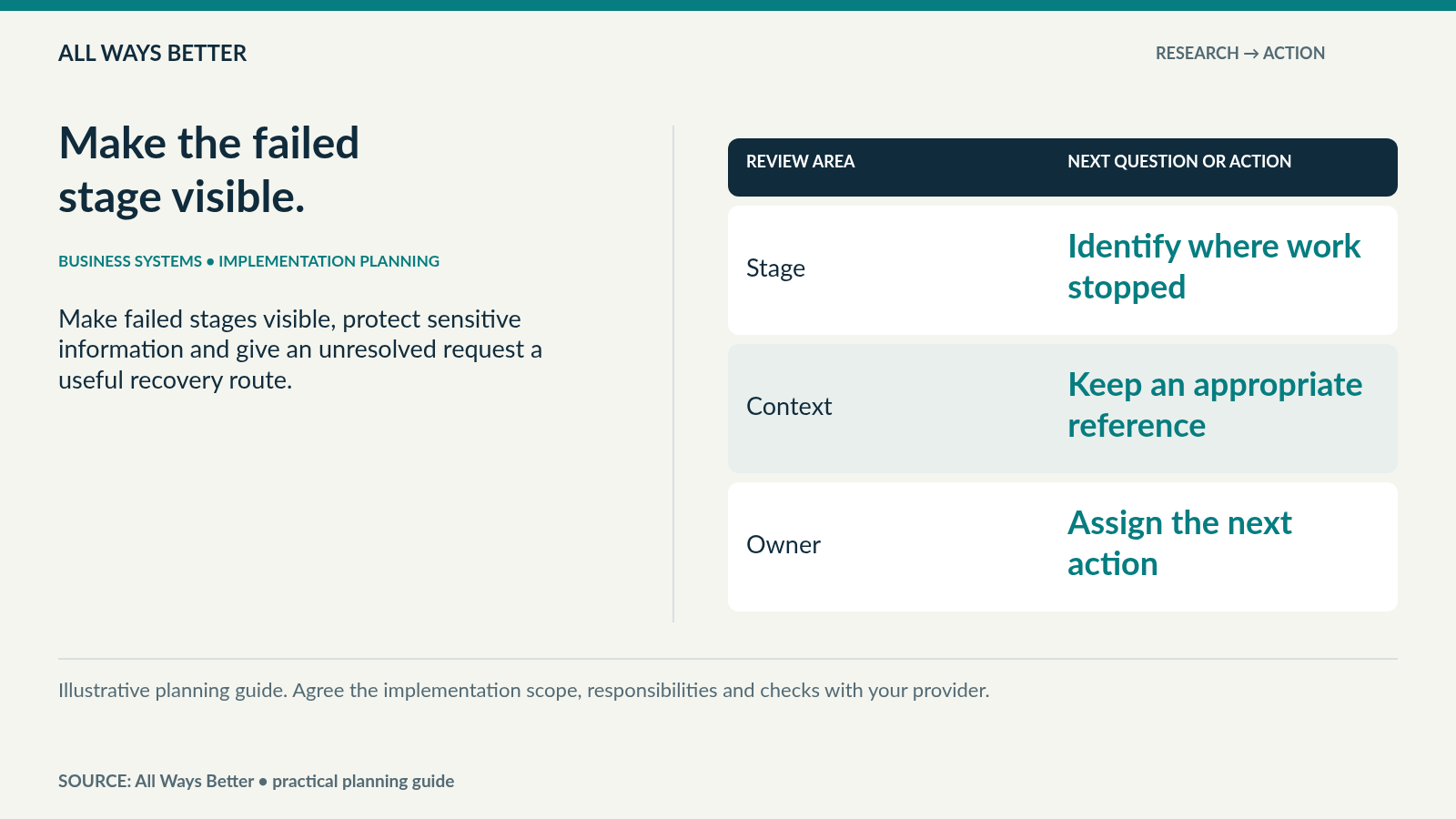
Use authorized examples with confidential details removed. Check whether the result helps the intended person complete the task and whether the next action is clear. Include a case where the required information is unavailable. The workflow should acknowledge that limit and provide a route to someone who can resolve it.
Record what you learn before expanding the scope. Ask employees which responses saved them work and which needed correction or explanation. Agree how changes to instructions, documents or connected systems will be reviewed. A pilot is easier to assess when its original requirement and the observed result stay together.
Discuss a task with clear boundaries
All Ways Better can help map the workflow and identify suitable implementation support. Bring a recurring task, the information it depends on and the point where a person needs to make a decision. We can discuss a manageable first scope and the questions a delivery provider should answer.
Use the article's contact offer to request a free initial consultation. Our team will follow up to arrange a call. The initial discussion is free. Software subscriptions, assessments, integrations and implementation are separately scoped and priced. Keep customer files, credentials and other private material out of the signup form; a general description is enough to begin.