A vulnerability finding is useful when the organization can turn it into a decision about a specific system. A list of exposed services may identify concerns, but someone still needs to confirm what the equipment does, who is responsible for it, and how any proposed change will affect operations.
Confirm the finding and its owner
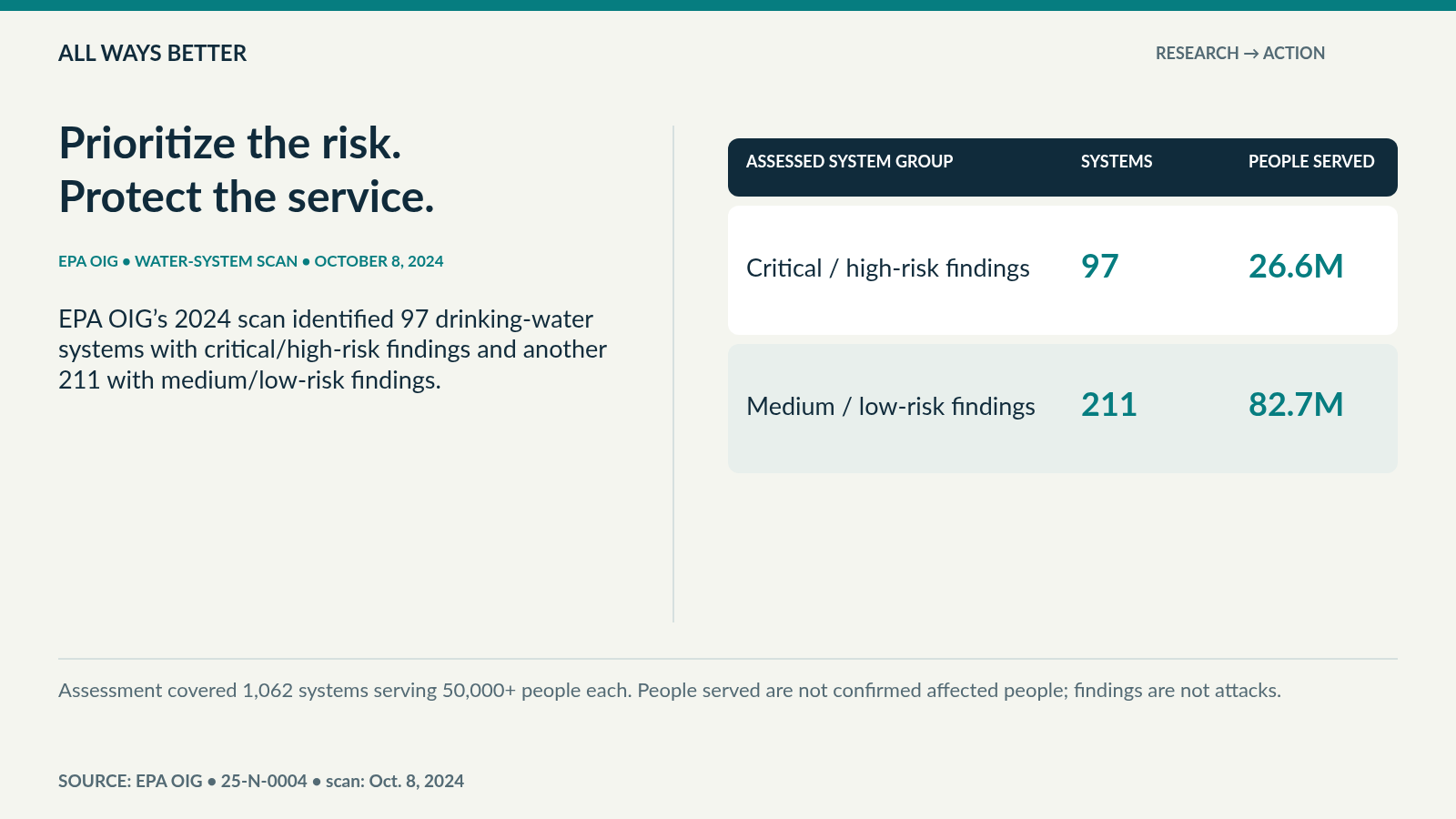
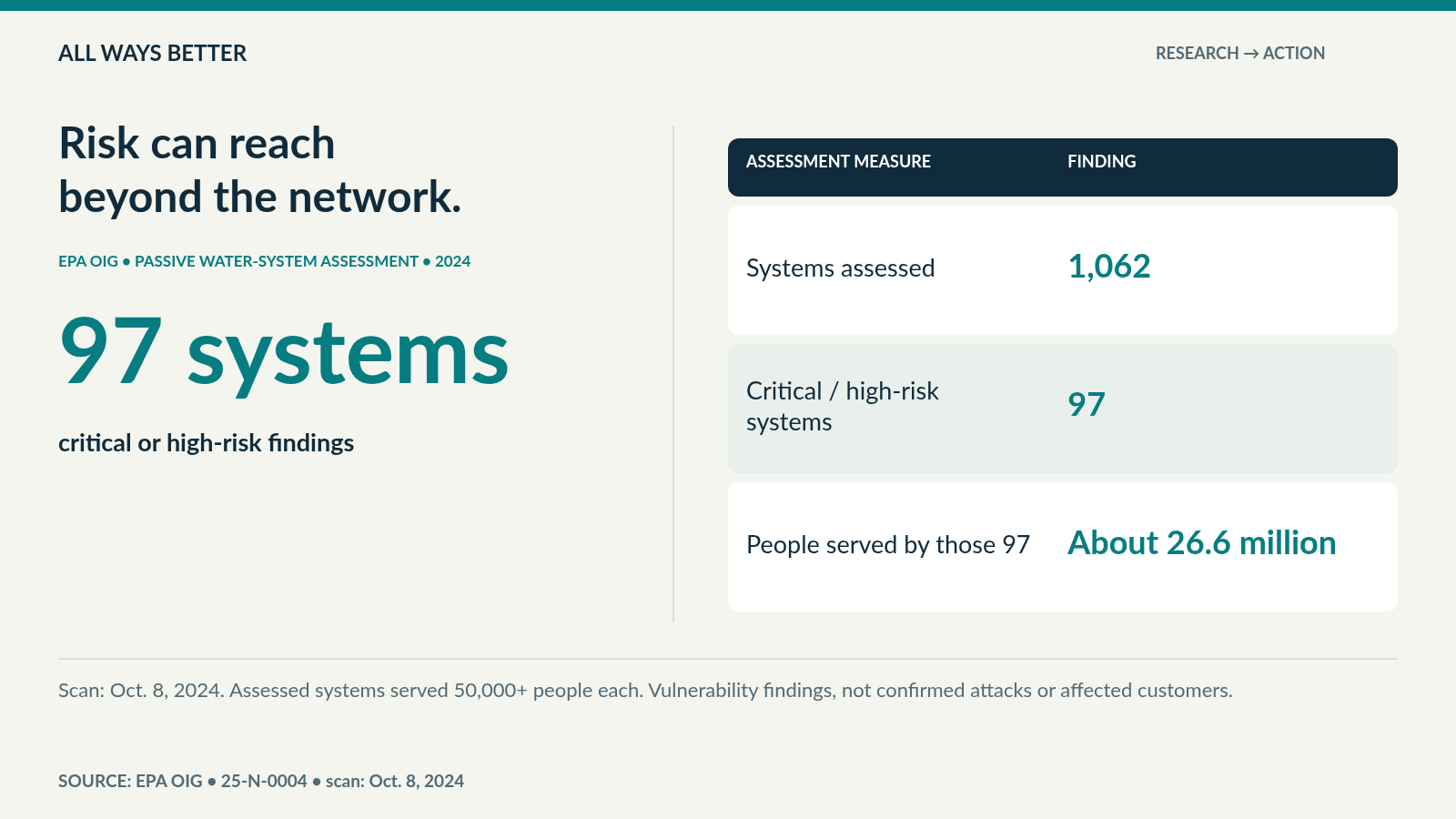
EPA OIG identified 97 systems with critical or high-risk findings in 2024. Its report describes a passive assessment, not confirmation that those systems had been compromised. That distinction should remain visible when findings are discussed with staff, management, or the public. A reported exposure needs review in context before an organization can determine its significance and agree what work should follow.
Start by assigning an owner to the finding. The owner should be able to bring the operational team and the relevant provider into the same conversation. Record the affected asset, its business function, and the evidence supplied by the assessment. Keep sensitive technical details in an appropriate secure system. The initial question is whether the finding accurately describes the current environment, including connections managed by third parties.
Agree the response and completion evidence
Ask the provider to explain the proposed response and its operating constraints. Some work may concern remote access or authentication; other work may require replacement planning or a broader review. The responsible specialists should confirm what can be tested, which approvals are needed, and how service will be protected during the change. A severity label does not remove the need for careful implementation planning.
Define what closing the finding will mean. A note saying that someone looked at it is different from evidence that the agreed work was completed and checked. The record should identify the action, the date, the people involved, and any remaining limitation. If a change cannot be made immediately, document who accepts the interim arrangement and when the organization will review it again.
Keep the decision record current
Keep management reporting tied to that record. A short status view can show which concerns have an owner, which need a decision, and which have completion evidence. Explain uncertainty in plain language. Avoid turning a scan result into a claim that an incident has occurred, or treating an unanswered question as proof that everything is safe. The aim is to support decisions the organization can explain afterward. Ask who will review that evidence before the item is marked as complete.
Discuss the assessment finding
All Ways Better can help prepare a focused conversation about assessment findings and the support needed to act on them. We will ask about the service, the responsible people, and the questions a specialist must resolve. A provider confirms its assessment or implementation scope, qualifications for the work, schedule, and fees. That helps connect a finding to an agreed next step.
Sign up today to receive a free initial implementation consultation. Share a general description of the finding and the decision your team needs help framing. Our team will follow up to arrange a call. The offer covers the initial discussion; technical assessment, engineering decisions, remediation, and implementation are separate services agreed with the relevant provider.