A security finding at a water utility needs to be understood through the service the equipment supports. Losing a monitoring view, losing the ability to make an authorized change, and losing an ordinary office application have different consequences. The people responsible for operations need to help explain those differences before work is prioritized.
Connect the finding to the service
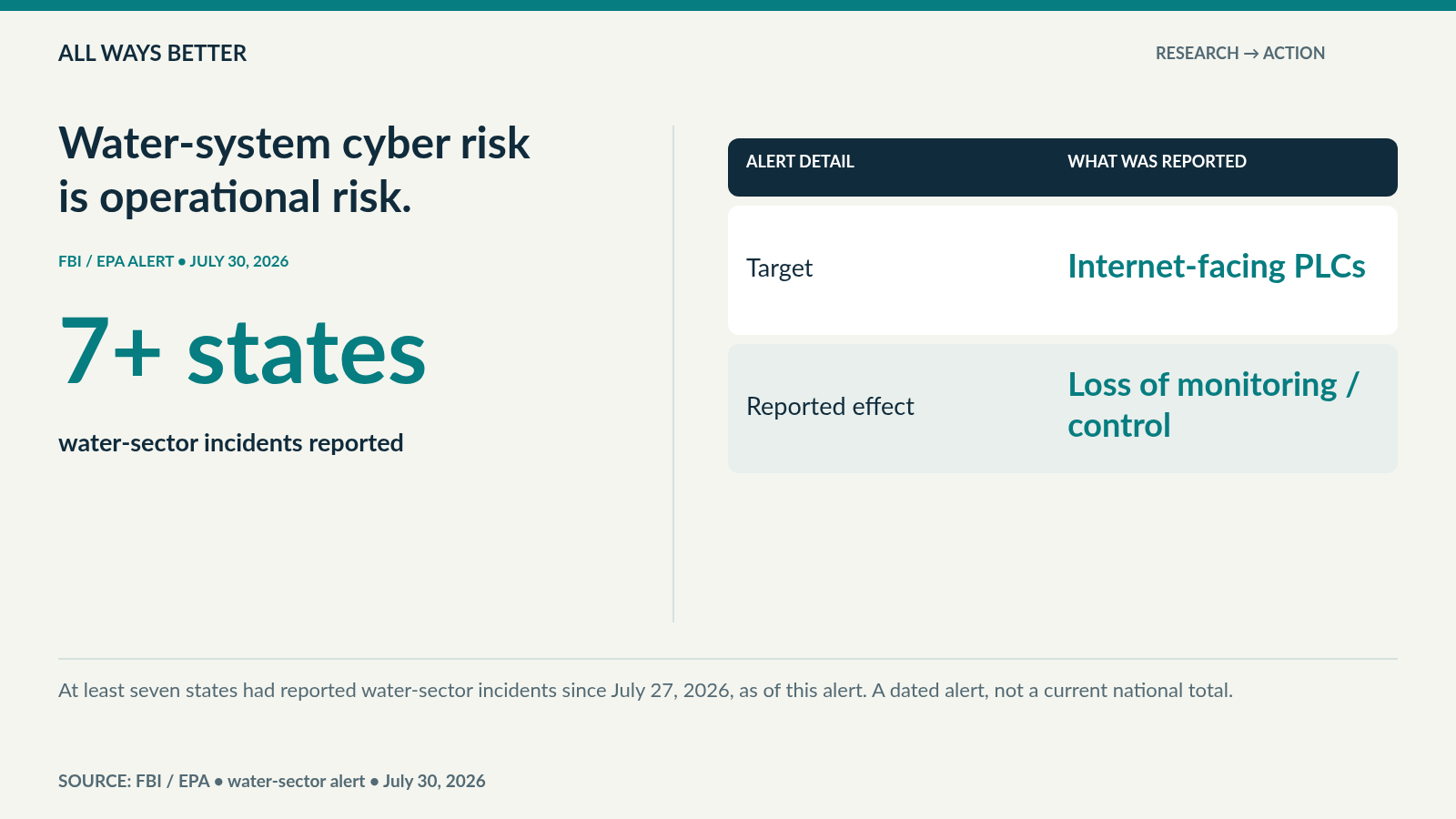
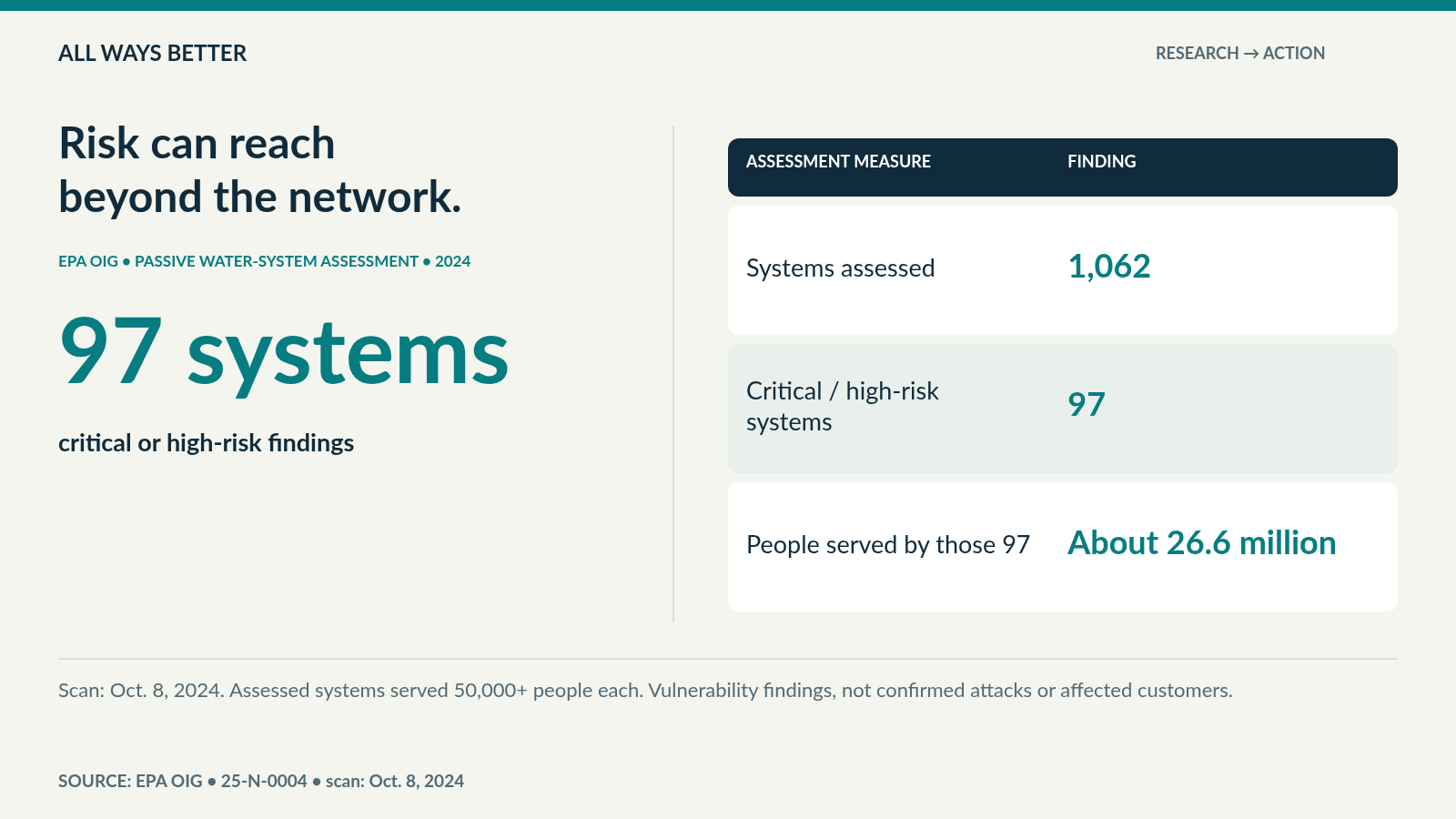
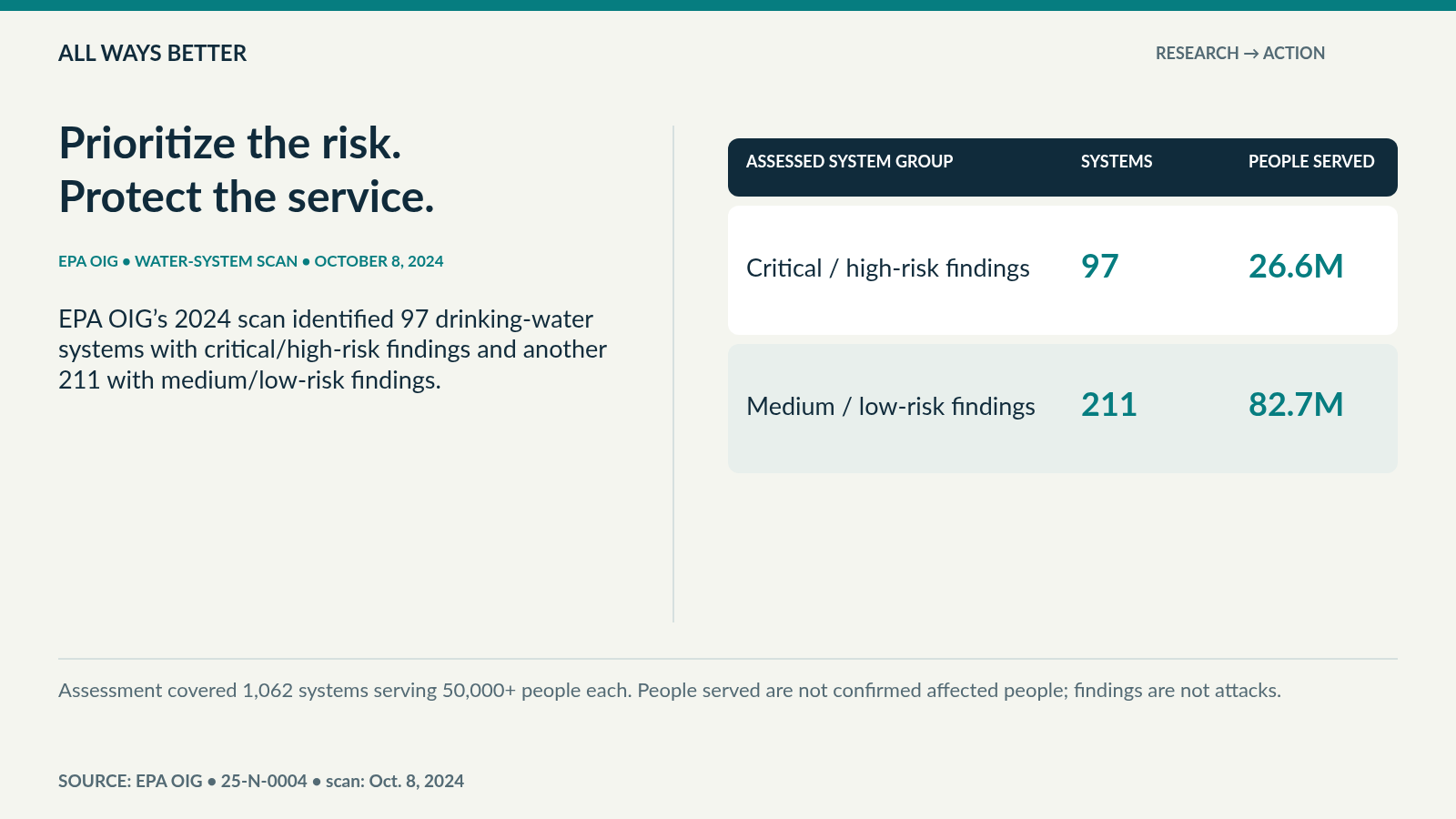
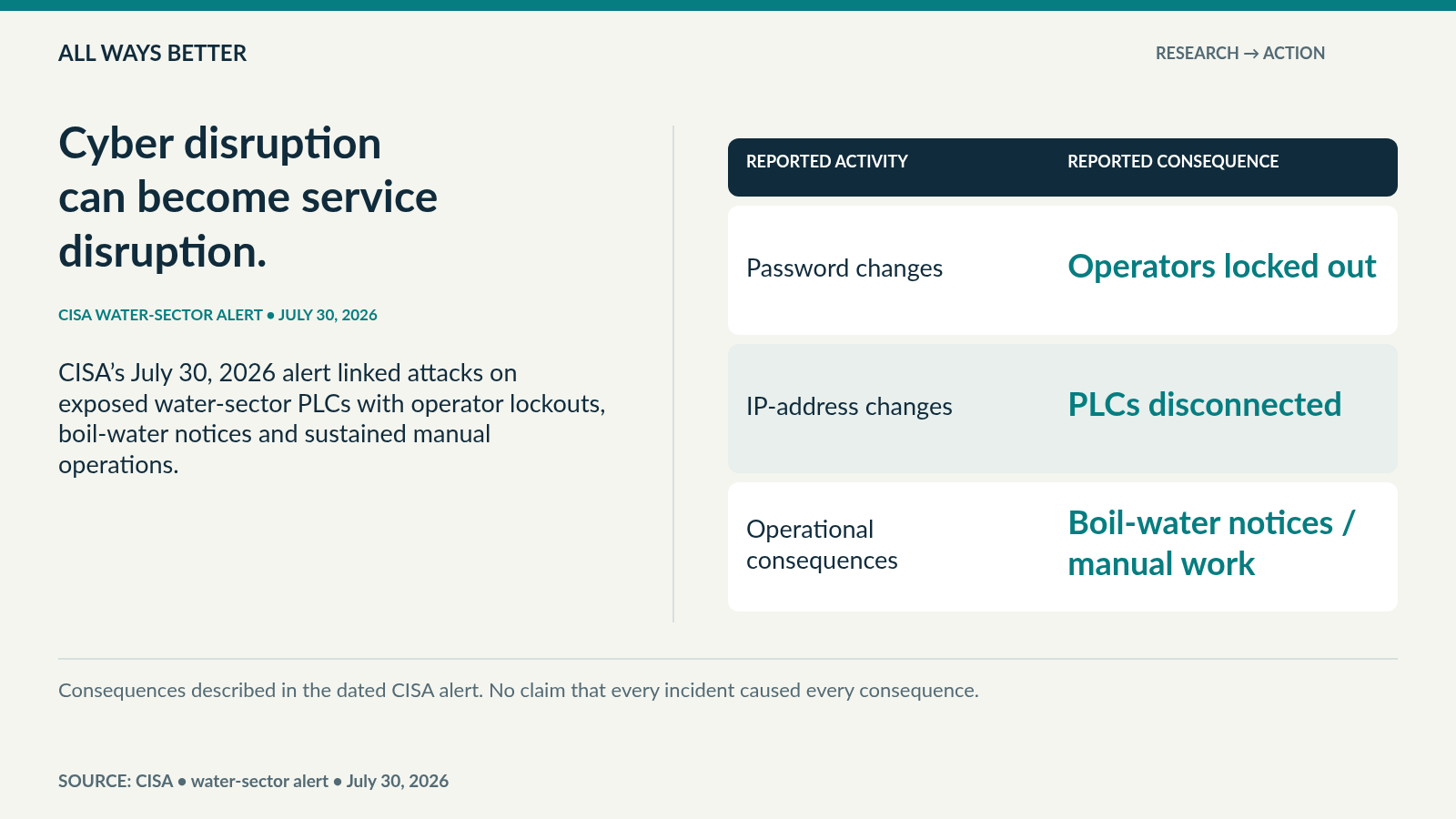
Federal water-sector guidance describes disruptions involving exposed operational devices. It does not establish the condition of your system or prescribe a single response for every facility. The local discussion needs the equipment's purpose, its connections, and the operating arrangements already in place. A technical severity label is a starting point for that discussion, rather than a complete description of the service risk.
Choose one identified concern and trace its operational role. Ask which process uses the affected equipment, what information operators need from it, and which other systems depend on it. Record the responsible people and the relevant supplier contacts. Keep configuration details within an agreed secure channel. An initial planning note should explain the concern without exposing information that belongs in a specialist assessment.
Check approved fallback arrangements
Review existing fallback arrangements with the operational owner. Establish which procedures are already approved, what training or resources they require, and how the team knows they remain usable. The purpose is to identify readiness and unanswered questions. It is not an invitation to improvise manual control instructions or test a live process without appropriate authorization, safeguards, and qualified personnel.
Use that operational context to discuss priorities with the technical team. A proposed change should explain what it addresses, how the work will be planned, and what evidence will show completion. Include the effect on alarms, maintenance support, and access for authorized staff. If a constraint prevents immediate work, record the interim arrangement, its owner, and a date for reviewing the decision.
Make priorities and communications explicit
Communications belong in the same review. Staff should know how to report an unexpected change, who can make an operational decision, and where to find contacts if ordinary email is unavailable. Public communication responsibilities should also be clear. Consistent information helps the organization explain the state of a service without turning an incomplete technical finding into an unsupported assurance or alarm. Ask an operator to review the service description so a manager reading the finding understands which daily operational work is affected and why.
Review the management summary with an operator
Give the management summary enough detail to support a decision. It should identify the affected service, the concern confirmed so far, and the question the specialists still need to answer. Where the consequence depends on a particular operating condition, keep that condition visible. Removing it to simplify a status report can change what the finding appears to mean.
Ask the operational owner to review the summary before it is used to prioritize work. This is a chance to correct an inaccurate service description and identify another team that needs to participate. Keep any proposed technical method in the specialist scope, with its authorization requirements.
Discuss the operational context
All Ways Better can help shape the initial requirements for a relevant assessment or implementation conversation. We will ask about the service involved, the people accountable for it, and the decision that needs support. An appropriate specialist confirms its qualifications, scope, responsibilities, timing, and fees. That discussion helps connect technical concerns with the operational outcomes the organization needs to protect.
Sign up today to receive a free initial implementation consultation. Provide a general description of the concern and a suitable business contact. Our team will follow up to arrange a call about next steps. The offer covers the initial conversation; engineering assessment, operational instructions, emergency response, and implementation work are outside that conversation and require separate agreement.