A risk table becomes difficult to use when every entry says that an issue is important but nobody can explain the next decision. Water organizations need a record that connects a concern to the affected service, the person responsible, and the evidence still needed. A color or score cannot supply those details.
Separate evidence from assumptions
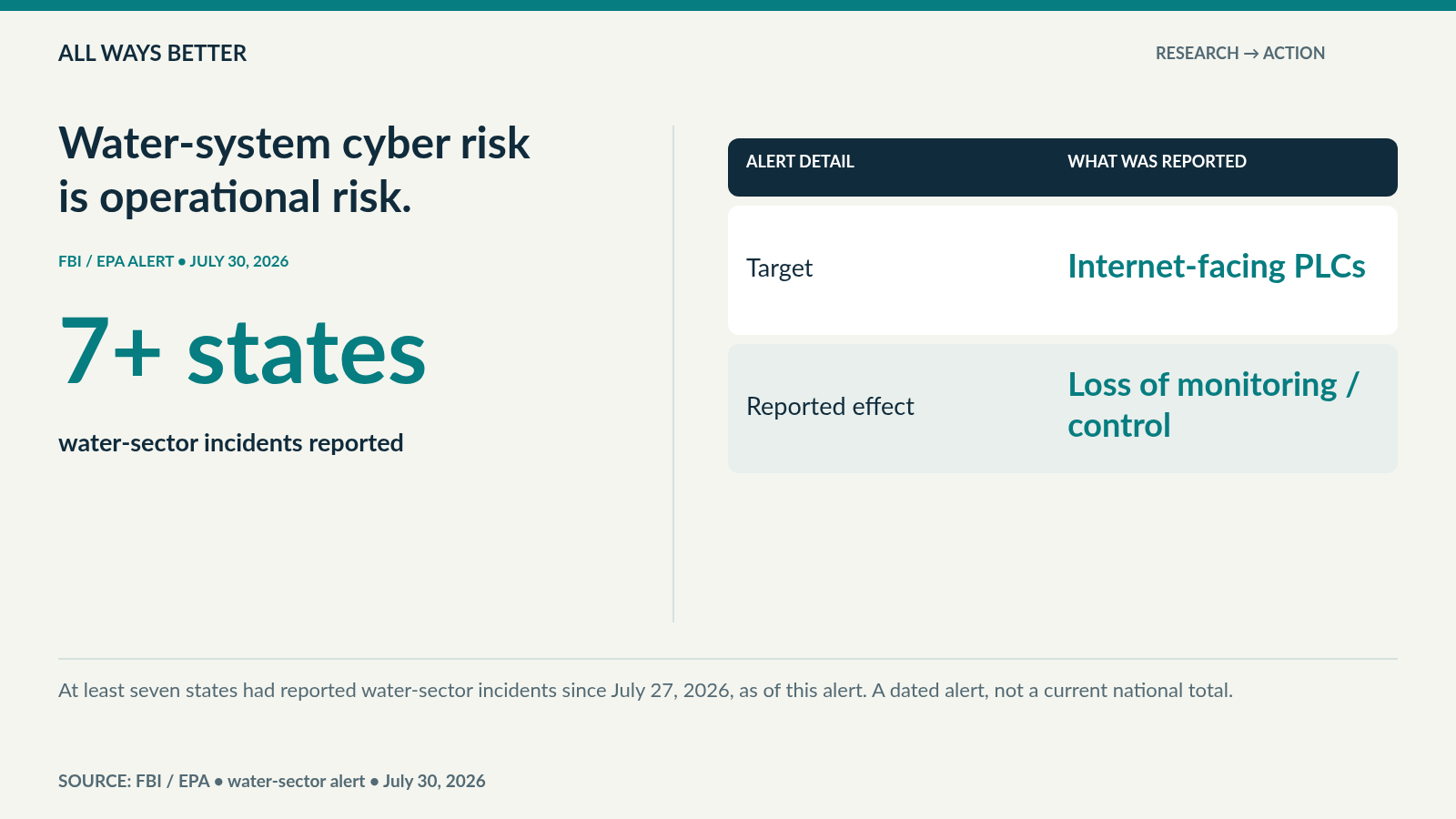
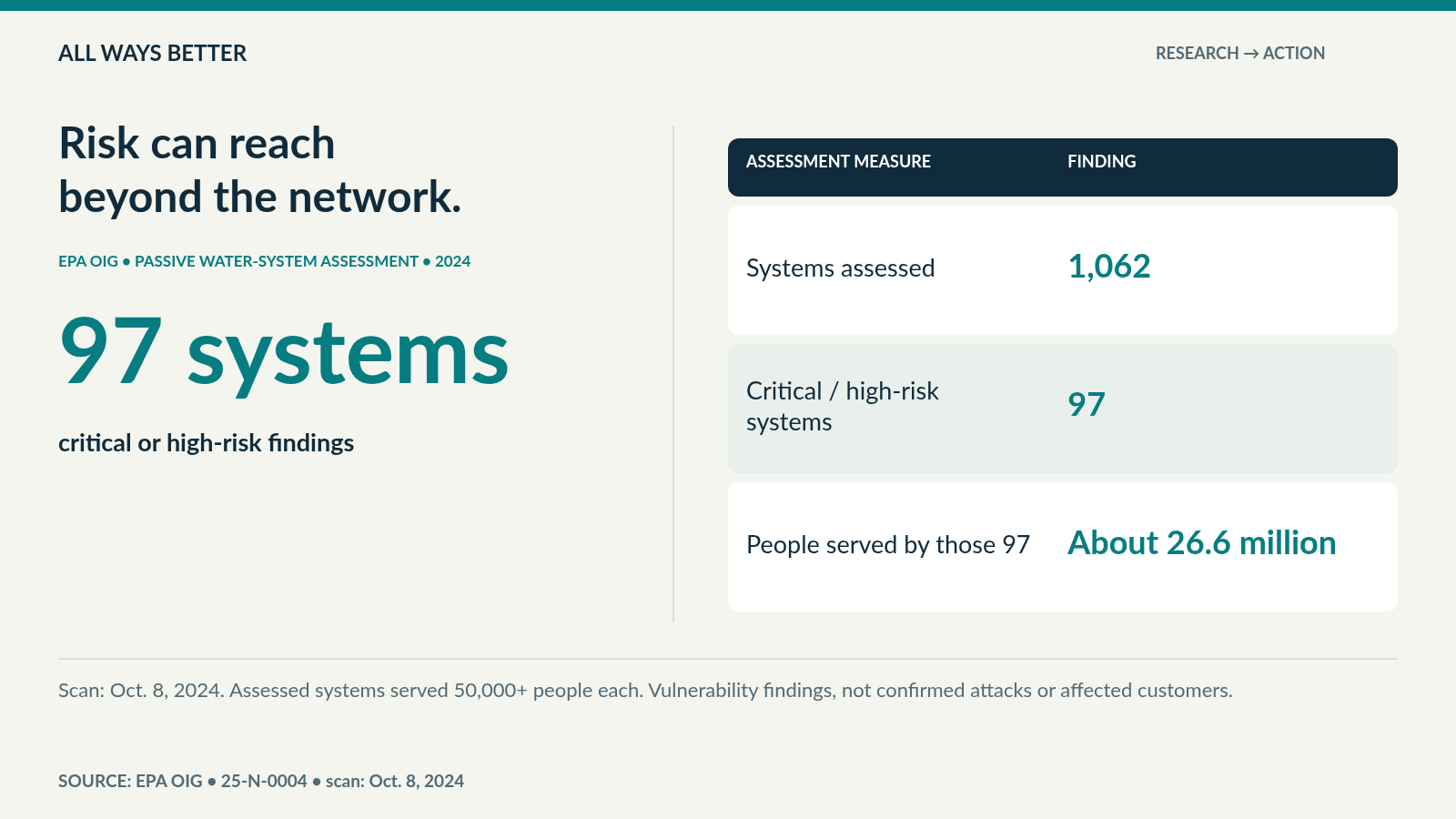
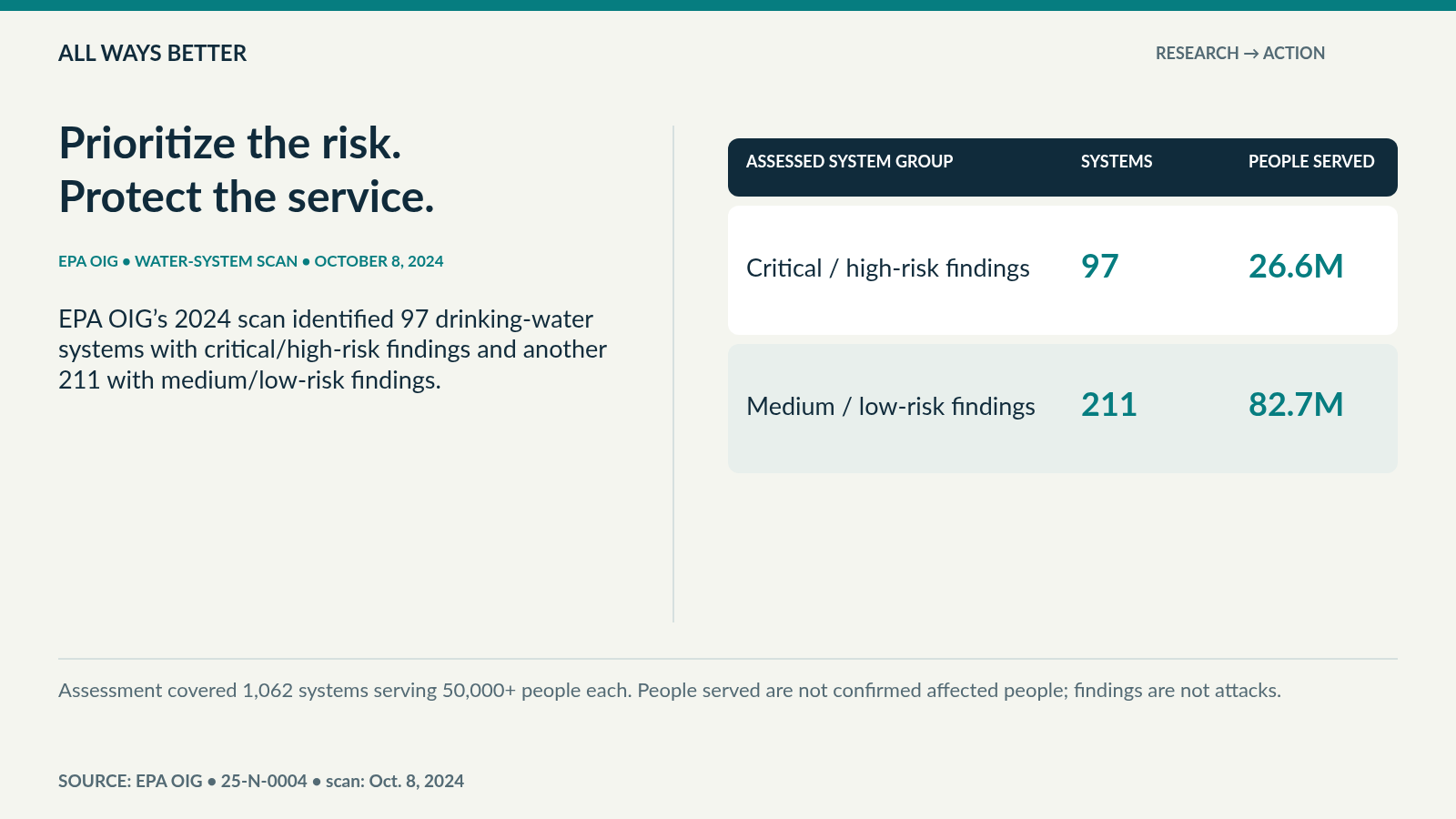
The EPA Office of Inspector General's review of internet exposure in water systems provides a reason to examine that record. Its findings came from a particular assessment and should not be read as proof that every identified system had been compromised. Local priorities need local evidence and the judgment of qualified people accountable for the service.
Start with one concern already raised through an authorized review. Describe what is known, where the information came from, and when it was observed. Distinguish a confirmed condition from an assumption requiring investigation. Avoid putting sensitive system details into broadly shared documents. The risk record should point authorized staff to the supporting information without exposing it to people who do not need access.
Connect the concern to a service owner
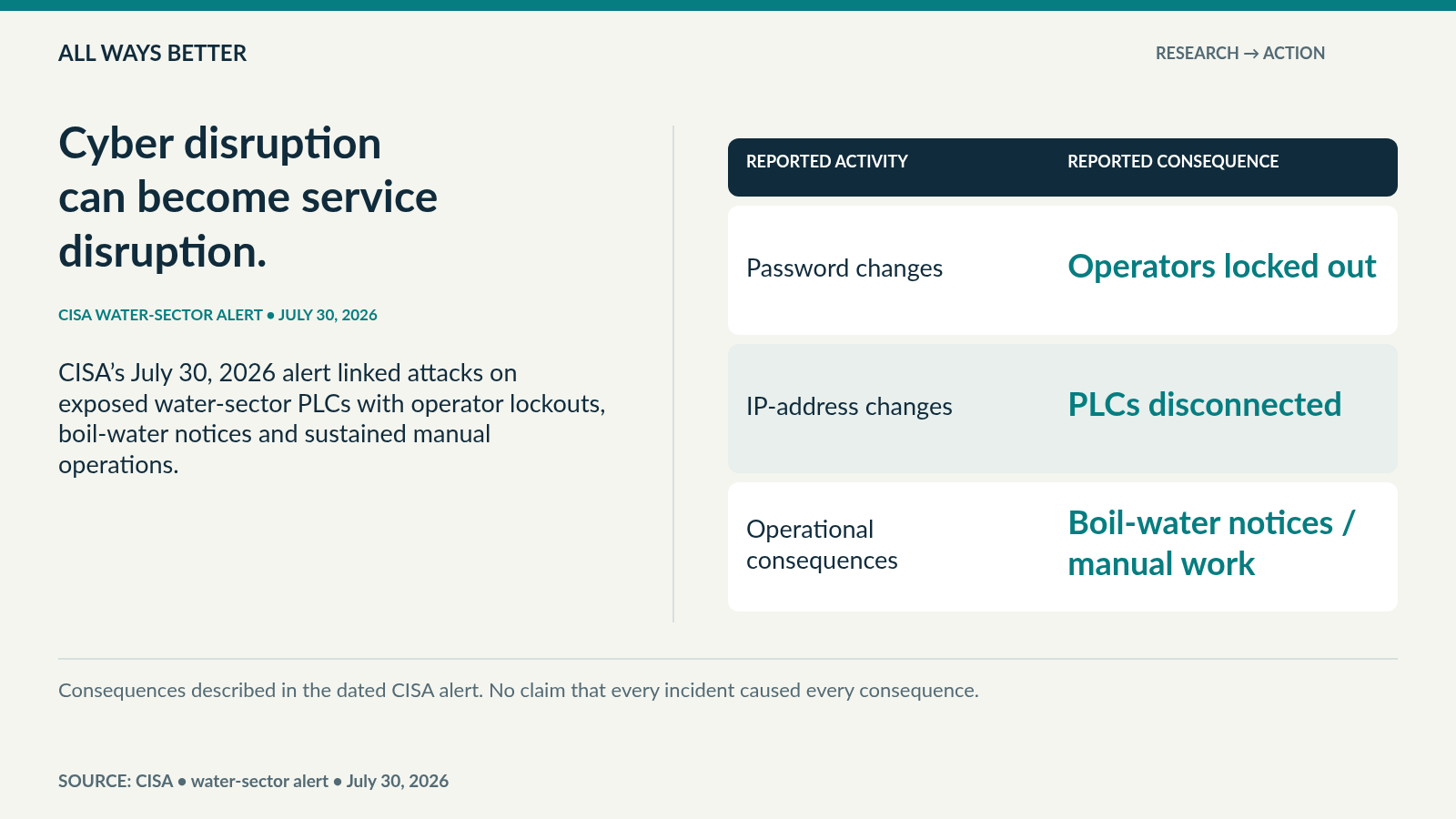
Identify the service that could be affected and ask its owner to explain the consequence in operational terms. A technical label may mean little to a manager deciding which work to fund. Equally, a general statement about service disruption may hide the dependency the technical team needs to assess. Both groups should be able to recognize the concern in the same record.
Give the next action an owner and a decision date. Sometimes the action is to obtain evidence or clarify responsibility, rather than change equipment. Record who has authority to approve the work and which supplier must participate. Technical changes to operational systems need qualified assessment and the organization's established authorization process. A planning table is not permission to alter a live service.
Define completion and retain the decision history
Keep the reasoning behind the priority. Note the evidence, uncertainty, dependencies, and any temporary arrangements that affect the decision. If two entries share a cause, ask whether one approved improvement would address both. If an action is delayed, record who accepts that position and when it will be reviewed. This makes the table useful during follow-up instead of leaving the same unresolved items to reappear at every meeting.
Agree what completion means before closing an entry. A purchase order, an installed setting, and an accepted result are different stages. The responsible team should define the evidence it needs and who will review it. Keep that evidence available for the next assessment and revisit the entry if the system or its use changes. Preserve that history.
Use the register as a decision record
A useful entry can be read as a short decision record. It explains the condition established by the review, the service concerned, the question still unresolved, and the next authorized action. Keep those elements distinct. A proposed action should not be written as though it has already been completed, and an untested assumption should not appear as a confirmed condition.
Review the record with the person who owns the action. Ask what would let them move it forward: a supplier response, an approved scope, or evidence from an authorized assessment. That answer helps management distinguish an item waiting for a decision from one waiting for delivery. Both may remain open, but they need different follow-up.
Use the completion review to check the original concern again. If the agreed work addressed only part of it, record the remaining question and its owner. Closing a purchase or project should not erase the reason the issue was raised. Retain the decision history so the next reviewer can understand what was accepted and why.
When a review date passes without a decision, leave the item open and record the reason. The next meeting should make that delay visible, including who can resolve it. Keep the unresolved work attached to its service owner until an authorized decision is recorded.
Discuss the next assessment decision
All Ways Better can help organize the requirements for that discussion and identify suitable specialist support. Bring a general description of the planning problem. An appropriate provider will confirm the assessment or implementation scope, responsibilities, fees, and schedule separately.
Sign up today for a free initial implementation consultation. We will follow up to arrange a call about your next planning step. The offer covers the initial conversation; technical assessments, operational advice, incident response, and implementation projects require separate professional scope.