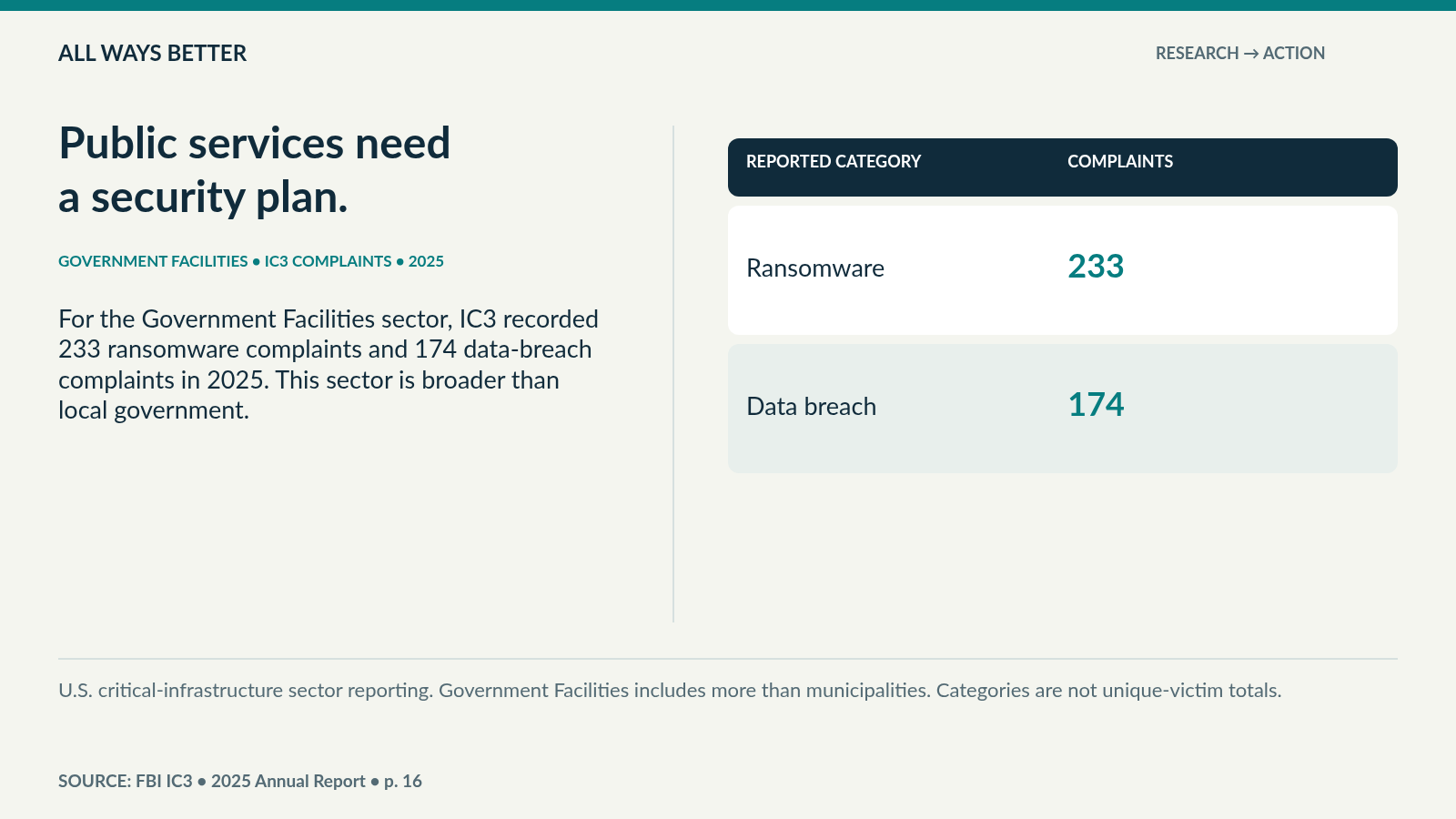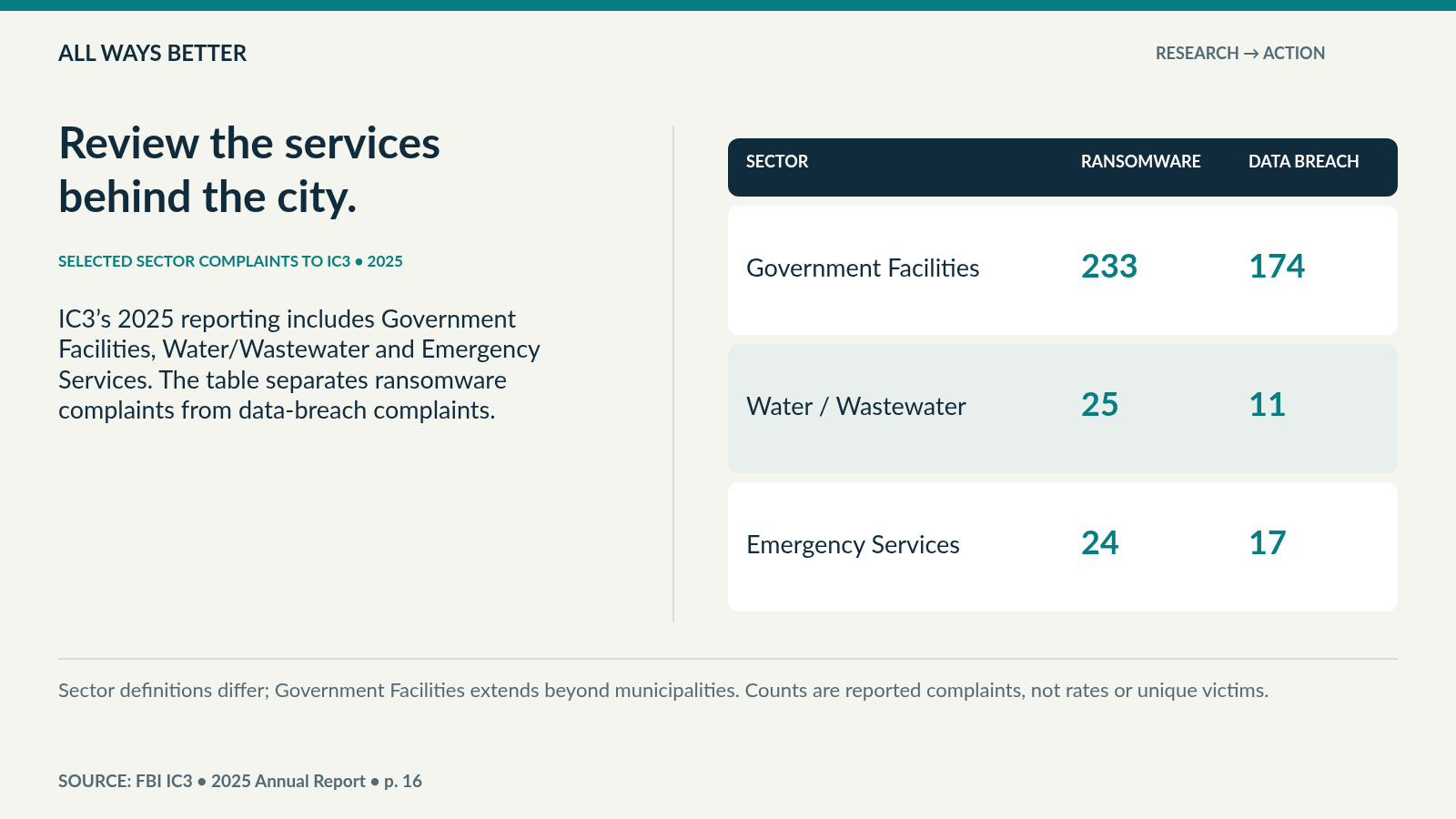
An emergency service needs more than functioning vehicles and trained responders. Dispatch, communications, records, supplier contacts, and administrative systems can all affect how work is coordinated. A disruption to a supporting application can create questions about responsibility even when the organization already has approved operational procedures.
Trace the information and its ownership
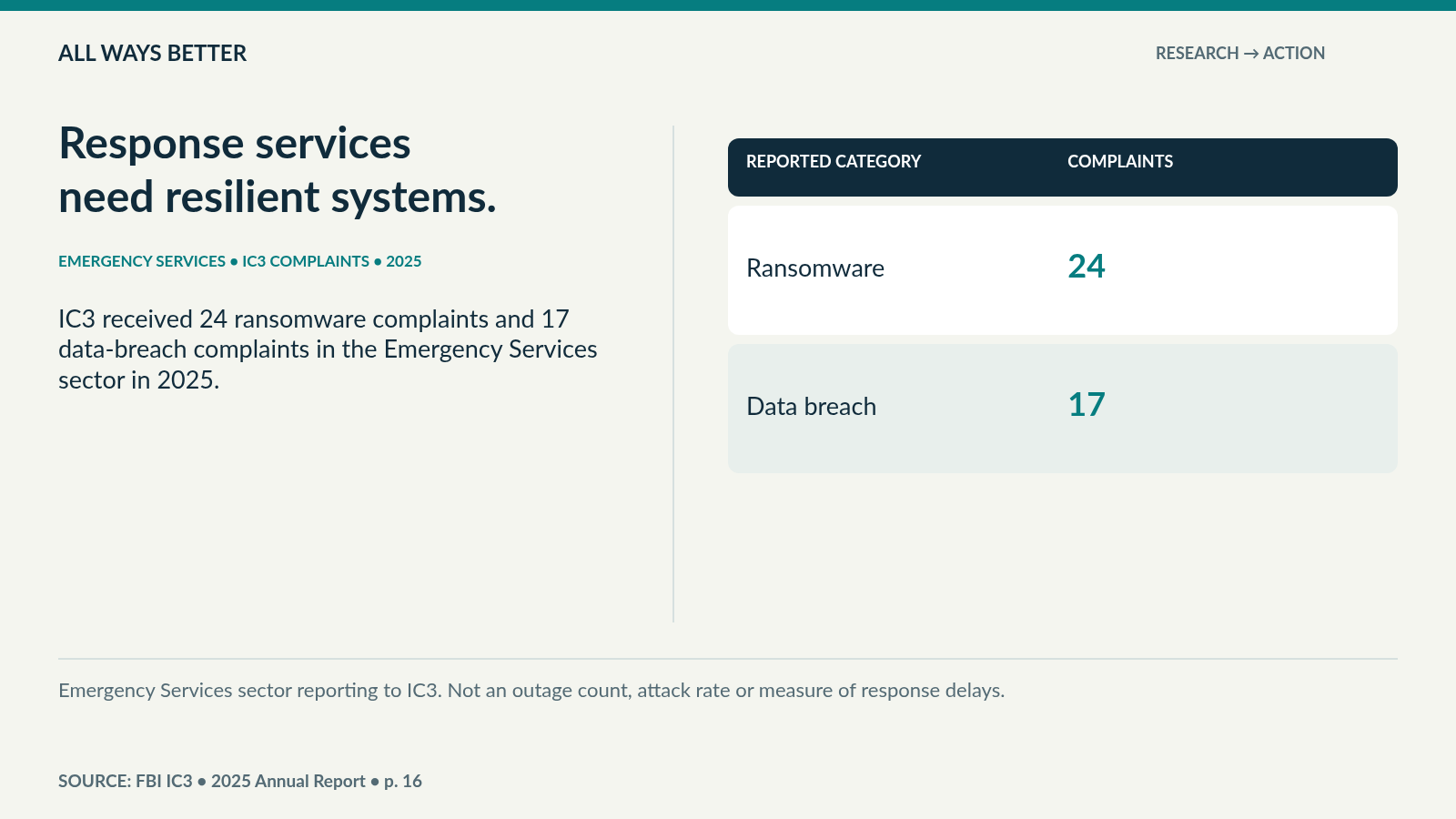
Emergency Services appears in the FBI's annual reporting on critical infrastructure complaints. Those figures describe reported incidents, not the readiness of a particular department. A useful local conversation starts with one service dependency and the people accountable for it. Choose an ordinary workflow and ask what information must be available for the authorized team to perform it.
Trace that information from its source to its users. Establish who maintains the record, who can authorize a change, and how staff identify the current version. Include suppliers where they operate or support part of the workflow. The result should make responsibility easier to find. Keep operationally sensitive information in the organization's approved systems, rather than adding it to a public contact form or a general marketing conversation.
Confirm reporting and recovery responsibilities
Review the contact arrangements for reporting a concern. Staff need an appropriate route to the people who can assess it, including when the usual email or telephone system is unavailable. Confirm that the technical provider and service leadership understand who makes which decisions. Outdated supplier details can complicate an otherwise clear plan, so give the contact record an owner and a review date.
Ask the responsible technical team about access and recovery evidence. Which accounts have privileged access? How is supplier access approved and reviewed? What has been established about restoring important information? These are scoping questions for authorized specialists. They do not authorize changes to live emergency systems, and they should not replace existing incident, dispatch, or public safety procedures.
Exercise the coordination arrangements
A discussion exercise can reveal uncertainty without changing operational equipment. Use an approved scenario, involve the relevant owners, and record where people disagree about a handoff or decision. Assign each unresolved point to someone who can settle it. Follow up on those actions before treating the exercise as complete. A document that names a responsibility is useful only if the named person understands and can carry it out. Include the person responsible for keeping that contact record current between reviews.
Choose a question for the discussion exercise
Include administrative and supplier contacts in the review where they support the chosen workflow. The person responsible for a contract may be different from the person who can authorize operational work. Both roles should be identifiable, with an approved way to reach the appropriate contact. A directory containing names without responsibilities can leave that decision unresolved.
Choose a specific question for the discussion exercise. For example, can the authorized team find the current support contact if its ordinary collaboration tool is unavailable? Keep the exercise within the approved scope and record where the answer remains unclear. It should help assign follow-up work without interrupting live services.
Before closing the review, confirm who accepts the completed actions. A new document needs a maintainer, and a supplier arrangement needs an owner who understands its limits. Put the next review date alongside those responsibilities so the work remains usable when personnel or providers change.
Discuss the supporting service requirement
All Ways Better can help organize an initial requirements conversation and identify appropriate assessment or implementation support. Explain which supporting workflow you want to examine and who needs to participate. We can discuss the coordination needed between service owners and technical providers. Any specialist work requires an agreed scope, qualified delivery team, operational authorization, and separately confirmed fees and timing.
Sign up today for a free initial implementation consultation. Share a general description of the planning problem and a business contact for follow-up. Our team will arrange a call about possible next steps. The initial conversation does not provide emergency assistance, incident response, or operational direction. Those responsibilities stay with the organization's authorized services and qualified specialists; any subsequent project must respect their established procedures and approval requirements.