A technology outage in local government can reach the public through an ordinary task: paying a bill, requesting a permit, or finding the right office. Planning for that disruption starts with the service residents need and the people who must keep it available. The IT system is one part of that service.
Follow the resident's service request
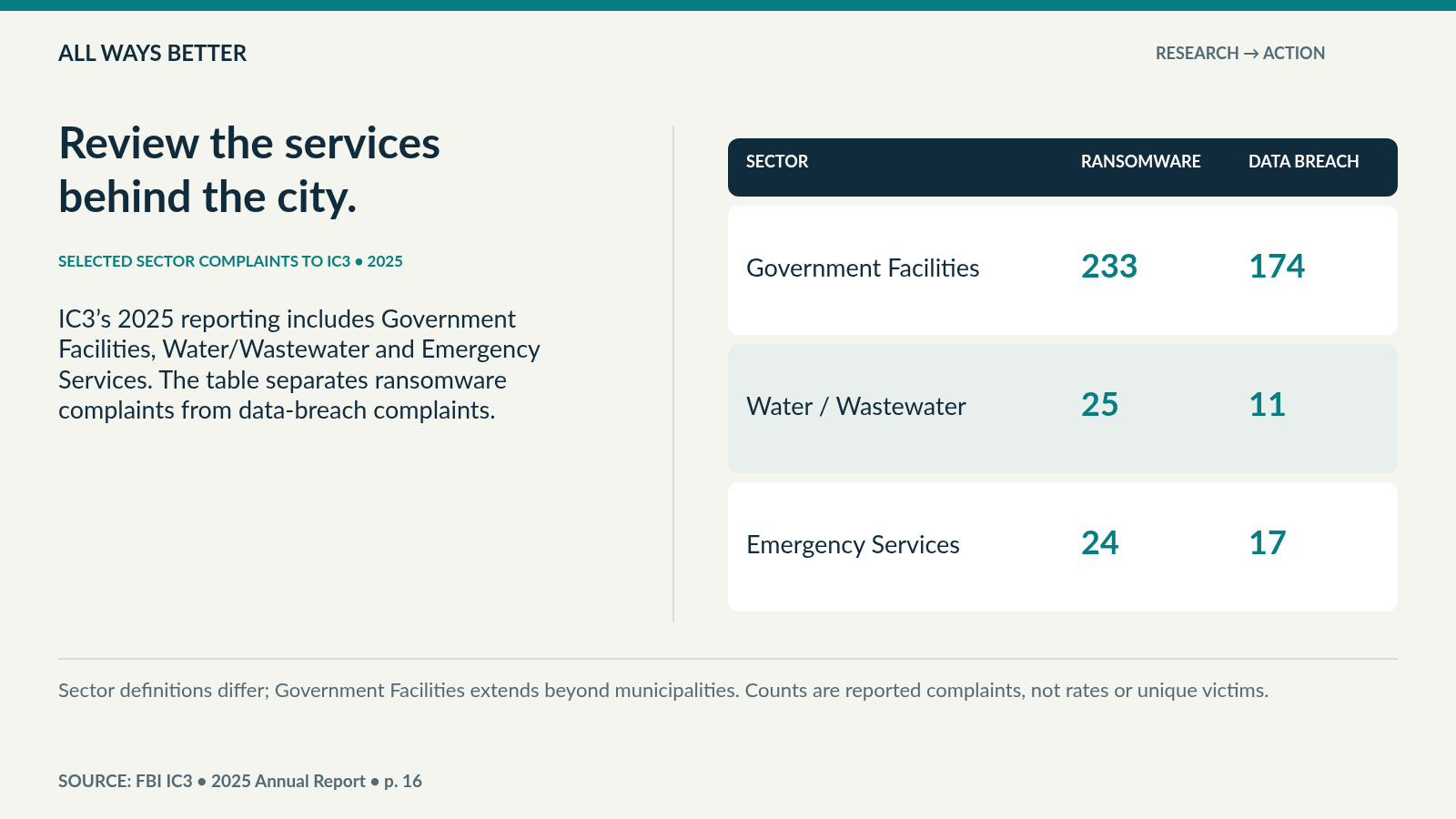
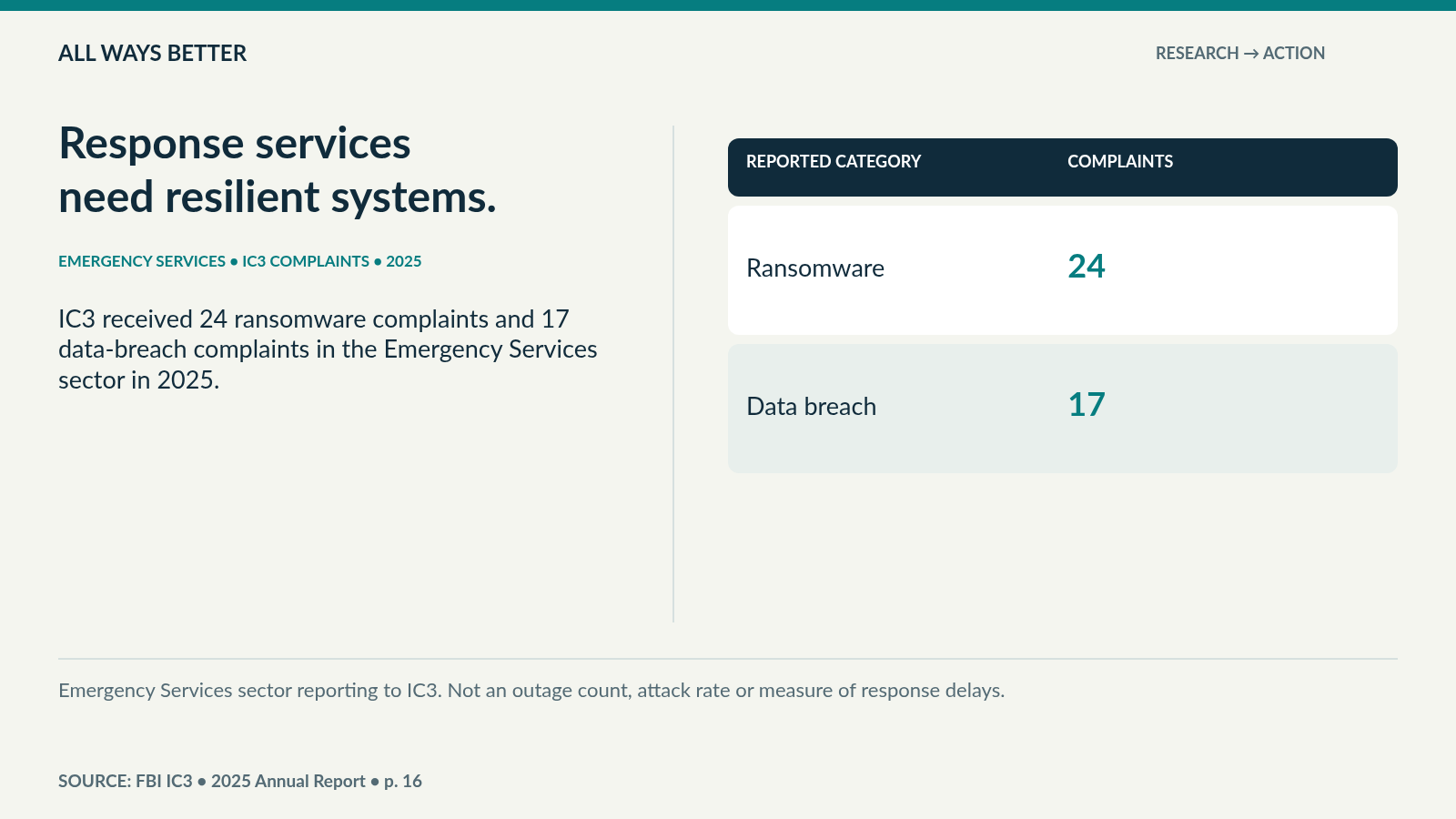
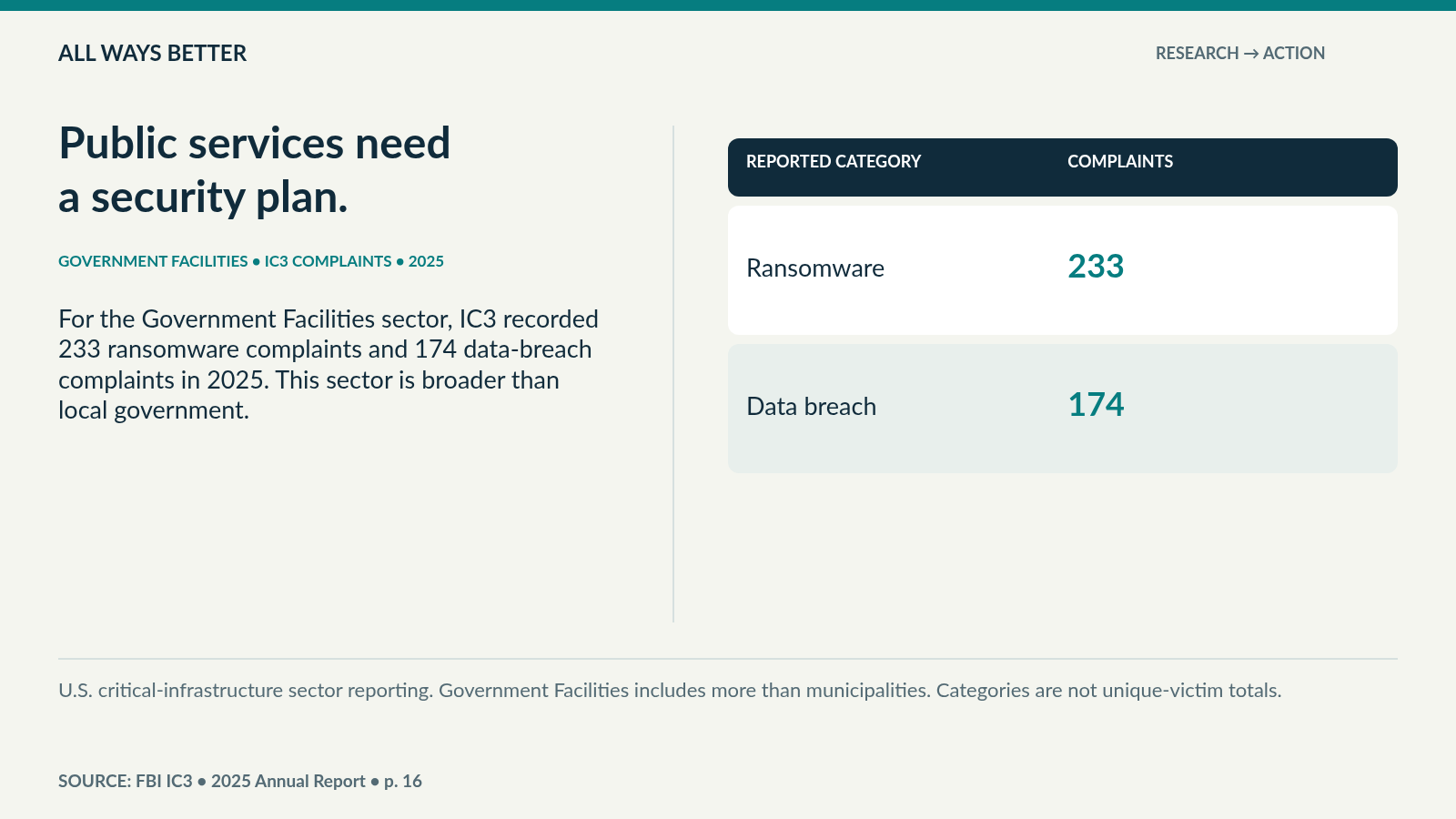
The FBI's annual reporting includes complaints from Government Facilities. Those reports do not establish the condition of your municipality or the likelihood of a future outage. They provide context for a discussion grounded in your own dependencies. Begin with a public-facing service and ask the staff delivering it which information, accounts, and outside providers they need during a normal working day.
Document the full path. A payment counter might depend on an application, an identity service, a printer, and a connection to a processor. A permit team might also rely on shared files and another department's approval. Note which steps can continue manually and which require a specialist decision. An agreed fallback should explain where records go and how they will be reconciled when normal service returns.
Plan the public-facing response
Include operational staff in the review. A workaround that looks simple on a diagram may create queues, duplicate records, or accessibility problems at the counter. Ask what employees would tell residents, how they would record urgent requests, and who could approve temporary changes. Keep public communications and internal technical decisions connected so people receive a consistent explanation of what remains available.
Review access to the systems supporting that service. Identify administrative accounts and supplier connections, then ask who authorizes them and how access ends. Discuss appropriate authentication, backups, and recovery testing with the responsible technical team. Changes involving building systems or operational equipment need the relevant operators and suitable safeguards. A service review should not create disruption by rushing a technical change.
Assign the decisions that remain open
Turn unanswered questions into assigned work. Each item should describe the affected service, the concern, an owner, and the evidence needed to close it. That evidence might be an approved contact list, a completed recovery exercise, or a documented supplier responsibility. Review the list with the people who can make decisions about staffing, procurement, and technical delivery. A report is easier to act on when each recommendation has a next step. Include the staff member who will explain the interruption to residents.
Walk through the resident's next question
Use a familiar resident request to make the review concrete. If the payment system is unavailable, can staff explain which channels remain available and whether a receipt can be issued? The answer may involve finance, the processor, and the team at the counter. Those departments need to agree the message together so residents are not sent from one office to another for conflicting answers.
Include people who use different access channels. A temporary arrangement that works at the counter may not help someone who normally uses the website or needs assistance by telephone. Ask the service owner to document those gaps and decide what information staff should provide. Any alternative payment or recordkeeping process still needs the organization's normal approval.
Discuss implementation support
All Ways Better can help clarify the requirements for that conversation and coordinate an appropriate introduction for assessment or implementation support. We will ask about the services you deliver, the systems involved, and the constraints the team must respect. Providers confirm their own scope, fees, and schedule. An initial discussion helps determine what needs specialist review before work is commissioned.
Sign up today to receive a free initial implementation consultation. Share a brief description of one public service you want to make more resilient. Our team will follow up to arrange a call and discuss the information needed for a useful scoping conversation. The offer covers that initial conversation; technical assessments and implementation remain separately agreed services.