A municipality's technology risks do not fit neatly into one departmental budget. Finance may depend on shared identity services, public works may use outside maintenance, and emergency coordination may need information held elsewhere. Comparing departments is useful when it reveals those connections and the decisions that need a common owner.
Compare services using consistent questions
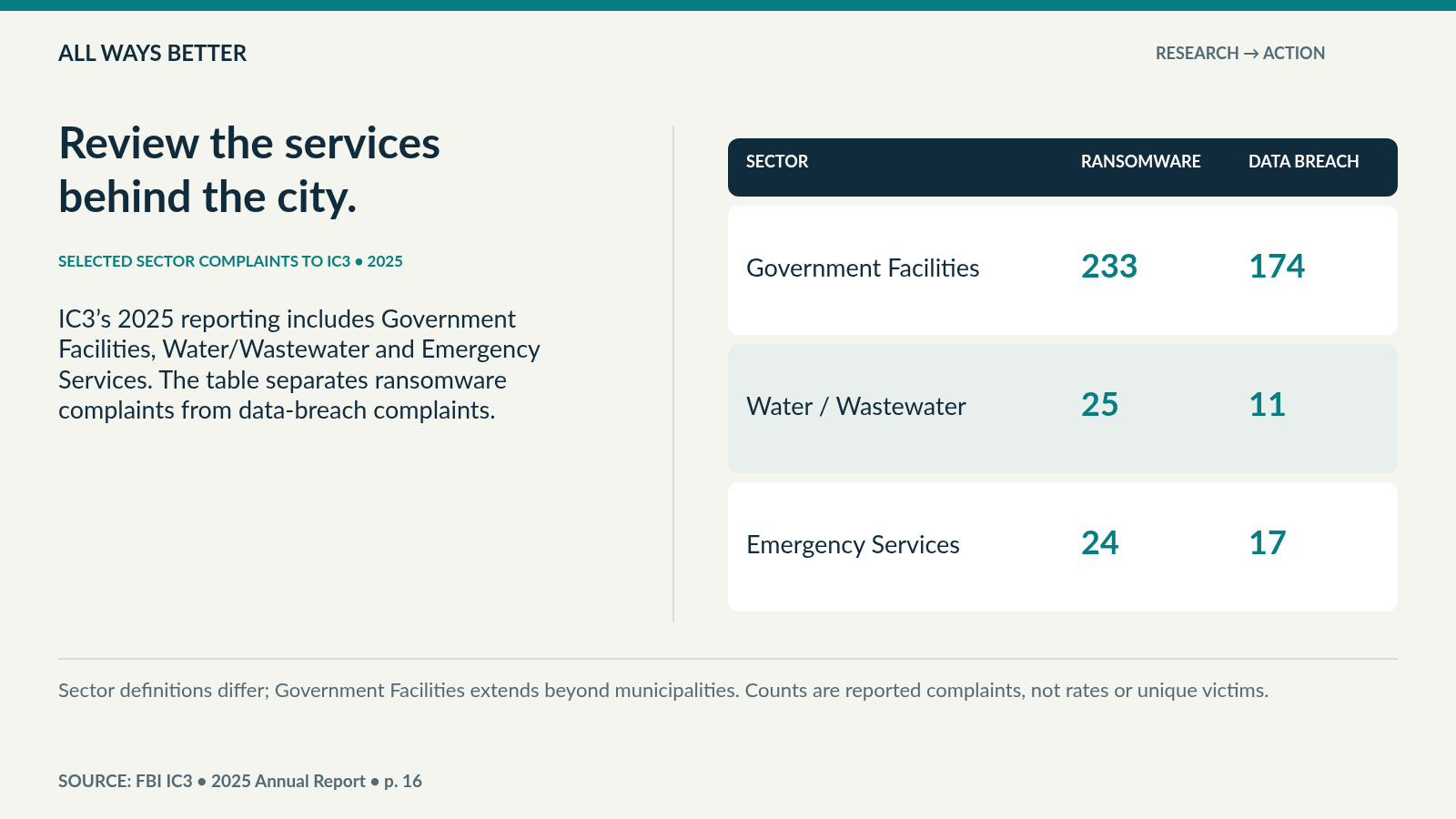
National complaint reporting separates organizations into sector categories. Those categories describe reported information; they do not provide a league table of how safe a city or department is. A local comparison should use consistent questions about the services each team delivers. Begin with the systems staff need to serve residents, then identify which dependencies are shared and which are specific to an operational function.
Use a simple record for each service. Include the business owner, the technical contact, the important outside providers, and the effect of an interruption. Ask departments to describe the interrupted work: which requests cannot be processed, which records cannot be checked, and which decisions require another team. That gives a planning meeting something more concrete than a general concern about cybersecurity.
Check shared recovery assumptions
Compare recovery assumptions next. One department may expect shared IT support to restore access quickly while another has already planned a manual process. Ask what evidence supports each expectation. A provider agreement, a completed exercise, or an approved procedure can help resolve a question. If the information is missing, assign the question rather than filling the gap with a confident estimate.
Look for changes that need coordination. A new authentication method may affect several departments, while a supplier-access decision may involve both public works and IT. Include the people who understand availability, accessibility, and safety requirements before setting a schedule. Shared ownership of a decision does not mean every team has the same technical needs. The implementation plan should make those differences explicit.
Report the decisions management must make
Management reporting can then focus on decisions and evidence. Show which concerns need approval, who will carry out the work, and how completion will be checked. Keep dates attached to agreed actions rather than promises made before the work is scoped. Review the comparison when a service, supplier, or responsibility changes, so the record remains useful to the people making operational decisions. Give each department a chance to correct the record before management uses it to set forthcoming service priorities or compare proposed work.
Give departments a common request for proposals
Keep the comparison focused on decisions rather than a single departmental score. Finance and public works may share a technology provider while requiring different temporary arrangements. Record that difference where management can see it. A common supplier does not establish a common consequence or make the same implementation schedule suitable for both teams.
Before requesting proposals, agree which question the proposed work should answer. A shared access review, a recovery exercise, and an update to departmental procedures are different pieces of work. Ask providers to state the boundaries of their proposal so departments can compare it against the same request.
Also record the staff time each department will need to contribute. A project may depend on interviews, document checks, or an authorized review of existing arrangements. Management can then consider those commitments alongside the supplier's scope before approving a start date.
Discuss a shared-service requirement
All Ways Better helps organizations clarify these requirements and identify an appropriate service conversation. We can discuss the gaps found in a departmental review and help coordinate suitable assessment or implementation support. The specialist provider confirms the work it can undertake, its responsibilities, and the commercial terms. A clearer request makes it easier to compare proposals against the service outcomes you need.
Sign up today to receive a free initial implementation consultation. Bring a short description of a shared service or a question that crosses departmental boundaries. Our team will follow up to arrange a call about possible next steps. The offer covers the first scoping discussion; assessments, technical reviews, procurement work, and implementation are separately agreed services.