Remote support can be useful to an energy operator, but an access route should have a defined owner and purpose. Connections can remain in place after a project ends or a supplier's responsibilities change. An access review helps the organization establish which routes are still needed and who is responsible for controlling them.
Identify the access and its purpose
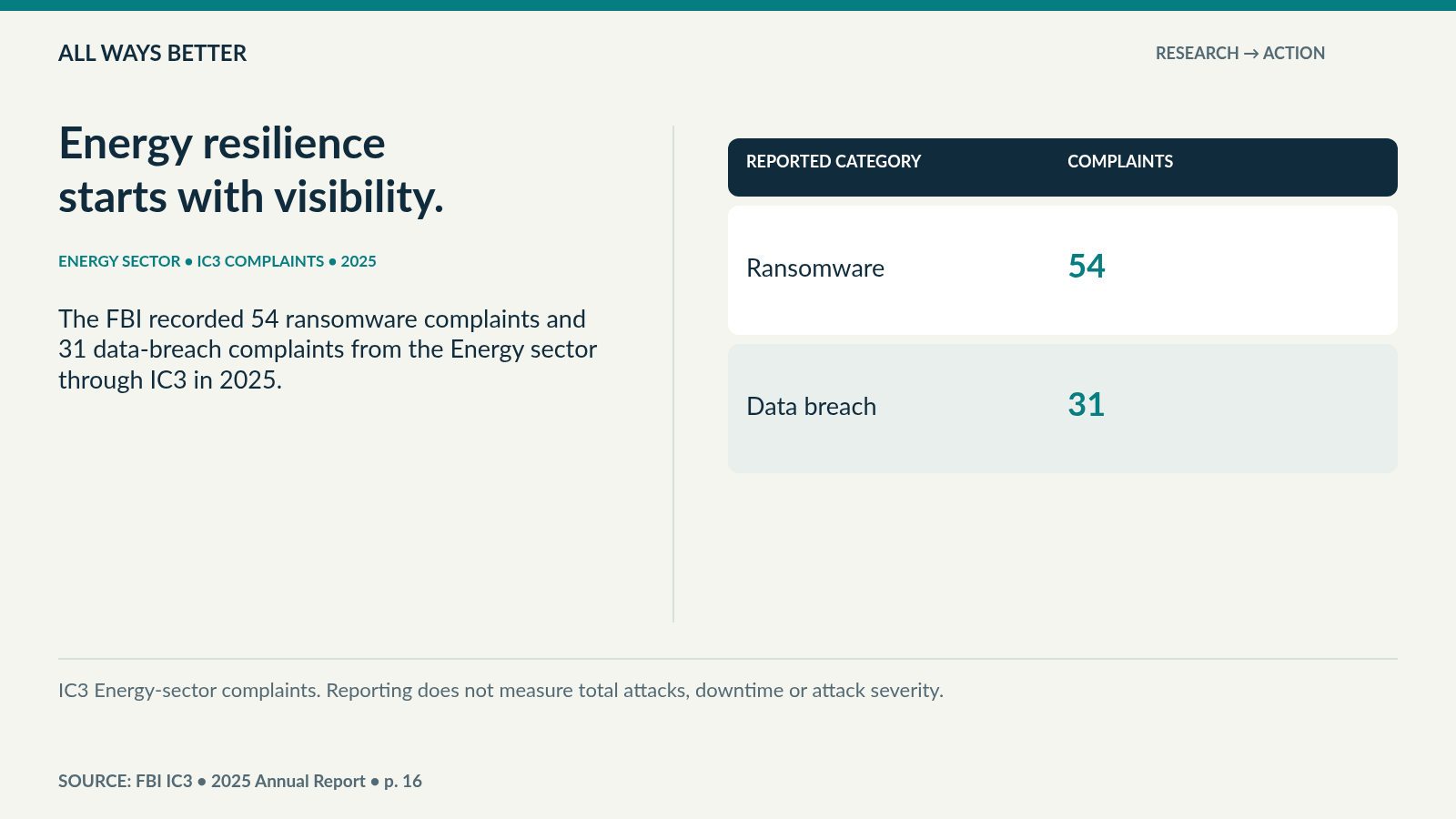
Energy-sector complaints appear in the FBI's annual IC3 reporting. Those totals do not describe your equipment or establish whether a particular connection is unsafe. A local review starts with a current inventory and the people who understand the operational process. Office IT staff, equipment operators, and external suppliers may each hold information that the others need before a change can be considered.
Record the system, its function, the approved support method, and the contact responsible for it. Include access used infrequently, such as a supplier connection for maintenance or diagnostics. Ask how permission is granted and how it is removed when the work ends. Keep sensitive technical information in an agreed secure location. An ordinary website form is suitable for describing a concern, not for sending credentials or detailed control-system configurations.
Review arrangements before changing them
Review the inventory with the operational owner. A connection that appears redundant may support a required maintenance process, while a familiar arrangement may no longer match the current contract. Resolve those questions before changing settings. Work involving operational equipment needs qualified personnel, authorization, and a method that respects the facility's safety and availability requirements. Planning and verification are part of the task.
Discuss how the team would recognize and respond to an unexpected change. Identify the records used to review access, the person who receives a concern, and the supplier contacts available when ordinary communication is disrupted. Confirm who can authorize further investigation or an operational decision. Staff should understand the escalation route without needing to determine the technical cause before reporting a problem.
Assign evidence and follow-up
Document the next steps in language both operators and providers can use. Each item should name the affected service, the question to resolve, the responsible owner, and the evidence needed for a decision. Some findings may require an assessment; others may need a clearer supplier agreement. Review the list when equipment, personnel, or access arrangements change, so the inventory remains connected to the work being performed. Ask the supplier to confirm who maintains its contact details.
Document the provider handover
Include a handoff when responsibility for an asset changes. The departing provider, incoming provider, and operational owner may each hold a different part of the access history. The organization needs an agreed record of the current arrangement and the questions still unresolved. Ask who maintains that record after the handoff, so a completed project does not leave ownership unclear.
Use that record when commissioning further work. A provider should be able to describe which connection the proposed assessment covers and what information it needs from the operator before proceeding. Keep the resulting scope attached to the concern that prompted it.
Discuss assessment requirements
All Ways Better can help clarify the requirements for an assessment or implementation conversation. Bring a general description of the access concern and the teams involved. We can help identify suitable support and coordinate an introduction. The specialist provider confirms its competence for the work, the delivery scope, responsibilities, timing, and fees before any project is agreed.
Sign up today to receive a free initial implementation consultation. Our team will follow up to arrange a call about your needs and the information a provider should review. The offer covers an initial scoping conversation, rather than an engineering assessment, operational advice for live equipment, emergency support, or implementation. Further services are separately agreed with the responsible team.