A production team can feel a technology outage through a missing job sheet or an unavailable shared file. The machine on the floor may be working while the information needed to run the next job is inaccessible. A continuity review should follow the production process far enough to find those less visible dependencies.
Find the approved production record
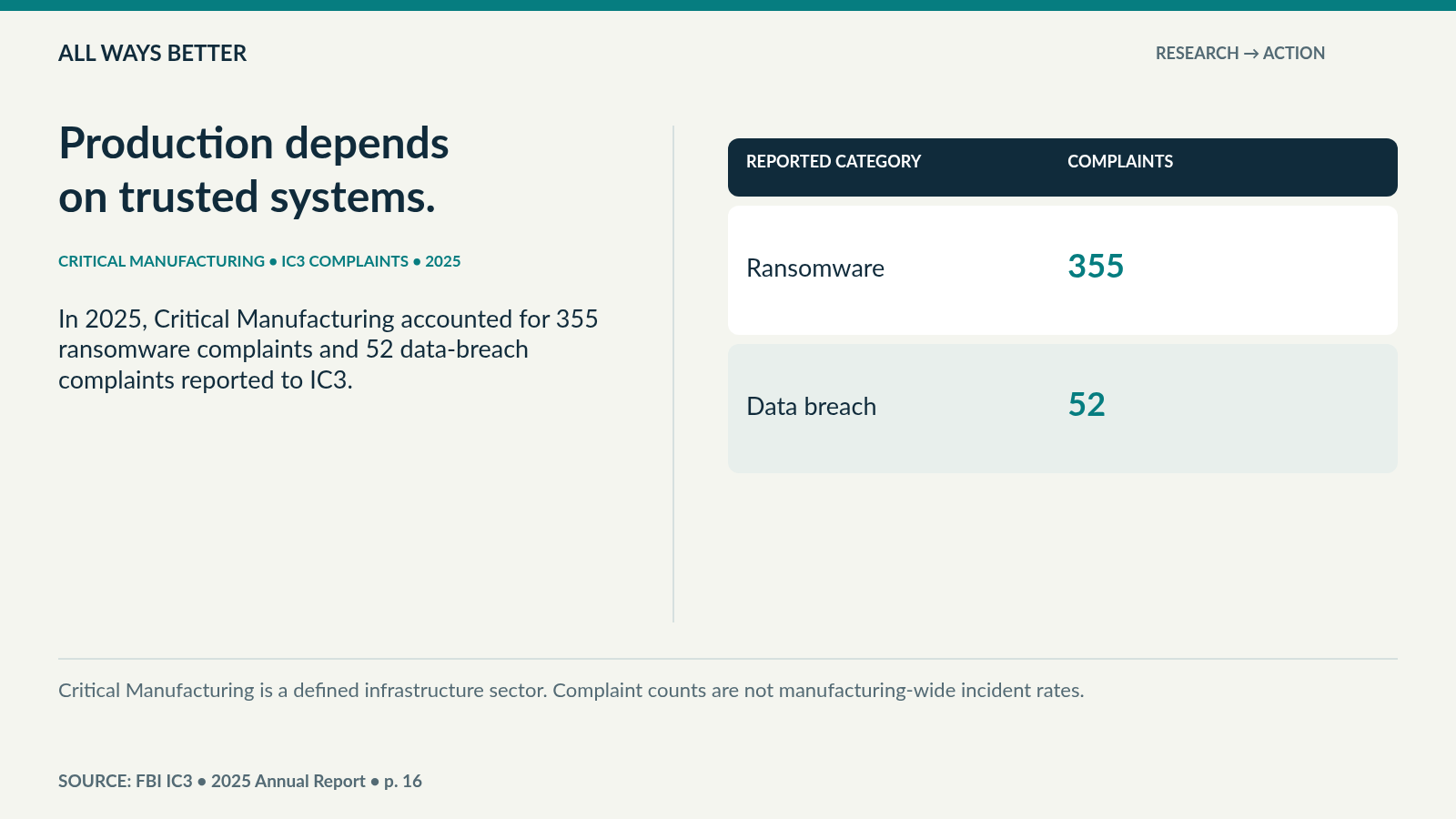
The FBI includes Critical Manufacturing in its annual complaint reporting. That context supports asking questions, but a sector total cannot determine the priorities for an individual plant.
Start with one production activity and the people responsible for it. Ask what information they need, how they receive it, and which systems or suppliers must be available for the next task to proceed.
Review interruptions with the floor team
Map the route from an order to the floor. Note where specifications are checked, which version is approved, and how operators know a change has been authorized. Shared drives, email, scheduling tools, and supplier portals may each play a part. The review should identify the authoritative record and the person responsible for resolving a mismatch, rather than adding another document that nobody owns.
Then discuss an interruption with the operational team. Identify which work can continue under established procedures and which decisions require engineering, quality, or management approval. Include how temporary records would be checked and reconciled afterward. Any fallback must respect the plant's safety and quality requirements. A generic workaround is not a substitute for a procedure approved by the people accountable for production.
Define completion before work begins
Ask the technical team to review the access and recovery arrangements supporting that process. Relevant questions include who can administer systems, how suppliers obtain remote access, and what evidence exists that important information can be restored. Operational equipment needs its own qualified review. Agree how changes will be planned and tested so improvement work does not create an avoidable interruption to the line.
Use the findings to define a manageable first project. Specify the process affected, the gap to address, and the evidence that will show the work is complete. A project might concern record handling, supplier access, or recovery planning, depending on what the review establishes. Identify the production time and staff involvement needed before agreeing a schedule with a provider. Ask an operator to show where the approved job information comes from before choosing a proposed change.
Walk through a revised job specification
Consider a revised job specification that reaches planning but has not yet reached the floor. Ask how the operator identifies the approved version, who can settle a discrepancy, and where that decision is recorded. The question concerns the whole handoff, including people and procedures. Adding another screen will not resolve an unclear approval rule.
Include a person from the next shift in the walkthrough. They should be able to follow the record without relying on a conversation that happened earlier in the day. If a temporary arrangement is proposed, ask how the next shift will recognize it and who can authorize the return to ordinary working. Leave operational decisions with the people accountable for the process.
Agree a practical review at the end of any project. The relevant users should be able to demonstrate the agreed task, find the current information, and explain where an exception goes. Record unresolved limitations alongside that result rather than treating installation as the only measure of completion.
Discuss a production handoff
All Ways Better can help turn those concerns into a clearer scoping conversation and coordinate suitable implementation support. We will ask about the workflow, the people who use it, and the constraints a delivery team must understand. Where a specialist assessment is needed, the provider confirms its role and scope. Technical work, fees, responsibilities, and timing are agreed separately with you.
Sign up today to receive a free initial implementation consultation. Bring a short description of one production handoff that depends on shared information or outside access. Our team will follow up to arrange a call about possible next steps. The offer covers the initial conversation; engineering reviews, security assessments, software changes, and implementation services require their own agreement before work begins.