A technology budget can become a list of subscriptions and unfinished projects without a clear connection to the work they support. Before choosing another tool or renewing an arrangement, identify a business problem worth addressing and the result your team would recognize as progress.
Give the problem a concrete example
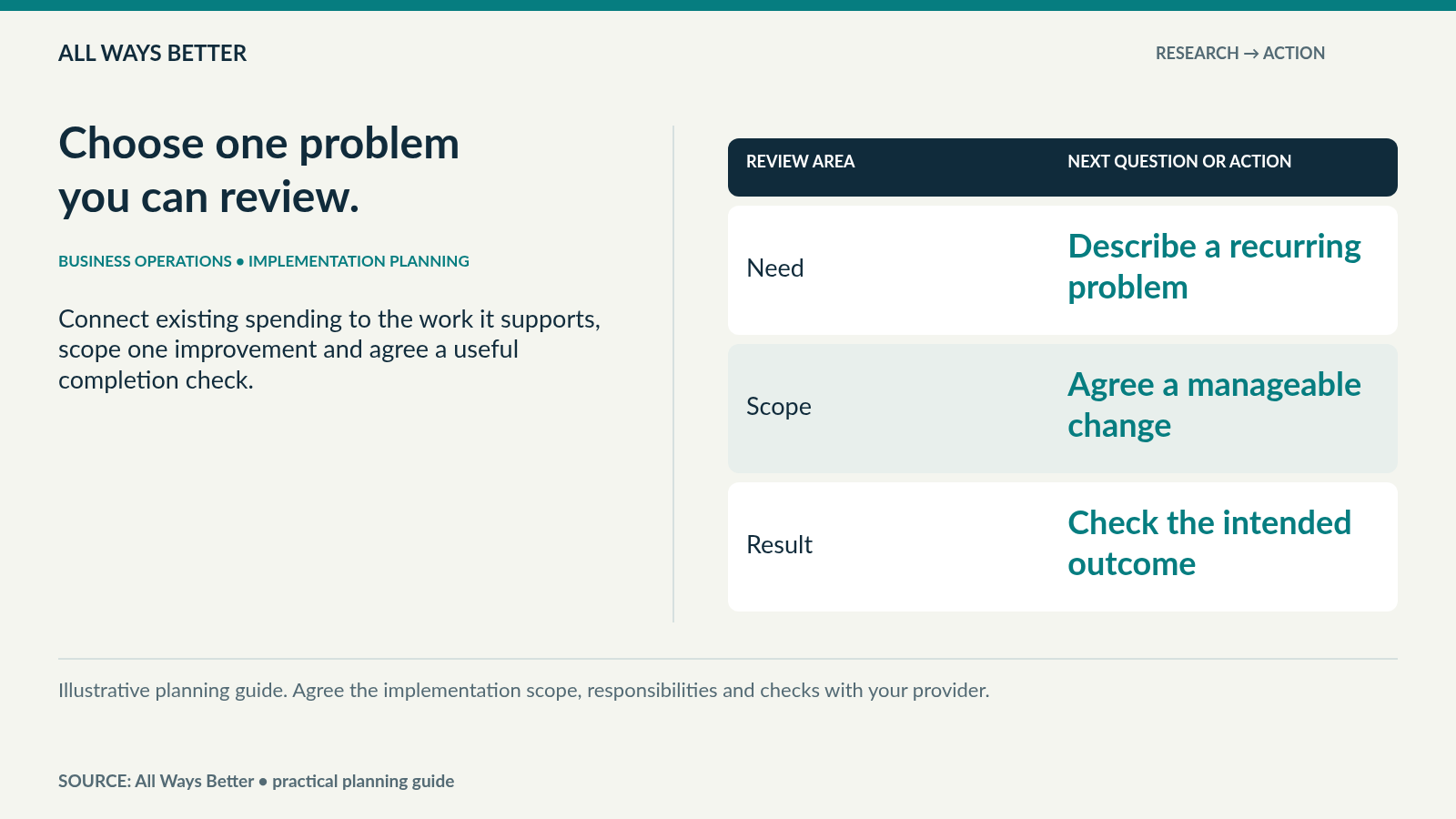
Choose something that happens in ordinary work: an enquiry passed between colleagues, a report assembled repeatedly or a customer waiting for an update. Describe the steps and the point where work becomes difficult. Include the people who perform the task. Their account of a busy day often explains constraints that an application list leaves out.
Keep the initial scope small enough to review. An entire customer journey may include several systems and departments. One recurring request can be a useful starting point. Identify who receives it, who takes the next action and where the team can see that it is still waiting.
Connect spending to an intended result
Review the tools and services already supporting that task. Ask what each arrangement is meant to provide and what evidence the business has of that result. An invoice establishes a purchase, but it does not describe how staff use the service or which responsibility a provider accepts.
If the purpose is unclear, assign the question before deciding what to change. A service may cover an important dependency that is less visible to daily users. Ask the responsible owner to explain it. Renewal decisions are easier to assess when the organization understands the work involved, its current obligations and the practical effect of ending or changing the arrangement.
Compare changes against the same requirement
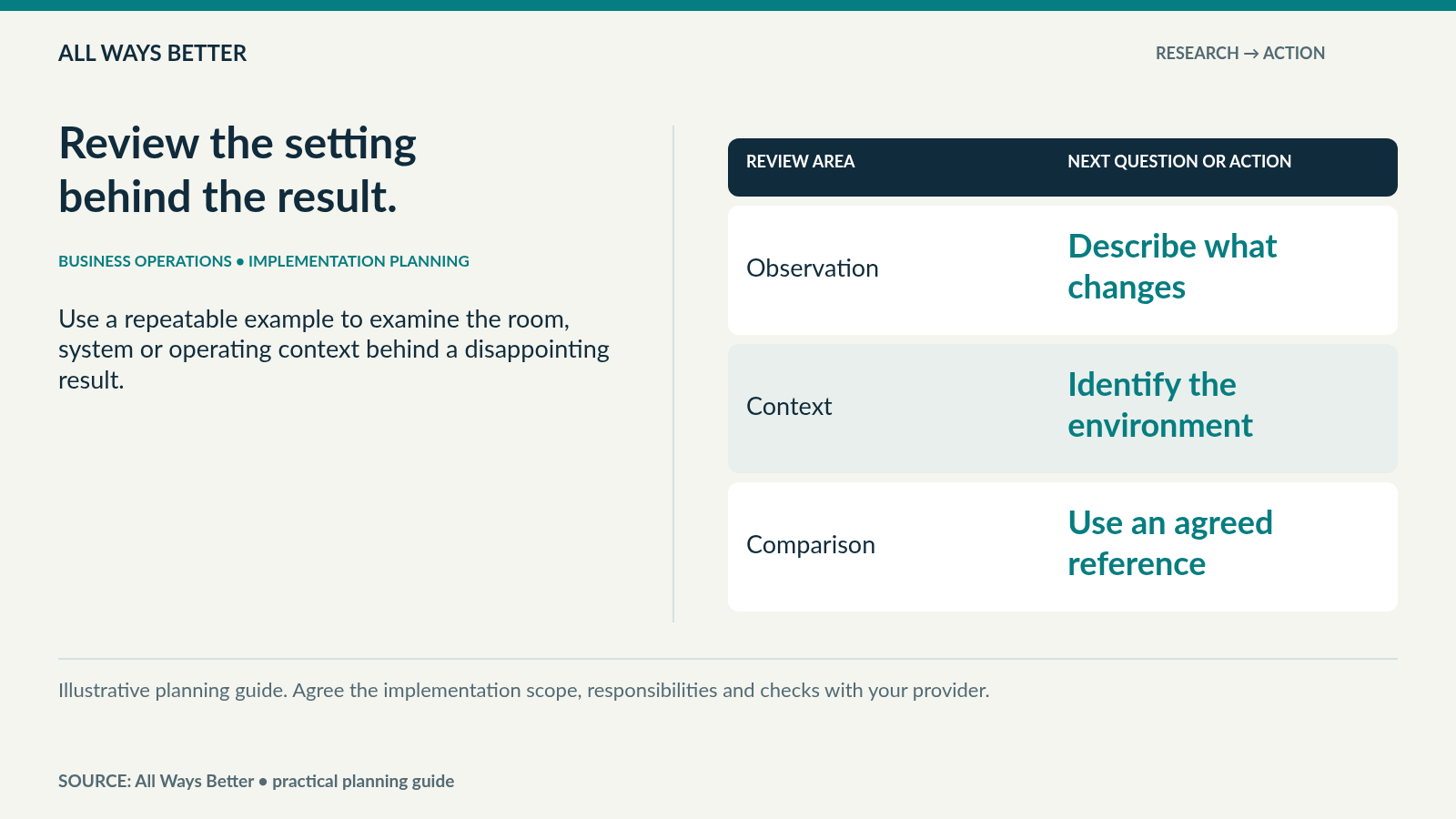
Define what the first improvement should accomplish. For an enquiry workflow, a useful requirement might be that a request reaches a named owner with its original details and a next action. A proposed form change, staff procedure and integration can then be discussed against that requirement.
Ask providers what is included, what remains with your team and what information they need before committing to delivery. Include staff time, ongoing maintenance and the process for handling exceptions. Comparing an initial price alone can hide work that still needs an owner after installation.
Choose a check you can perform
Agree how the team will review the result. Use an authorized example and follow it through to the intended destination. Record what happened and any unresolved limitation. The completion check should match the task the business set out to improve, rather than simply recording that a new feature was installed.
For instance, a callback reminder is useful only within an agreed response process. Staff still need to know who receives the task, when it needs attention and how an unavailable owner is covered. Test that handoff before adding more alerts or asking another department to adopt the same arrangement.
Finish the review before expanding the project
After a manageable trial, ask the people using the process which parts helped and which created more work. Keep the observations beside the original requirement. A result that falls short can identify a specific change to make; it does not have to become another broad project with an unclear end.
All Ways Better can help clarify that requirement and discuss suitable services or implementation support. Bring one problem, the people involved and the result you want to review. The relevant provider confirms any assessment or delivery scope, responsibilities, fees and timing.
Sign up for a free initial consultation through the article's contact offer. Our team will follow up to arrange a call about a practical next step. The offer covers the first conversation. Further assessments, subscriptions and implementation work are separately agreed, with no purchase required to have the initial discussion.