A recording can sound different in another room. Software can behave differently when it reaches another system. In both cases, looking only at the tool can leave an important part of the problem unexplained: the environment in which the work is produced and judged.
Describe the result that changes
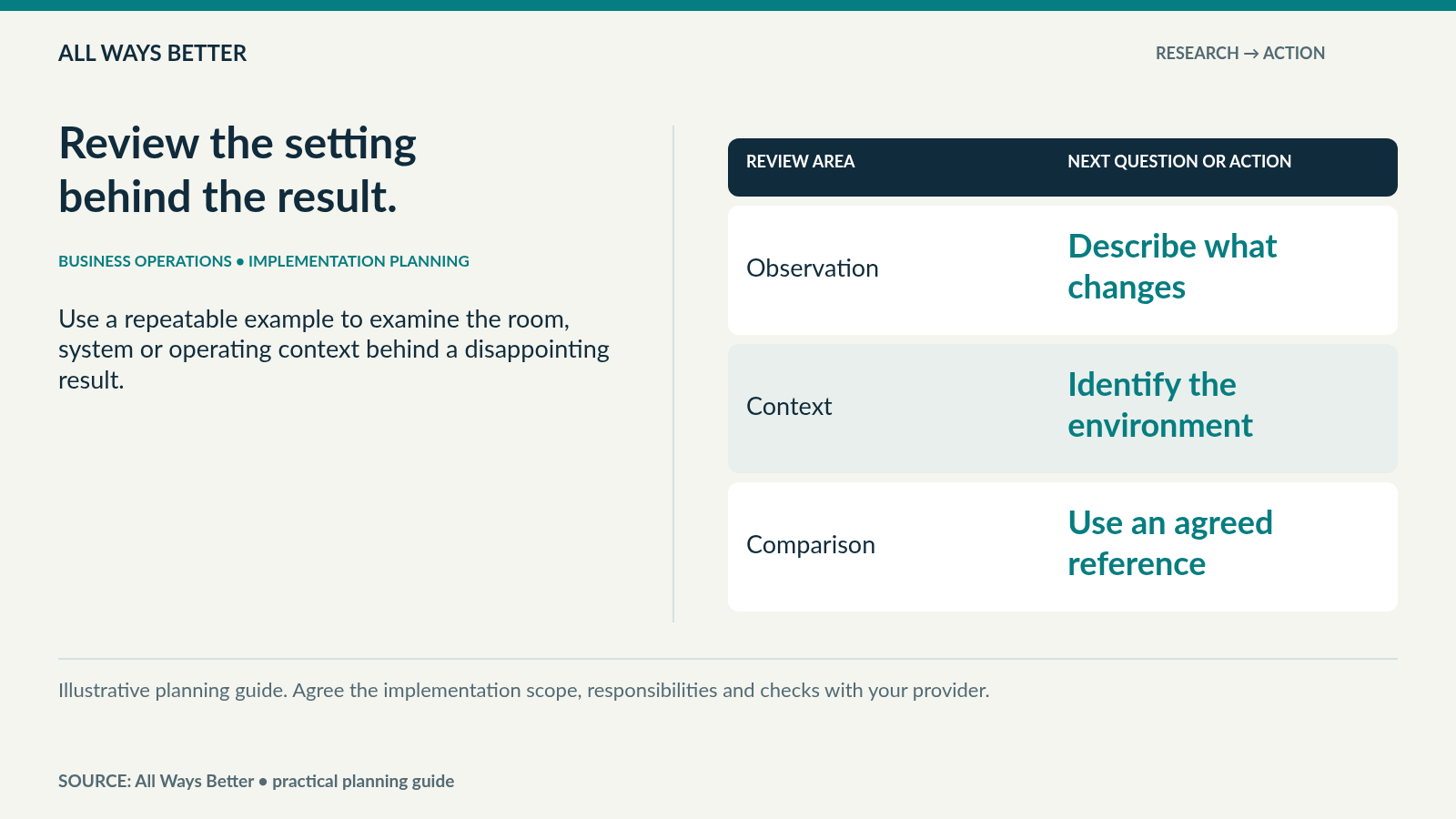
Start with a repeatable example. For an audio project, explain what you hear, where you hear it and which version you are comparing. For a software workflow, identify the task that behaves differently and the environments involved. Keep the observation separate from a conclusion about what must be replaced.
Include the people who use the result. A producer, an engineer and a client may judge different parts of an audio delivery. A developer, operator and business user may observe different stages of a software process. Their descriptions help identify the question a specialist needs to investigate.
Review the listening or operating context
In a studio discussion, the room and monitoring arrangement belong alongside the equipment list. Genelec's educational guidance explains how room acoustics and placement affect monitoring. That background does not diagnose a particular room. An appropriate audio professional can help determine which observations and review methods are relevant to the project.
For software, ask the responsible technical team to compare the relevant operating arrangements. Versions, connected services, access and configuration can differ between a development example and the live environment. Keep sensitive details in an approved channel. A business scoping note should identify the difference without publishing credentials or private system information.
Change one defined part of the problem
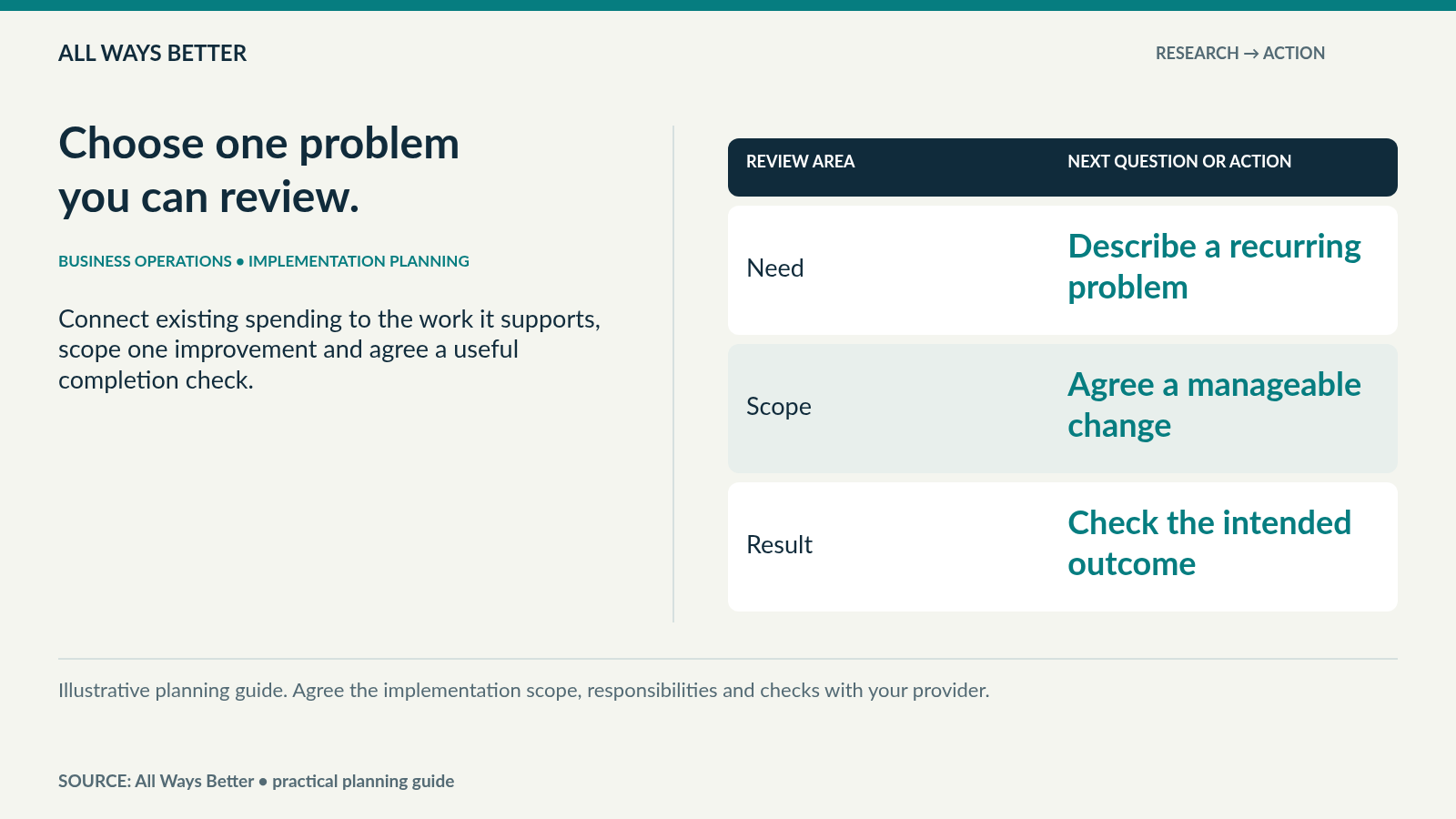
Agree what will be examined and how the team will assess the result. In an audio project, that could mean establishing a suitable reference and clarifying the delivery requirements. In a software project, it could mean a qualified review of an identified difference between environments. The method should fit the work and the people responsible for it.
Avoid commissioning a broad replacement before the question is clear. Buying different equipment or adding another service may introduce work without resolving the original concern. Ask the proposed provider to explain which part of the observed problem its work addresses and what remains outside the scope.
Keep the comparison usable
Retain an agreed reference, the relevant conditions and the observations made during the review. Someone joining the project later should be able to understand which version or environment was examined. An unexplained change can make a later comparison difficult even when the immediate result seems better.
For example, a client reviewing an audio revision needs to know which file is current and what feedback the revision addresses. A team checking a software repair needs the same clarity about the intended task and operating context. Agree that handoff before treating a delivery as complete.
Bring the result and its context
All Ways Better can help clarify the requirement and identify a suitable service conversation. Audio production needs may involve Aria Sound Lab; software or infrastructure concerns may need a different delivery team. The provider confirms its competence, scope, responsibilities, timing and fees directly with you.
Use the article's contact offer to request a free initial consultation. Describe the result that needs attention and the setting in which it occurs. Our team will follow up to arrange a call. The initial conversation is free; acoustic assessment, production work, technical investigation and implementation are separate services agreed before delivery begins.